

Henriette Cornet, Ph.D., is the founder and CEO of Urban Innovate, where she advises cities, transit agencies and industry on autonomous mobility. She is also a professor at the University of San Francisco and co-directs its Autonomous Vehicles and the City Initiative. She previously coordinated one of Europe's largest AV deployment projects, across 15 cities, and serves as a Senior Expert for the European Commission. She writes about AVs and public transit in her newsletter, Urban Innovate READS.
On a recent trip to San Francisco International Airport, I had a large suitcase and a familiar decision to make. To reach BART (Bay Area Rapid Transit), the rail line that serves the airport, I could walk 20 minutes uphill, or wait for a bus that came every half hour. Or I could open the Uber app and ride straight to the terminal.
Uber won. But what I needed was a feeder: a frequent connection from my neighborhood to the station. If one had come every ten minutes, I would have taken the train. Changing vehicles with a suitcase wasn’t the problem. The waiting and uncertainty were.
I have spent over a decade working on autonomous vehicles for public transport, and this trip was a useful reminder: I didn’t need a driverless vehicle. I needed a better connection.
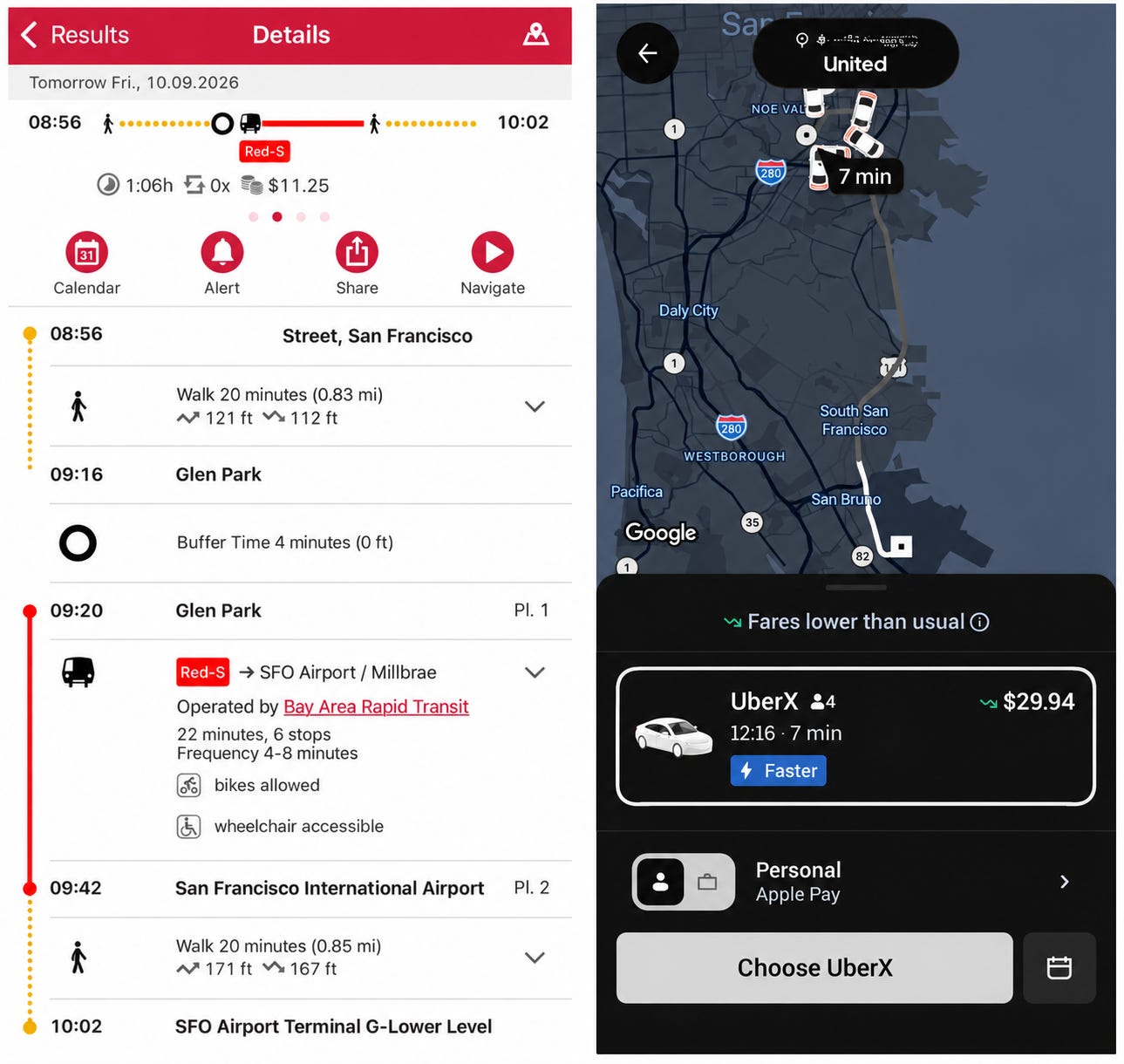
Notice what the missing connection cost the system: BART didn’t lose a feeder leg, it lost the entire trip, because the Uber went straight to the terminal.
That’s why I see the feeder as one of the most promising uses of automation in public transit: a first- or last-mile connection that can determine whether someone takes the train at all.
Agencies don’t need to own driverless vehicles to benefit: They can define the feeder service they need and commission an integrator or a robotaxi operator to deliver it, on their terms. Credits are an encouraging start, but agencies need service agreements that turn shared ambitions into clear commitments.
The Promise, and the Caveat
The usual pitch for autonomous buses is simple: remove the driver, save the wage. This is a weak argument, at least for now. In the early stages, an autonomous service can cost two to two and a half times as much to operate as a comparable manually driven one, an operator’s rule of thumb rather than a calculated figure, according to my interview with William Levassor, who has experience operating autonomous public transport in France.
The more interesting promise, in the longer run, is not lower costs but more service, and it is clearest on the feeder. A driven feeder in a low-demand area costs the agency a driver’s hour for every hour it runs, however few passengers are on board. So, these services stay infrequent, and low frequency keeps ridership low. If vehicles can operate without a driver on board and remote staff can support several vehicles, running them more often no longer means paying for another driver’s hour each time. That could make frequent service affordable where it is difficult to justify today. But the savings depend on the full operation: vehicles, technology, maintenance, remote supervision and passenger assistance. More service for the same budget is a possibility to work toward, not an outcome automation guarantees.
Oslo: The Agency Sets the Terms
One of the transit agencies I follow closely is Ruter in Oslo. Its starting point is blunt. Even with one of the best transit systems in the world, many people in the region still feel they need a car, and Ruter believes shared, on-demand, autonomous transport could be the alternative. In its own words:
The key to launching similar services on a large scale across the entire region is the use of self-driving vehicles.
Its pilot runs in Groruddalen, a valley where transit is thinner than in the city center, with operator Holo. The goals are to feed metro stations and to cover low-demand hours. During the first phase, which opened to the public in February 2025:
Five Chinese NIO cars equipped with Mobileye carried around 7,000 passengers on roughly 6,000 trips
Riders used 124 pickup and drop-off points defined by Ruter, booked through an app
About 90% of driving was in autonomous mode, including through an Oslo winter, with a safety operator in the driver’s seat
From this autumn, six Volkswagen ID. Buzz vehicles take over, built for shared rides, and the area extends to southern Lørenskog. This is a phase in a long-term plan, not a demo.
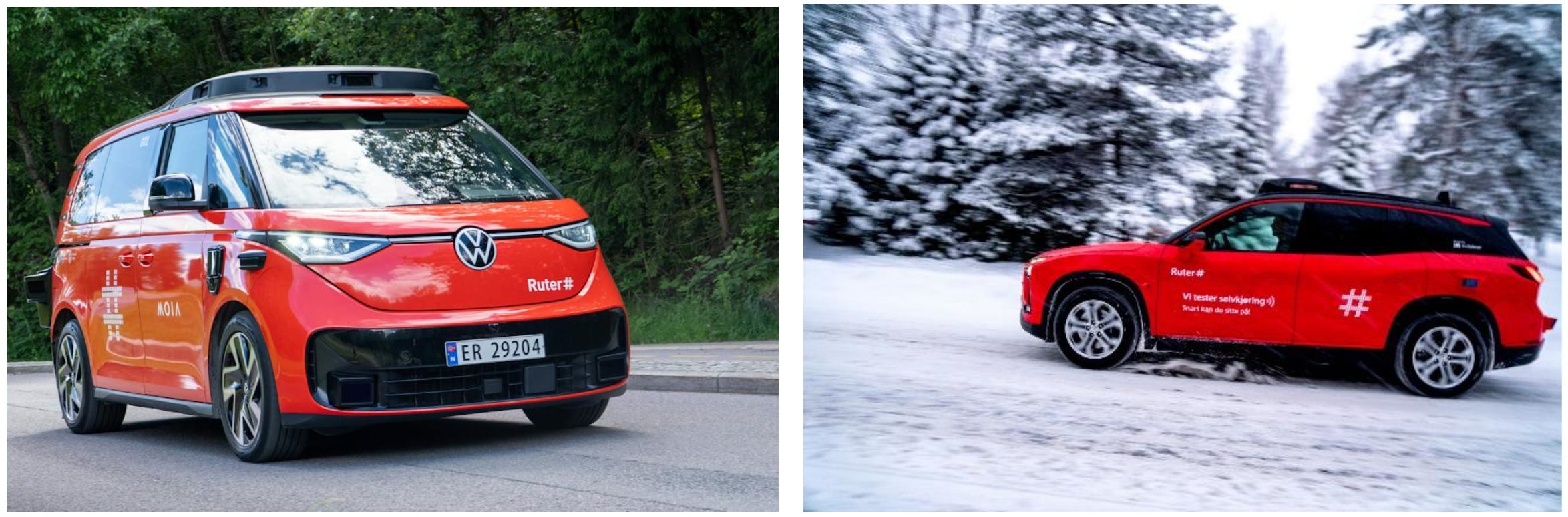
Imagine the same idea around a U.S. rail station: pickup points a short walk from home, shared rides where it makes sense, one fare, and hours that match when people actually travel. Ideally, the passenger wouldn't even care whether there is a driver.
In the U.S.: Agencies Are Already Experimenting
In the U.S., agencies have started to experiment with versions of this. Valley Metro in Phoenix piloted Waymo vehicles for first- and last-mile connections in 2018, starting with its own employees. In 2025, Via and Waymo announced that Waymo vehicles would be dispatched through Via’s software in Chandler Flex, the city’s microtransit service (app-booked shared rides in small vehicles, on flexible routes). The point is that the city can manage those rides under the same compliance and reporting standards as the rest of its service. Agencies can also work with an integrator such as Beep to bring together the vehicles, technology and day-to-day operations, while defining the service requirements themselves.
Other models exist. In Dallas, Dallas Area Rapid Transit (DART) first contracted Uber in 2018, under a federal pilot, and now uses it to supplement GoLink, its microtransit service that connects riders to stations and covers low-density areas. The rider pays the DART fare and, since 2023, can book the Uber ride inside DART’s own GoPass app. So, DART decides where the service runs, what it costs the rider and who owns the customer relationship, while Uber supplies the vehicles and drivers. Uber’s own case study from 2023 reports an average subsidy of $8.58 per rider on Uber against $17.04 across GoLink, though these are vendor-reported figures.
Robotaxis: From Credits to Contracts
Riders are already stitching AVs and transit together on their own. In Los Angeles, Waymo still can’t serve the LAX terminals, so some riders take a Waymo to the LAX/Metro Transit Center and hop on the free terminal shuttle, as the Driverless Digest reported recently.
An agency that can’t run its own autonomous fleet could make that kind of connection deliberate through a robotaxi partnership. Dallas shows the template, and Chandler may be the first test with Waymo vehicles.
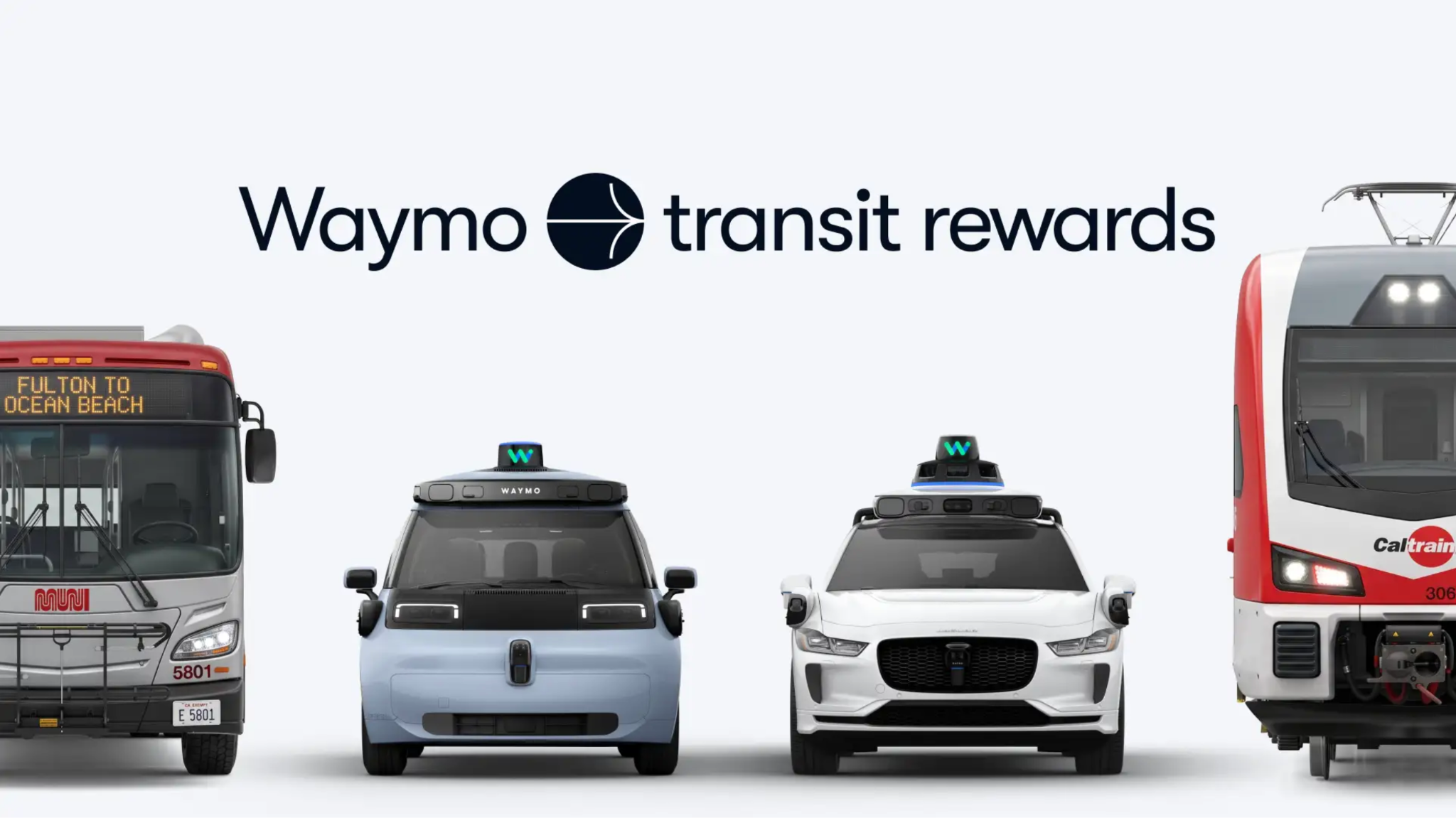
Not a partnership yet, but still encouraging: Waymo’s recent Bay Area transit rewards point in that direction. Announced on September 22, the program pays $2.85 in Waymo Cash, the price of a San Francisco bus fare, when a rider uses the same linked Visa card for a Waymo ride and takes a transit trip within two hours. It covers the 27 Bay Area agencies that accept contactless Visa. It is a Waymo account credit, not an integrated fare, it rewards a payment rather than a service level, and it started with Waymo’s own employees before opening to the public.
At the Autonomous Vehicles & the City initiative at the University of San Francisco, we evaluated Waymo’s earlier pilot: a $3 credit for rides to or from eight geofenced transit stations in fall 2024. Our exploratory survey received 74 responses, including 16 credit recipients. Asked how they would otherwise have reached the station, half of those recipients said Uber or Lyft, 38% transit, and one each car or bicycle.
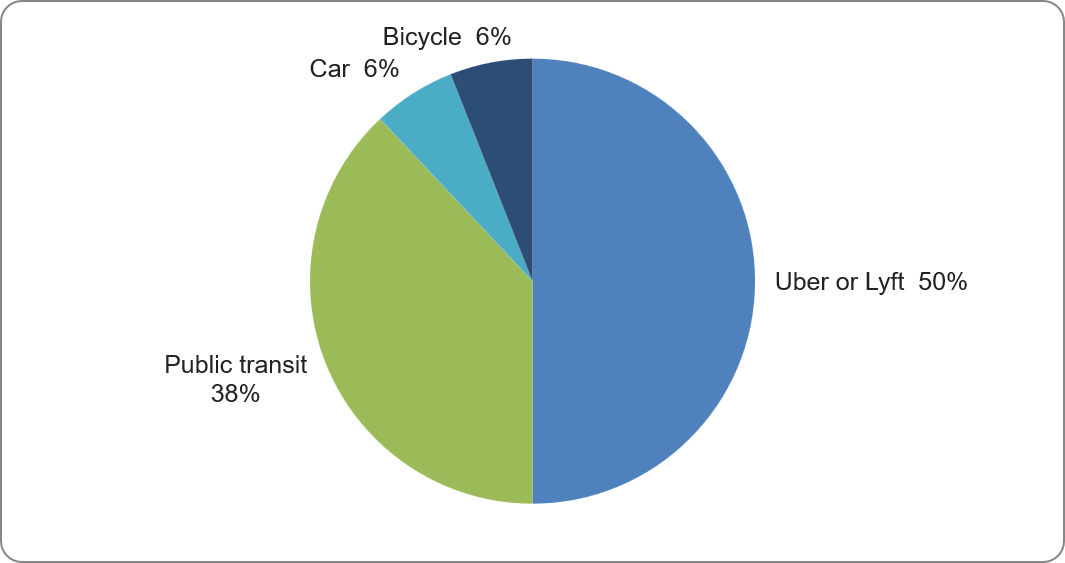
These responses suggest that Waymo can replace several different ways of reaching a station, but this small sample cannot tell us whether the credit generated additional transit trips overall. Waymo says its own surveys show that more than half of its riders in San Francisco, Los Angeles and Phoenix also use public transit. That points to an operational advantage for Waymo as well: pickups and drop-offs clustered around stations mean steadier demand, shorter empty runs between rides and a more compact area to serve. Its plan to lease 40 Caltrain station parking spaces to stage vehicles fits that logic.
But still, I often hear that robotaxi services and transit can’t be complementary, and there is something to it: left to the market, ride-hailing services (autonomous or not) go where demand is highest, which may be where people already have options. A transit agency’s job is different: it includes providing mobility for people who have no other option, often in places where demand is thin. A credit alone does not guarantee service there.
That’s why I’d like to see a service agreement, a genuine partnership between agency and operator, built around a transit agency’s needs:
Coverage incentives around specific stations
Guaranteed operating hours and wait-time targets
Dedicated wheelchair-accessible vehicles
Fare caps balanced with the transit fare
Regular reporting on the basics agencies typically track for buses: wait times, trips completed, reliability and accessible service
The agency doesn’t need to own the fleet. It does need to be able to hold the operator to those commitments, which takes skilled people on the agency’s side, as in Oslo.
Waiting is also a Decision
My biggest worry is inertia. Robotaxi companies are already shaping how their services connect with transit. If agencies don’t take an active role now, they risk responding to decisions already made about where, when and how people can travel, and who can travel. I’d rather see agencies help set those terms from the start.
And I’d like my next airport trip to work well enough that the train becomes the easy choice. If automation helps an agency get there at a cost it can sustain, it has earned its place.
Great insights really pointing to where ADS can truly serve the public’s greater good. Combined with 100% EV transit and we would have a winning strategy.
One thing to address is rider safety at non peak hours with AV multi-passenger transit. (It’s a pity we can’t teach men to not rape and assault people.)