

Today’s post comes from Josie-Dee Li, who works at Einride charging electric & autonomous trucks and writes about AVs, charging, and product in a personal capacity at Electrons & Asphalt.
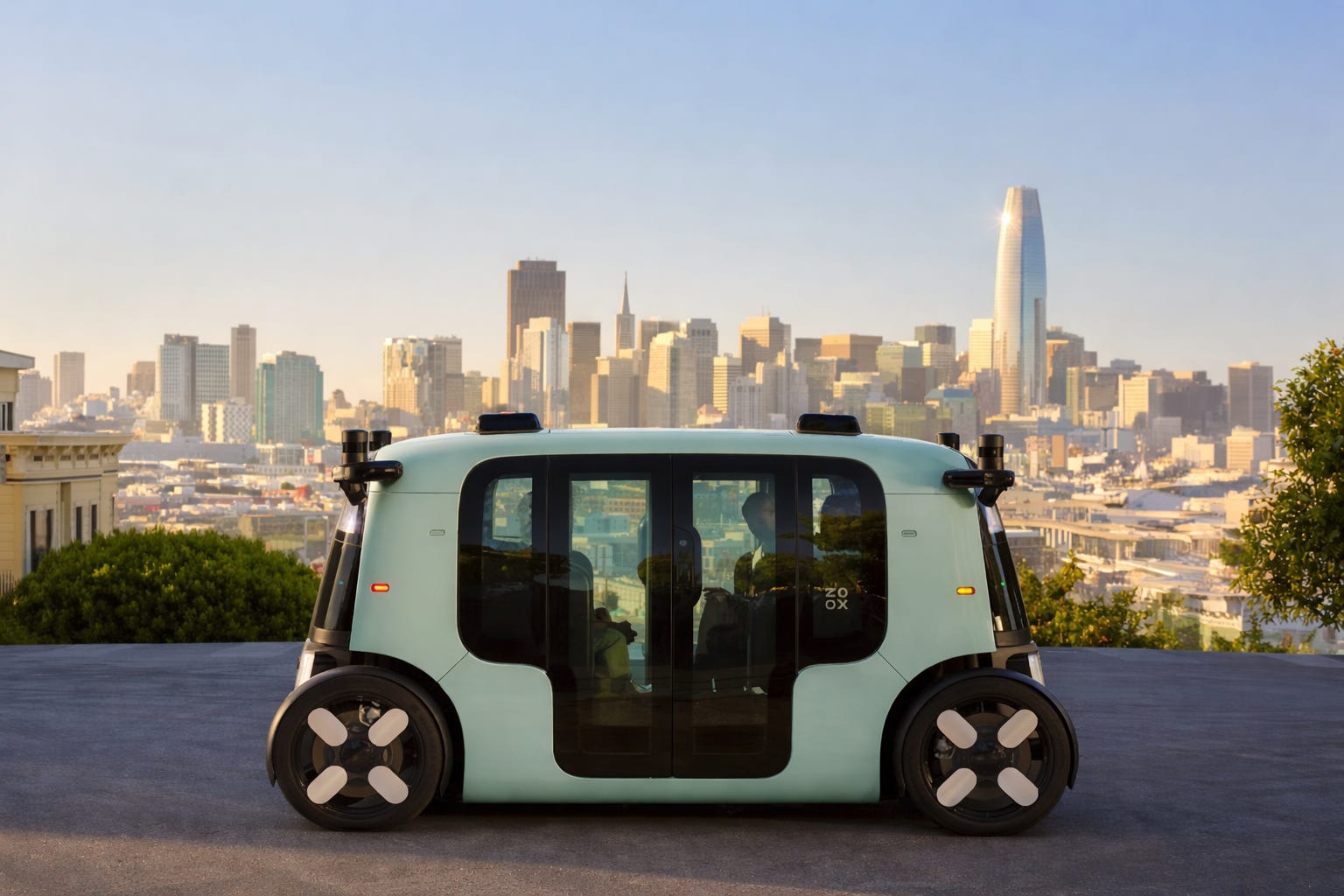
Off the Zoox waitlist and feeling like a beta tester
After years of riding autonomous vehicles around San Francisco, I finally got off Zoox’s public waitlist and promptly logged 15 rides in one week over Thanksgiving, dutifully giving feedback after every trip.
Zoox feels different from both Waymo and Tesla robotaxi in a way that’s intentional and thrilling, yet still feels experimental.
Unlike Waymo, which now feels like a reliable, premium ride home, or Tesla robotaxi, which feels like a cost-optimized layer on top of a driver-centric car, Zoox is living up to its promise: a purpose-built robotaxi designed around the rider experience. That puts it in a different category entirely.
Sharing these observations for two reasons:
to give others a glimpse of the experience so they can get excited when it’s their turn, and
invite comparison, validation, disagreement, and speculation from folks who’ve ridden already.
Zoox’s differentiation isn’t just about the vehicle hardware or autonomy stack. It’s a bet on what kind of robotaxi experience riders will value over time and optimize for in the moment.
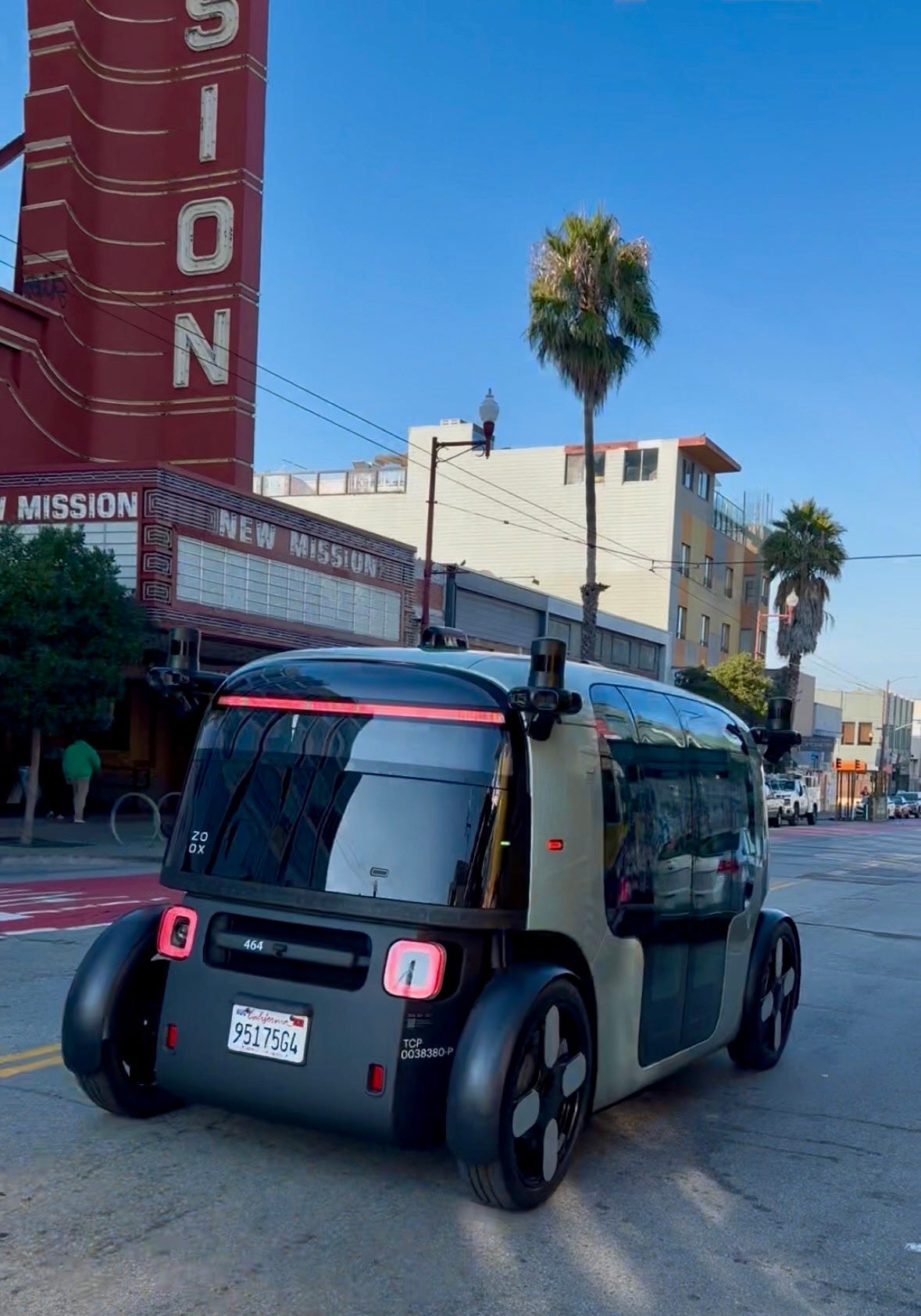
Why Zoox hits different
The simplest way I can describe a ride in Zoox is that it feels like what a robotaxi should feel like. It’s futuristic, a little wild, and still surreal that this now exists alongside other AV options.
Zoox isn’t a retrofitted, human-out version of a car we already know. It’s explicitly an autonomous robotaxi: purpose-built, rider-centric, and designed to shuttle people around.
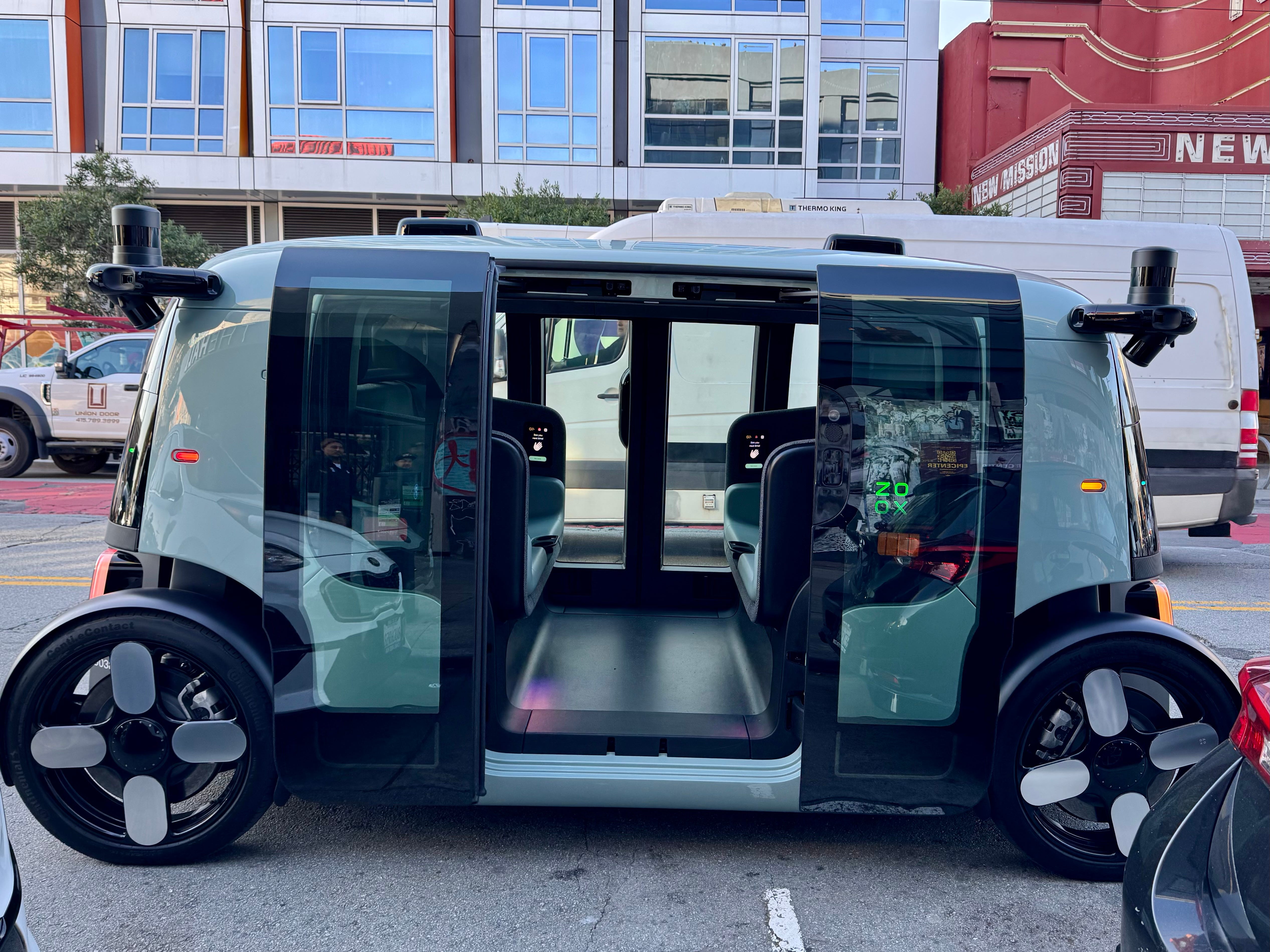
There’s no steering wheel. No pedals. No mirrors. No windshield wipers. There isn’t even a traditional front or back. The vehicle is symmetrical and bidirectional with four pedal steering. Every time I step inside, it still shocks me a little.
My friend Doug, CEO at Mystro, captured that feeling perfectly after getting off the waitlist around the same time in November: “I feel a bit giddy each time I step in. It feels like the future, bending the definition of what a ‘car’ even is.”
A more social, human experience
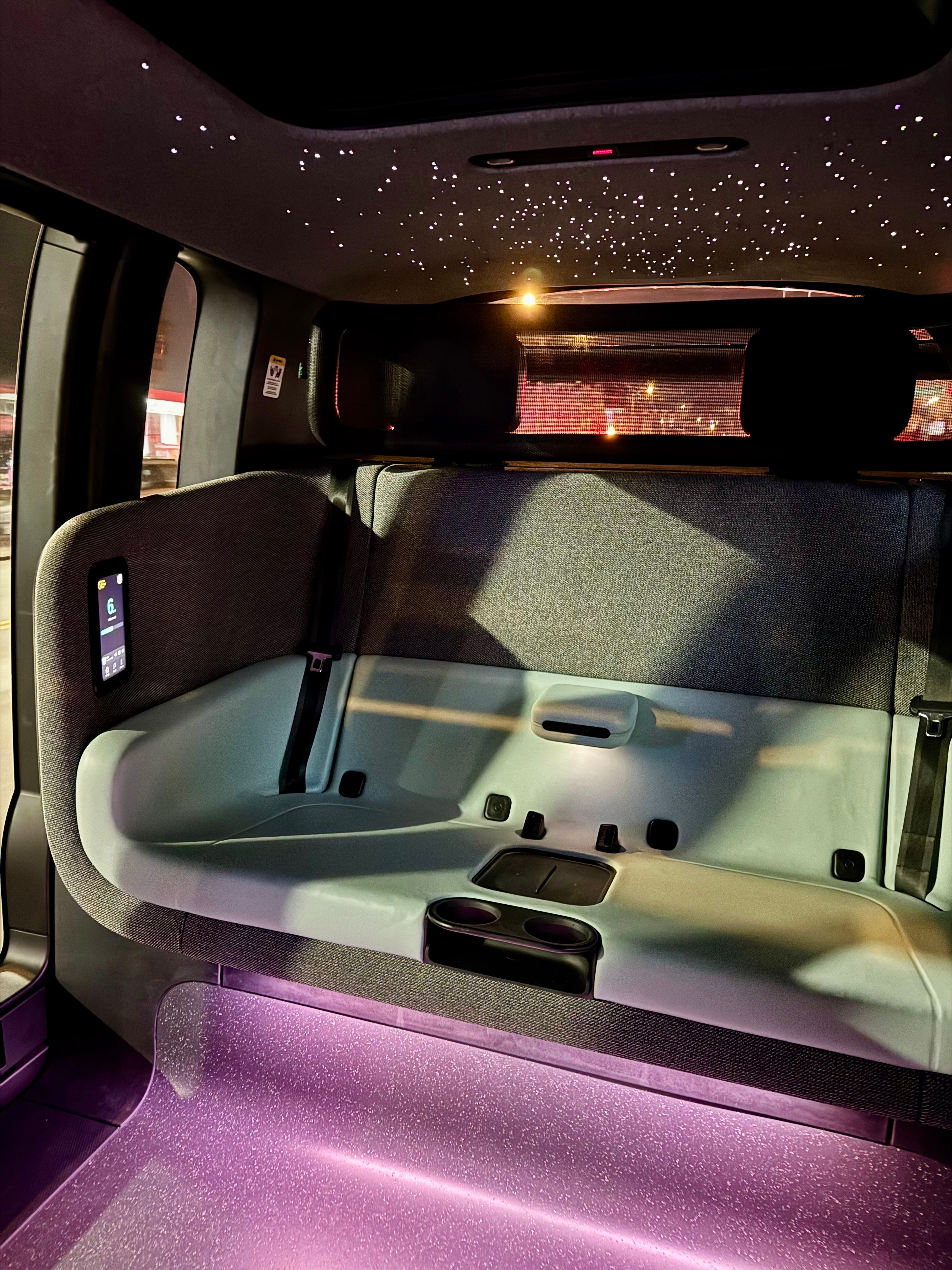
Because Zoox is designed around riders, not drivers, the experience feels fundamentally different from an Uber or any driver-centric car. The four seats face each other with plenty of space in between the two benches. Everyone is on the same level. There’s no one relegated to the front seat and no awkward choreography around a human driver. Riding with friends feels more social and more like a shared adventure, where the journey itself is part of the fun. It’s harder to retreat into your phone and easier to be present, whether that’s with the people you’re riding with or simply enjoying a solo ride. You can’t see as much around you or out in front of the vehicle, which subtly shifts your awareness inward. It feels closer to riding a train or subway, where you don’t see or think about how the vehicle is being operated. You’re just… riding.
Thoughtful details that elevate the experience
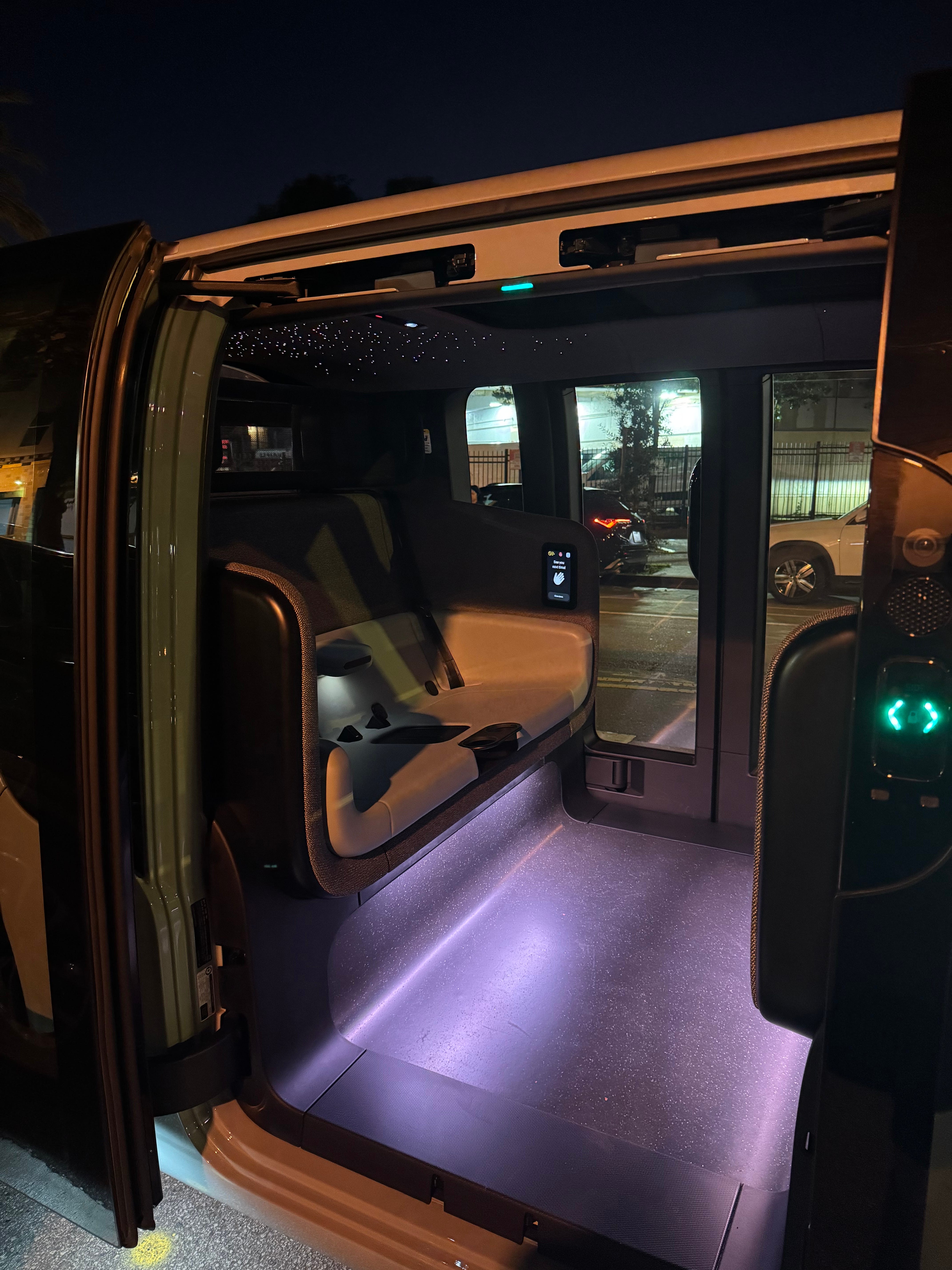
There are also small but thoughtful design choices that reinforce this rider-first philosophy. Doug pointed out something I hadn’t fully appreciated until I recently sprained my ankle and started relying on Zoox for short trips around my neighborhood: “A major comfort advantage for Zoox is the ease of getting in and out. The sliding doors are effortless, the step height is low, and the seats are easy to get into and out of.” Once you ride it enough, it’s hard not to compare that experience to any other car. Learning recently that Waymo has to pay people to close doors made me appreciate even more that Zoox’s doors open and close on their own, meeting neatly in the middle with a satisfying sound.
Sounds, lighting, and subtle magic
Then there are the magical touches that make the experience feel intentional rather than bolted on. I love the twinkling ceiling lights at night, and I remember being able to control the colors during a friends-and-family ride in Foster City, a feature I hope makes its way to public riders. Outside speakers play required backing up noises, while subtle, soothing music plays as the vehicle waits to pick you up. Inside, the sound and verbal cues - like opening and closing doors, buckling seatbelts, and starting and ending the ride - are clear without being intrusive, reinforcing that this experience was designed holistically, not pieced together. There’s something oddly satisfying and soothing about the signals when a ride starts or ends. I feel a sigh of relief and sense of wonder when I get in, consistent twinge of sadness when it cues the ride is ending, and a moment of accomplishment and satisfaction when I get out.
Where the beta still shows
All of that said, Zoox understandably still feels like it’s in beta. Riding it requires patience and grace. The driving style is extremely cautious - much more so than Waymo or Tesla - to the point where pedestrians and bikers often take advantage. When unexpected things happen, it can slam on the brakes and feel jerky, and I’ve experienced a sliding feeling almost like a hockey stop. The four-wheel steering adds this extra layer of unfamiliarity, but I’m getting used to it.
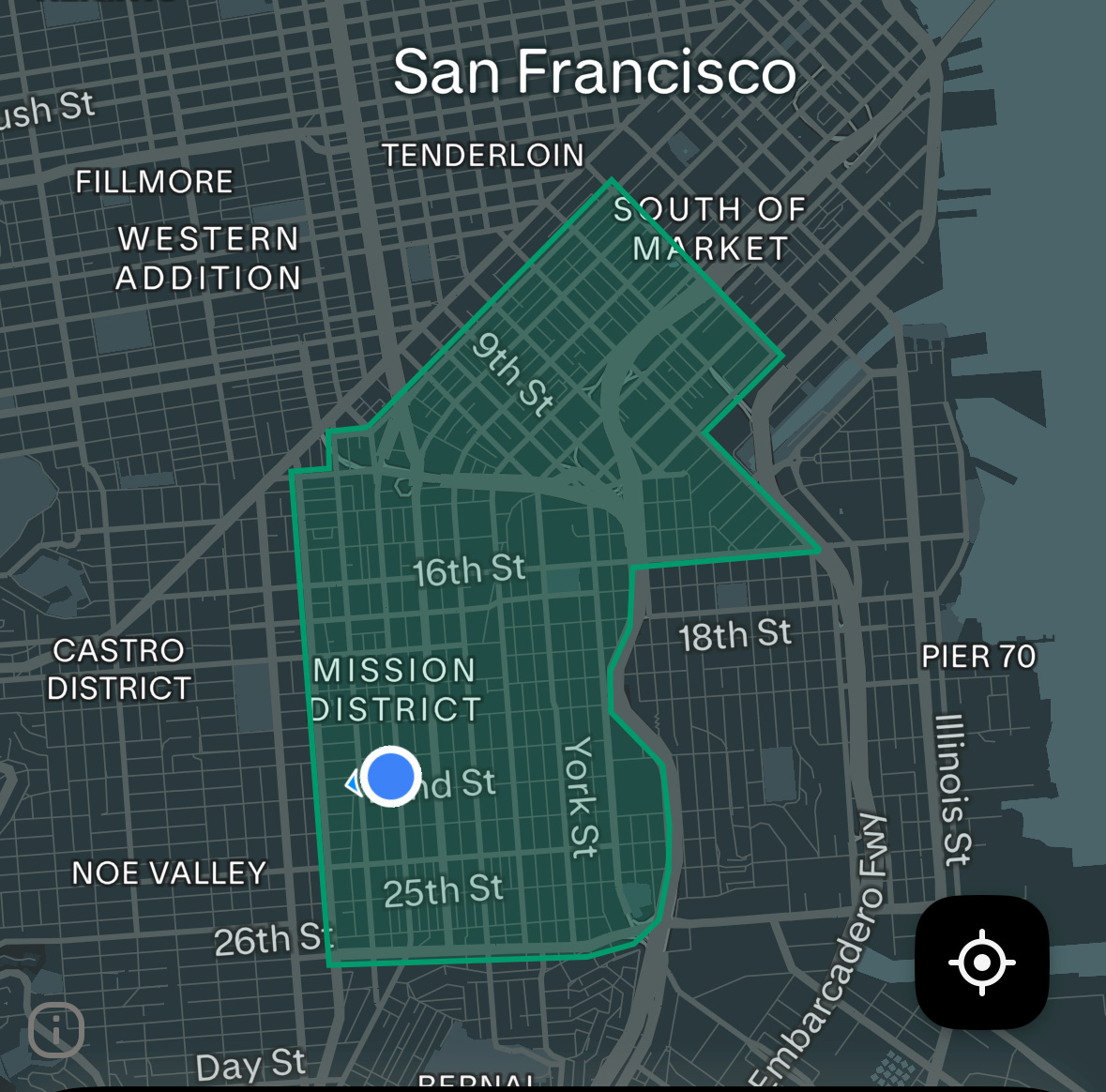
Outside of those moments, most rides are smooth. Mission Street is notoriously bumpy in my own car, but in Zoox the ride feels surprisingly fluid. Doug offered a helpful framing: “It has a major advantage in that the service area mostly contains slow roads and simple intersections, so it’s in easy mode.” I’m very curious how it will handle San Francisco’s steep hills and narrow streets…not to mention heavy fog and rain, which it currently doesn’t operate in.
Routing, pickups, and real-world friction
Routes today can be inefficient, possibly because Zoox avoids bus lanes, tricky left turns, or anything that could hold up traffic and create negative public perception or regulatory friction. There’s still no visible map on the screen, despite seeing one previewed at CES. Maybe that’s intentional, because some of the routes are borderline rage-inducing when I’m in a hurry. I’ve learned not to take Zoox when I’m tight on time, especially because I often still have to walk at least a block to my destination.
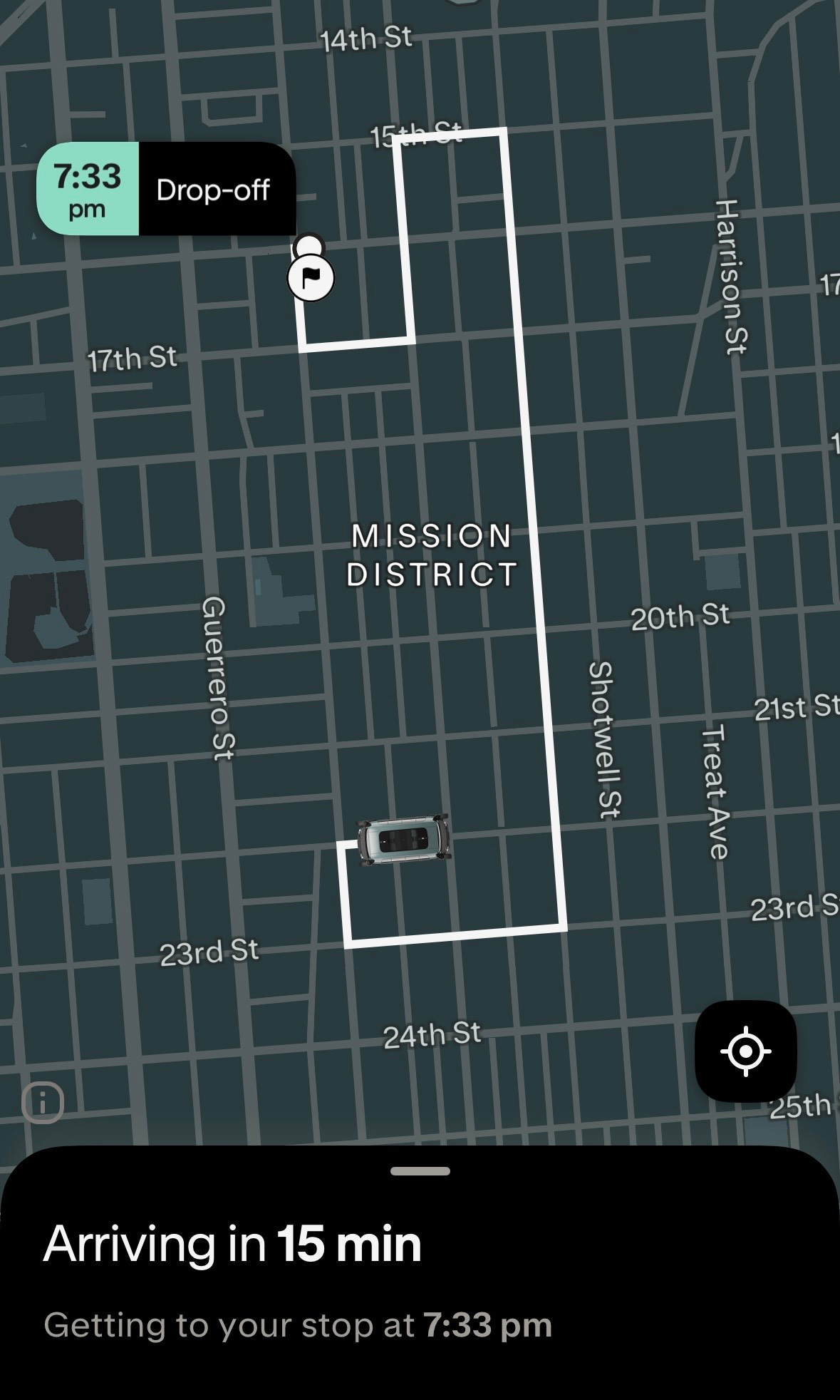
The biggest downsides for me are pickups and dropoffs. Sometimes Zoox stops dead in the middle of the street without even trying to pull over. Other times it blows right past me, only to stop a half to a full block away, forcing me to chase it down. Dropoffs can be even worse, looping around the block only to leave me in the original spot where nothing has changed, then lingering for 10-15 seconds after doors close before finally pulling away and unblocking traffic. I always feel bad when this happens and try to avoid eye contact with impatient drivers honking behind it. This, along with the driving timidness, feels a little like the early days of Waymo, where I know they struggled with similar holdups. Part 2 of this series will compare my experiences riding in Zoox, Waymo, and Tesla, with more detailed robotaxi comparisons.
Why I keep riding
And yet, I’m willing to look past all of this. Partly because it’s a privilege to be an early rider, but mostly because Zoox is free. I fill out the feedback survey after every ride because it genuinely feels like I’m helping shape the product and my opinion actually matters. In one case, after complaining enough times about a terrible dropoff spot near my apartment, the dropoff location permanently changed. The feedback loop feels real.
This unique and free experience in my neighborhood is why Zoox is my go-to mode of transportation right now, racking up 37 rides in just over a month.
Readers, have you taken a ride in a Zoox robotaxi — or would you? How was the experience?
- Josie-Dee
You can learn more about Josie-Dee and her writing at Electrons & Asphalt here.

I would totally ride in a Zoox. Unfortunately, I'm in Montana.
I have loved these little trolley designs since I first saw them on Olli back in like 2016. This was a great dispatch, and it was news to me that these were on the street in SF. So psyched to see that is moving.
Thanks for sharing about it and giving this detailed account! It was great! Go, Zoox!