

In this partner piece, we sat down with Terawatt’s first Chief Product and Strategy Officer, Titiaan Palazzi, who reveals how the infrastructure company is putting over $1 billion of funding to work, from screening 50 sites for every one built, to laying 10 miles of cable per depot, to offloading the data that powers autonomous fleets.
Titiaan Palazzi has made it his life’s work to help drive the shift to clean energy.
An engineer by trade, he founded energy startup Myst AI and sold it to cloud data platform Snowflake in 2023 before joining Terawatt as its first Chief Product and Strategy Officer. His task is to help shape the roadmap for Terawatt, a company that builds, owns and operates depots powering autonomous and electric fleets.
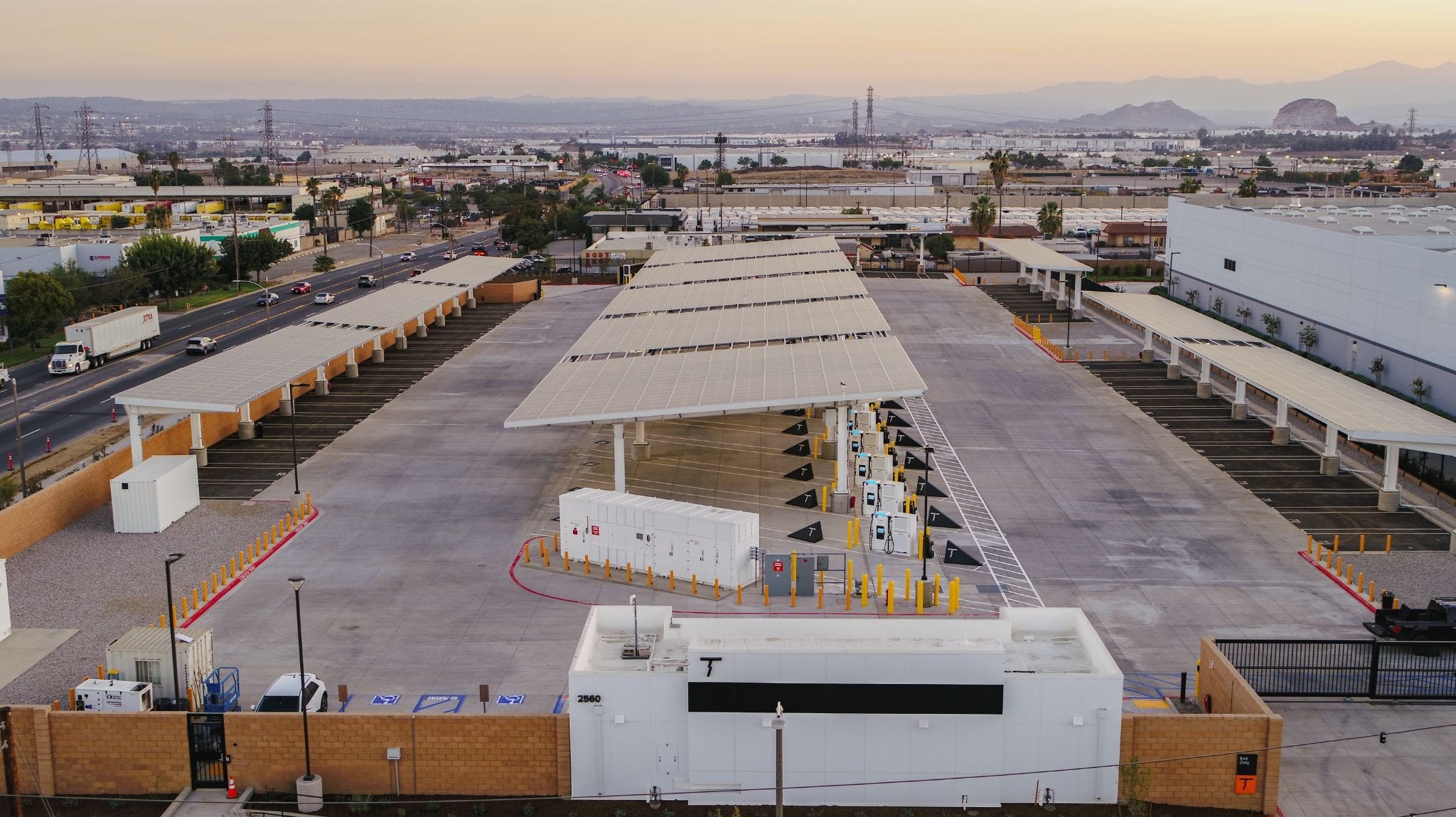
Terawatt has raised more than $1 billion, counts Waymo among its customers and has charging depots under development across more than 20 markets. Five sites are live today, another five are going live in the coming weeks and many more are slated for 2027 and beyond.
The Driverless Digest: You’ve spent your whole career on the energy transition. What shaped that path?
Titiaan Palazzi: I feel privileged that early in my undergrad years I got to meet leaders in sustainability. People like Al Gore and Janine Benyus, the founder of biomimicry, a form of nature-inspired design. My first boss was Amory Lovins, co-founder of Rocky Mountain Institute (RMI), one of the world’s leading clean energy think tanks. I’ve always worked toward building a better energy system, and doing so through business.
As Terawatt’s first Product and Strategy head, what are you most excited to dig into?
I’ve spent 15 years working on the energy transition but I’ve never had the chance to actually put steel in the ground. If you fast forward to 2030, this is the thing that’s really necessary in order to reduce global carbon and other greenhouse gas emissions.
Electrified autonomous fleets are basically a new clean energy category, and building charging depots with other services attached to them is a genuinely new market forming right now. Transportation is the largest source of U.S. greenhouse gases, accounting for around 30% of the country’s total. If you want to tackle climate change, this is a key area of focus.
What are your views on autonomy?
I’ve come to believe the best way to drive sustainability is to build products and services that are compelling beyond just their sustainability benefits. Tesla is a good example. I don’t think it won because it was the sustainable choice, it won because it was a superior car. My first job out of grad school involved some work with Nest, the smart thermostat company, and Nest won for the same reason: it was so much more intuitive and better designed than the incumbents.
I think the same logic applies to autonomy. As a passenger, taking a Waymo or a Zoox is a premium experience to human-driven rideshare, and that’s the real driver of adoption. On top of that, there are genuine safety benefits, and real embodied-carbon benefits too: a private car is used only 5% of the time, while an autonomous vehicle can be utilized roughly 10x as much. But ultimately, I think autonomy wins because it’s simply a superior product.
Which companies are you partnering with in the robotaxi and trucking space?
We work with many of the leading players. I can’t share all the companies publicly right now but I can say this includes Waymo in the rideshare world, all the major drayage companies operating near the port of Long Beach in California, and all the major heavy-duty shippers and carriers including PepsiCo.
How many sites do you have across the U.S. today?
Historically, we’ve been concentrated in California, since that’s where our AV and heavy-duty trucking customers wanted land, with the big hubs being in San Francisco and Los Angeles.
We own land in about 25 states, and as far as where we’re opening next we’re now expanding east and south: Nevada, Arizona, down into Texas, and further onto the Eastern Seaboard. We’re opening in Miami and Austin in the coming weeks.
You’ve explained why you chose Terawatt, why do you think Terawatt chose you?
I see two main roles for myself. First, launching new platform offerings. Today, our core promise to customers is developing sites on time and on budget, then operating them to a high standard. Uptime and reliability matter enormously to rideshare and autonomy operators. My primary responsibility is to launch new offerings that help our customers lower their cost-per-mile by reducing energy costs or automating site operations. My second role is turning Terawatt into a self-learning organization using AI. Having previously founded an AI startup and worked inside big tech companies like Snowflake, I think I can uniquely contribute there.
Tell us more about that self-learning idea.
A lot of what we do isn’t glamorous. Getting a site plan approved, extending a curb, filing a third load study with a utility. It’s blocking and tackling and most of that knowledge lives tacitly in the workforce rather than being written down. Becoming a self-learning organization means capturing all of it, including informal conversations, and codifying the lessons so every project makes us better at the core activity. Entitlement for a site in the LA area might take 18 months today; by 2028, we might get that to 15, and catch the issues that would sink a site in month three.
What makes Terawatt’s platform unique?
I can answer this question best by looking at the life of a site. By the time we hand over the keys to a customer it may look simple, but it’s not just a parking lot with chargers. There is 24 months of work that sits behind that. Our real estate team screens more than 50 sites for every one that makes it through development into operations. Our development team works through entitlements and easements, confirming approval for EV-charging use. Our utilities team may file load studies for 20 adjacent parcels and work with the utility on grid upgrades. Our construction team might lay something like 10 miles of underground cable just to enable 40 charging stalls. What makes us unique is a team with deep expertise in developing powered land in the places that matter, people like Neha Palmer, who led energy for data centers at Google for a decade.
Walk us through the journey of a robotaxi.
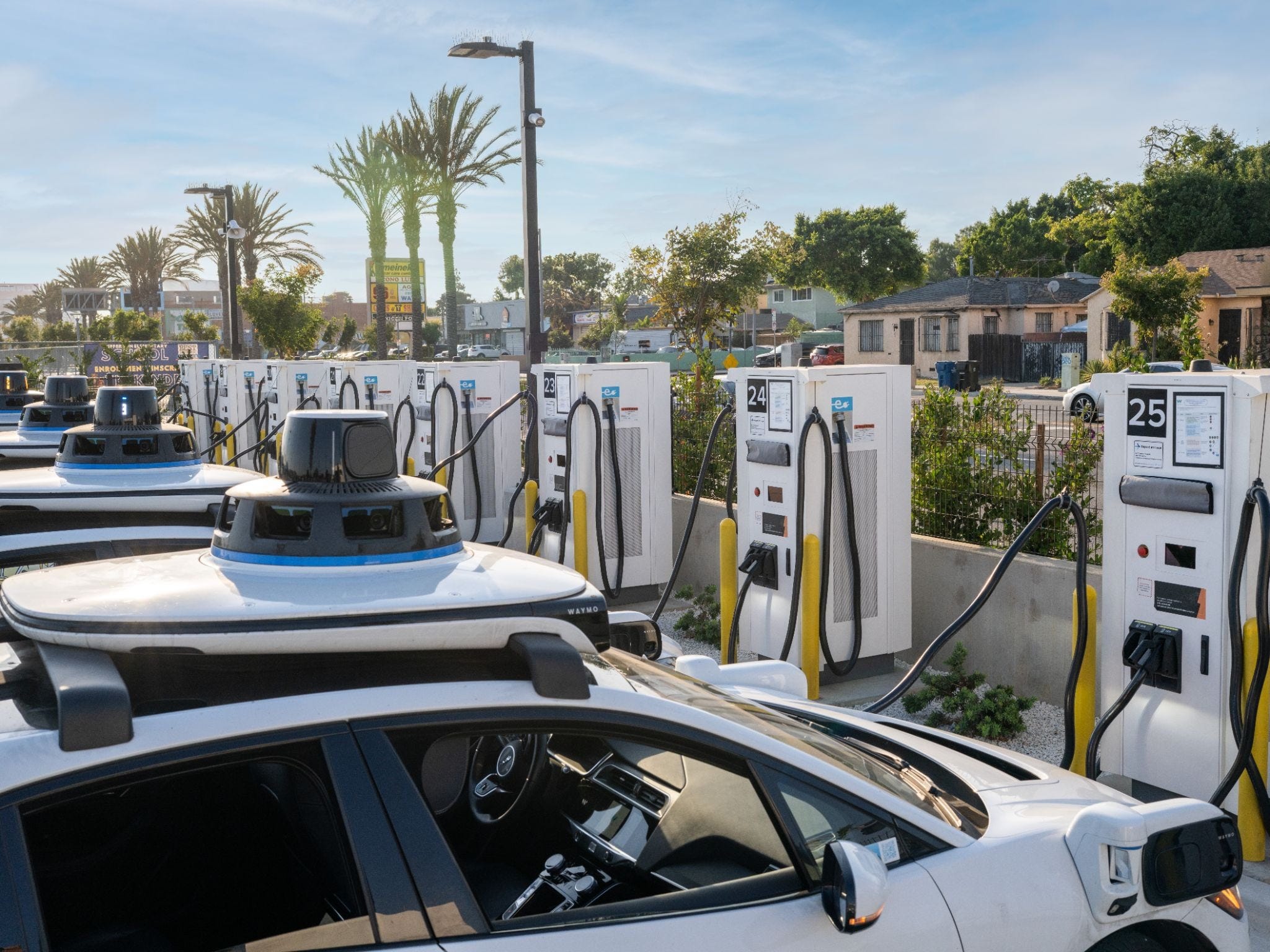
A typical passenger AV might carry a battery on the order of 100 kilowatt-hours and use around 20 kilowatt-hours per hour, mostly on inner-city rides with the occasional highway trip. A vehicle might run three to five hours between charges. When it comes into the depot, it charges, offloads its data, gets inspected, and gets cleaned if needed, so it’s ready to go straight back out for its next ride.
Beyond charging, cleaning, and maintenance, what else happens at a depot?
Autonomous vehicles capture huge amounts of data from lidar and cameras, so every site we build includes high-bandwidth data offloading, called LODA. Some AI runs directly on the vehicle’s onboard chip but model training and calibration often happen off-vehicle, some in the cloud, and potentially some at the depot itself over time. Our sites have a point of presence: a high-bandwidth fiber connection into the main network, which sends that data on to a data center.
Do you see humanoid robots taking over some of the work at depots?
Yes. Forming partnerships in site automation is very much on our product roadmap. But my take is that it won’t be humanoids right away. Between now and 2030, I think it’s more likely to be task-specific robots. But in due course, it may well shift toward humanoid labor, where a variety of tasks can be performed by a single robot.
How do your sites differ for trucks compared to robotaxis?
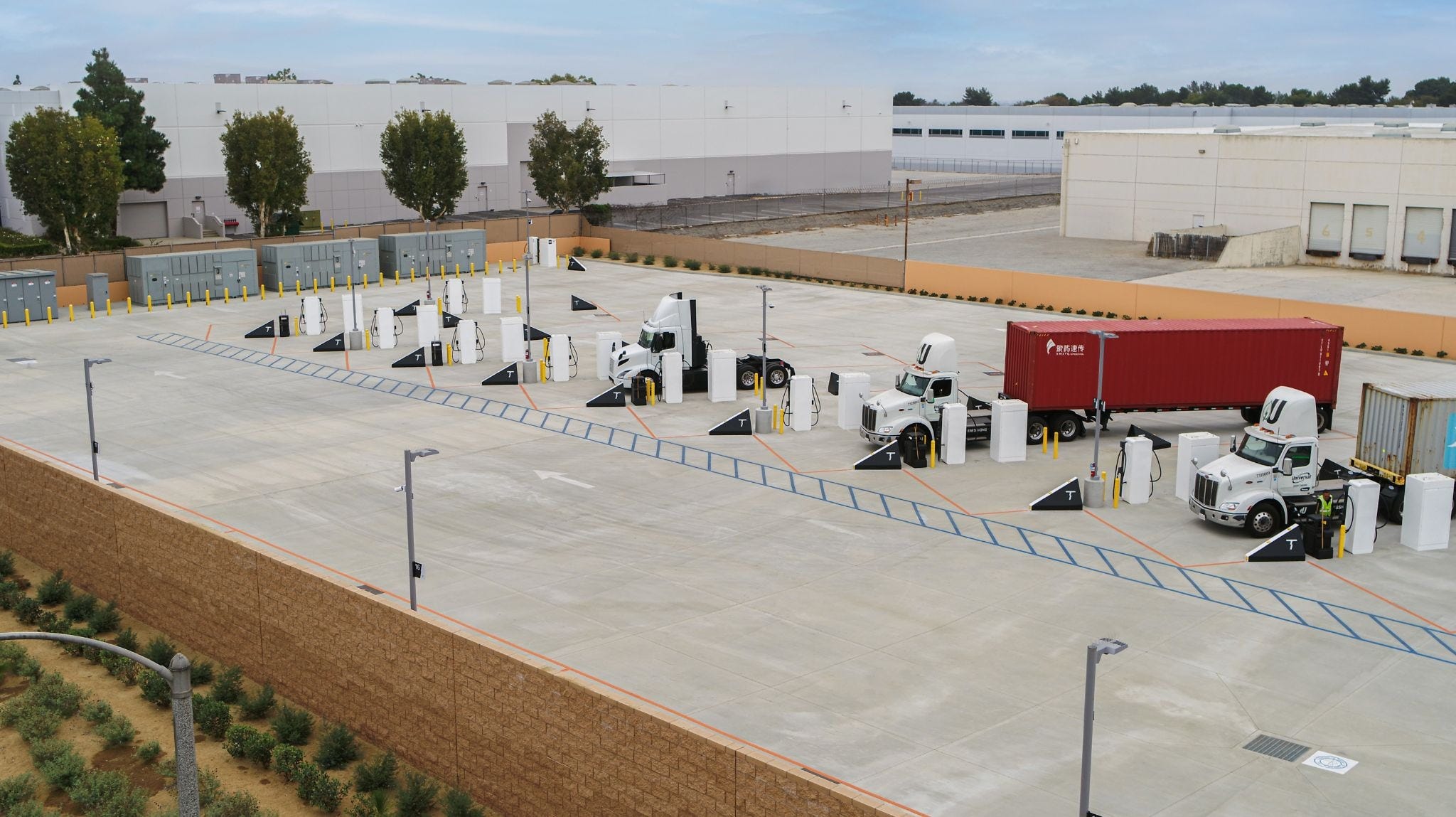
Trucks often need parking, not just charging. Heavy-duty sites tend to have multiple tenants rather than one, so we need license-plate recognition and per-session invoicing rather than a single monthly bill. Heavy-duty sites are larger, and they need megawatt charging infrastructure versus the lower power density needed for light-duty vehicles. Our trucking customers today are mostly long-haul carriers running electric, not yet autonomous trucks, plus some drayage customers moving goods from ports.
Finally, do you think this ecosystem is too big for one company to own?
Mature industries always end up with a variety of players. Think about data centers: there’s a wide variety of companies in the ecosystem, including hyperscalers, chipmakers, equipment manufacturers, and the companies that develop the physical land and power. What’s exciting is that autonomous electric rideshare is really taking off, and I believe electric heavy-duty transport will too within a few years. Rather than everyone optimizing for their own slice, it makes more sense to grow the whole pie which is exactly what’s happening now.
This interview has been edited for clarity and length.