

This week’s edition is brought to you by Virewirx. Enable full autonomy with Virewirx’s VX60, a high-performance 60 GHz wireless system for fast and scalable robotaxi data movement.
Top Stories of the Week
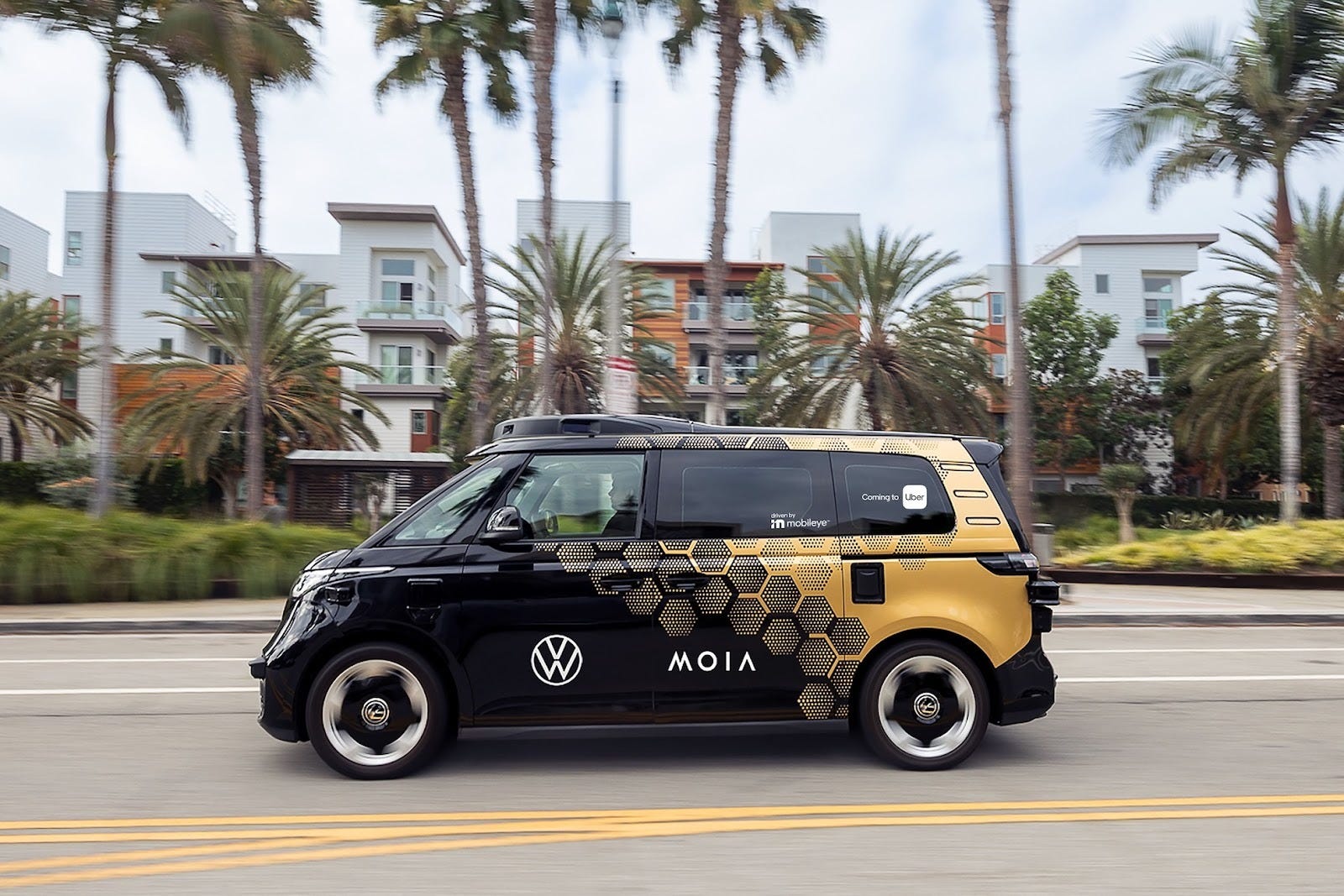
Volkswagen begins testing its self-driving microbuses in Los Angeles ahead of launch with Uber (link). Volkswagen subsidiary MOIA America and Uber have started testing autonomous versions of the Volkswagen ID. Buzz in the city ahead of a planned late 2026 launch. The test fleet is small for now, but the company says it will eventually scale to more than 100 vehicles. The service will initially include a human safety operator, with fully driverless operations expected to begin in 2027.
I think this vehicle looks pretty cool and even though they’re still early, I’m excited to see MOIA America launch here in my hometown of Los Angeles. The Volkswagen ID. Buzz starts around ~$60k in the U.S. for the consumer version, and likely much higher for a fully autonomous fleet vehicle once you factor in sensors and compute.
What’s also interesting here though is the form factor. Most robotaxi players are using (and trending towards) sedans, but the Buzz is designed for multiple passengers, which could improve unit economics if they can consistently fill seats. In a market like LA, that could be a better fit for group rides, airport trips, and longer distances.
Waymo InOut of NYC
Waymo’s Robot Car Testing Ends in NYC After Permits Expire (link).
Op-ed: With Waymo Testing Halted, We Have A Rare Chance To Get Ahead of the ‘Driverless Revolution’ (link).
Across NY, debate about the inevitability of driverless cars begins (link).
While Waymo has been at the vanguard of the driverless car push in New York, Uber – a major AV player elsewhere – has surprisingly suggested that New York should slow down to get the policy right.
There was a lot of reaction this week to Waymo being effectively kicked out of NYC, but it’s worth starting with safety.
As someone generally bullish on AVs, I’m disappointed that Waymo isn’t even being allowed to continue testing with a human safety operator behind the wheel. That feels like a pretty low-risk way to keep learning, especially in a complex environment like New York City.
That said, the safety argument is more nuanced here than in other markets. Waymo often cites data suggesting its vehicles are significantly safer than human drivers, but New York is not a typical baseline. It’s one of the only major U.S. markets where rideshare drivers are more tightly regulated with licensing, commercial insurance requirements, and drug testing. If AVs are primarily replacing professional drivers rather than the average driver, the relative safety gains may be1 smaller than the headline numbers suggest.
Longer term, cities like New York need to find a path to embrace this technology. But it’s also fair to ask how we support human drivers through that transition, especially in a market where driving is already more professionalized and regulated.
It’s also worth noting that if safety is truly the priority, there are plenty of proven tools that cities can deploy today. Things like encouraging public transit (much safer than driving a car), congestion pricing, speed cameras, and vehicle speed limiters can have a meaningful impact right now without waiting for full autonomy to arrive. It would be nice if AV executives also pushed for these changes alongside their own solution.
My biggest takeaway is that this doesn’t have to be an either-or decision. Cities can push forward on AV testing and deployment, while also investing in policies that improve safety today and protect rideshare drivers in the near term.
Other Stuff
Singapore Gets Robotaxis as Grab, WeRide Launch Driverless Cars (link, no paywall).
The company and its partner, Chinese robotaxi operator WeRide Inc., are starting a very limited autonomous-car service along two approved routes with multiple possible stops in the city-state’s Punggol neighborhood on Wednesday. An 11-vehicle fleet is designed to ferry residents to nearby amenities and transport links.
Waymo opens robotaxi service in Nashville, partners with Lyft (link). The company will begin inviting riders on a rolling basis and initially operate in a 60-square-mile geofence. A Waymo spokesperson said they currently have “dozens of vehicles” in Nashville. Riders will first hail rides through the Waymo app, with Lyft integration coming later as the service expands. Lyft will also handle fleet operations in Nashville through its Flexdrive subsidiary.
Faster Data Off the Vehicle—Faster AI on the Road
Virewirx’s VX60 High Performance Wireless System has piqued our interest—that’s why we’re partnering with them this week to share their unique millimeter wave system built to move massive AV fleet data quickly and reliably. Reach out to Brian Lee at info@virewirx.com to learn more.
DoorDash and Wing Expand Drone Delivery Partnership to Metro Atlanta (link).
Mapping Uber’s robotaxi technology advancements (link).
Baidu Silent About Failure Of 100 Robotaxis In Wuhan (link).
Waymo is offering to help cities fix their potholes (link, no paywall). I like this idea, and it reminds me of a startup I invested in, InfraHub. AVs like Waymo are constantly collecting detailed data on road conditions, lane markings, and infrastructure. That can give cities a much better, near real-time view of where maintenance is needed instead of relying on complaints or periodic checks.
It’s a good example of the “picks and shovels” side of autonomy. Even before full deployment, this data can help cities run streets more efficiently.
Municipal officials in multiple cities where Waymo operates have reached out to the robotaxi operator for help in locating potholes on their streets, assuming that Waymo kept such data. Fortunately for them, Waymo does, and it has recently decided to launch a pilot program, along with Google’s Waze, to share its pothole data with city officials.
indiGOtech Europe’s GO Bots are back in Belgium for the second time, operating on public roads and delivering groceries in a real city environment (link).
‘You can fold down the back seats in the unsupervised Tesla robotaxi. Nice for if you want to haul something like bikes, etc. And if you leave them folded down when you leave, it’ll automatically fold them back up before the next rider’ (link).
Pittsburgh startups test robotaxi parking payment system in bid to prevent lost city revenue (link).
Autonomous vehicles (AVs) still require a human to feed a meter or pay through an app — which defeats the purpose of going fully self-driving. But last week, Meter Feeder, a parking payment platform, and Mapless AI, an AV software company, successfully completed what they say is the first machine-to-machine parking transaction in the US, just in time for Waymo’s Pittsburgh deployment.
👀Spotted my first Zoox mapping car cruising through LA the other day (link).

Curbivore 2026 is just one week away, and tickets are almost sold out. We’ve got a strong lineup of autonomy partners, including Coco, Serve, Zoox, DoorDash Labs, Uber and a bunch more, and we’re excited to show you what we’ve been putting together.
Join us on April 17th in Downtown Los Angeles for a can’t miss gathering of industry experts across autonomy, mobility, and delivery shaping the future of curbside commerce. Hurry now, grab one of the last tickets and use code Autonomy25 for an extra 25% off.
‘I Really Want My Own Private Waymo’ (link).
‘Waymo is apparently sending out merch to influencers in AustinSan Antonio’ (link).

A New Asset Class (link).
Self-driving tech is already here. It’s safer, cleaner and getting better every day. But the one thing autonomous vehicles need is reliable access to power. In other words, in order for this technology to grow, it will need infrastructure to run on. Fleet operators need a network of convenient locations to charge and operate their vehicles. These sites are at the intersection of physical and digital infrastructure, they’re different from other kinds of assets in a couple of important ways.
NTSB adds latest Waymo school bus incident to growing investigation (link).
‘Elon Musk has said that Tesla’s AI self-driving will be “10x safer than human driving”. Is that good enough?’ (link).
What else we’re reading/listening to
Search Engine by PJ Vogt: The Trial of the Driverless Car (link). Interesting look at the city of Boston’s attempt to block Waymo with a nice cameo at the end by Timothy B. Lee.
Why Fully Self-Driving Cars Are Almost Impossible | The Limit (link).
Related: Check out our previous interviews with AV experts Phil Koopman and Missy Cummings who were featured in the show above.
Phil & Junko on AV Safety: Weekly News: Phil & Junko Launch Our Newsletter (link). Congrats on the launch!
Zag Talk S2E6: AVs’ Impact on Cities, Mobility & Delivery (link). Jonah and I also give a preview of what's to come at Curbivore.
DoorDash’s Autonomous Delivery Strategy with Ashu Rege (link). Our latest podcast episode features Ashu Rege, VP of DoorDash Labs at DoorDash, where he breaks down the company’s approach to autonomous delivery and how it differs from the robotaxi model. He shares the story behind DoorDash’s delivery robot DOT and explains how their Autonomous Delivery Platform (ADP) supports multiple delivery modalities. We also touch on the maturity of DoorDash’s autonomy efforts, where it makes economic sense, and how the company is balancing partnerships with in-house development as it looks to scale, among other topics.
AVs/Human behaving badly
‘Waymo drives through freshly paved road’ (link).
Self-driving car runs over Mueller Lake Park duck, raising safety concerns (link). Yes, that is a real headline.
‘waymo driving the wrong way in a whataburger drive thru’ (link).
‘When we tried to hide a fifth person in the Waymo and they discovered her mid ride’ (link).
AV behaving “goodly” :)
Zoox: Our robotaxis don’t rush, but some drivers do. When a driver decided our lane was a shortcut to a right turn, our robotaxi detected the move, yielded safely, and continued on its way (link).
Neat Jobs
Autonomous Vehicle Operations Manager: Ride Hail Operations at Moove AV (link) via Ming Maa.
Strategic Partnerships Development Manager, Utilities at Waymo (link) via Matthew Fisher.
IT Support Engineer at Wayve (link) via Emily Bragg.
Senior Software Engineer, Autonomous Vehicle Performance Metrics at Motional (link) via Gayatri K Sukumar.
Job Moves
Andrew Bridges: Senior Manager Technical Operations at DoorDash Labs (link).
Shout-outs
Big thanks to TDD reader Stefan G for referring new subscribers. If there’s someone you think would enjoy TDD, feel free to forward this email or use the referral button below, and we’ll make sure to shout out your company.
We’re now over 9,000+ subscribers! Interested in advertising with TDD? Check out our media kit here and reach out to us. Our newsletter spots are currently sold out until August so we will be raising prices soon.
Until next week :)
-Harry
This study is 20 years old but I think it makes a good case why taxi/professional drivers may be safer than the average human driver.