

Today’s post comes from John Deniston, co-founder of Repair Ally, an AI startup tackling the skilled labor shortage in automotive repair (disclosure: Harry is an investor in Repair Ally). John previously spent eight years in the autonomous vehicle industry with Cruise and Embark.
I have never worked for Waymo and do not have unique knowledge of their current operations. But after a career in the military, I spent the better part of eight years helping bring the dream of self-driving vehicles to life – both robotaxis and big-rig trucks ranging from the first trips of human-less vehicles on public roads to scaling autonomous fleets in major cities. I spent a chapter of my life on this endeavor because I wanted my children to grow up in a safer world with fewer needless road tragedies.
Recently, Waymo’s Chief Safety Officer testified before Congress. Despite coming off a remarkably successful and safe (particularly when measured against human drivers) year of scaling up self-driving vehicle operations, many of the resulting headlines have been shrunk to ‘Waymo is using offshore labor to drive their cars’ or worse.
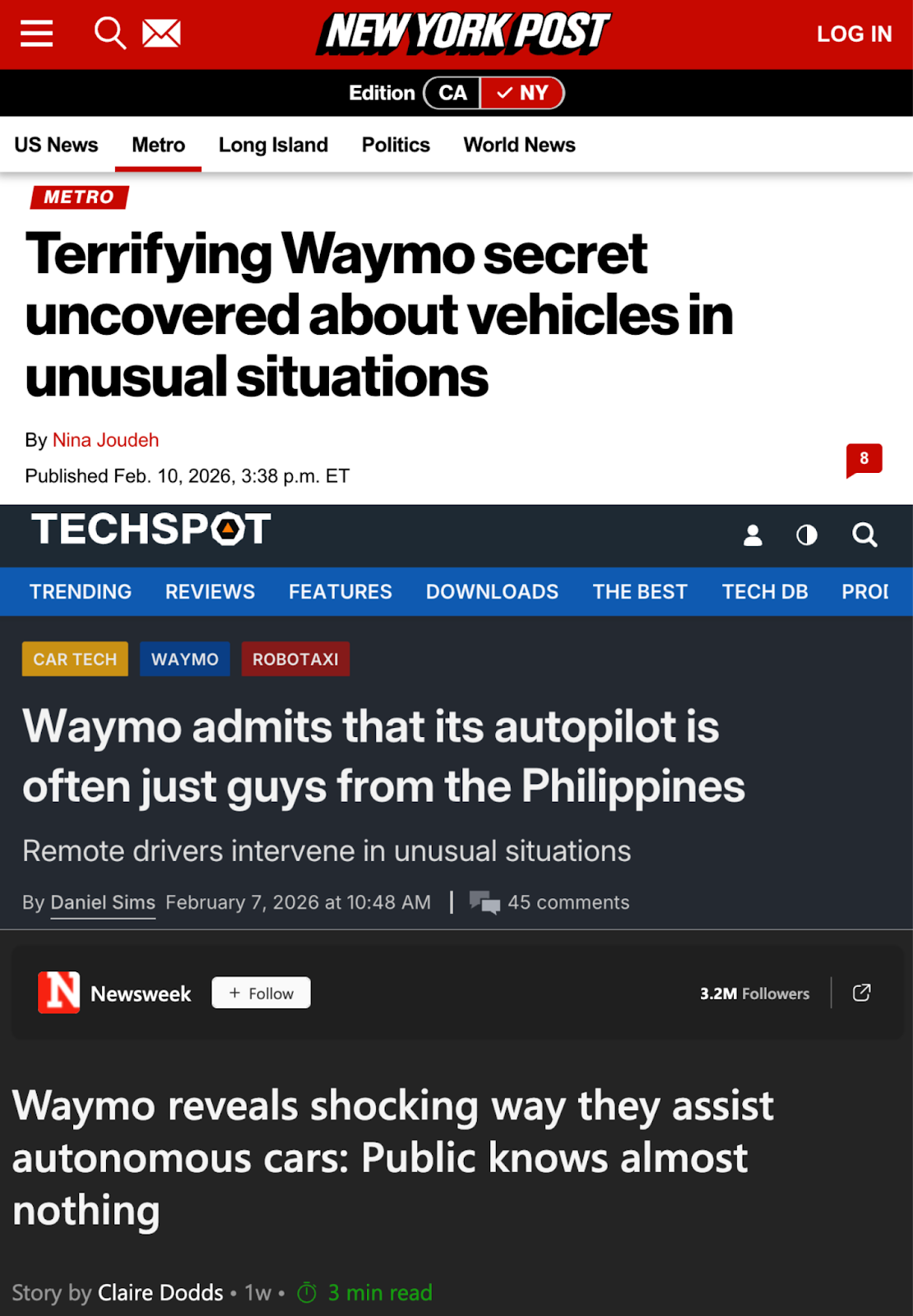
Now there may be a kernel of truth in these headlines, but it’s being lost in a haystack of misperception.
A first key premise is to understand what human remote assistants provide to self-driving vehicles – and what they don’t. These aren’t remote drivers directly freely controlling a vehicle, as you might imagine someone doing like playing a video game across the internet.
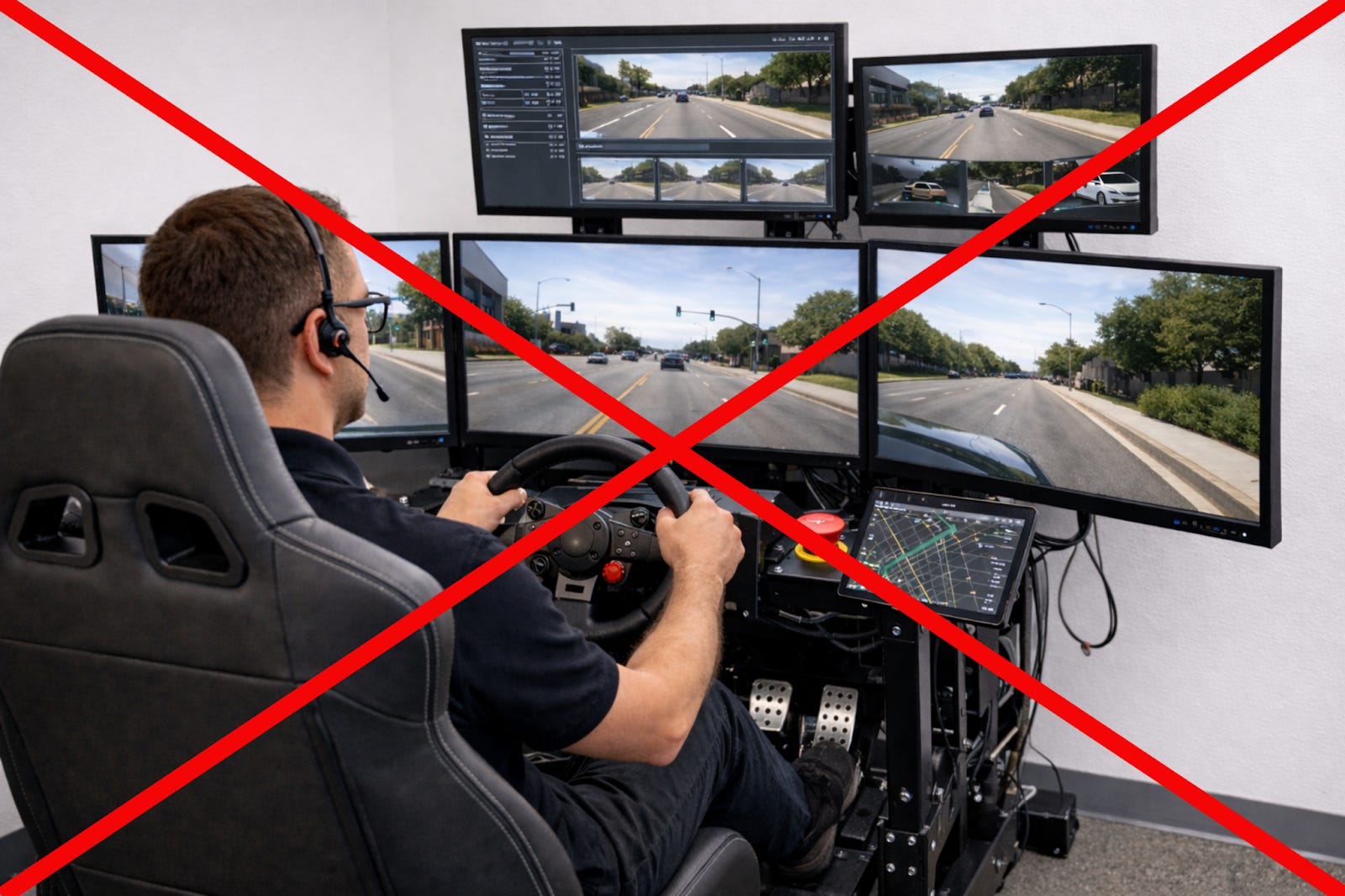
Much the opposite, these are extremely robust and thoughtfully designed systems that the vehicle can use to “phone a friend” in rare cases and receive human input to resolve ambiguities. As highlighted in Waymo’s testimony, the vehicle remains in control and is using human feedback as an additional input to its decisionmaking. And this isn’t exactly a secret either, Waymo’s blog post from May of 2024 goes into detail on how these systems work.
Instead of controlling a vehicle in a video game, the more accurate mental model is to think of the last time you were asked to answer a visual “Captcha” challenge as part of logging into a website (the pop-up that asks you which photos include fire hydrants).

Human remote assistants to self-driving vehicles are most often doing video versions of similar tasks to help resolve edge cases. Examples could include confirming whether a traffic light outage is actually that, helping double-check the hand signals of a human controlling traffic around a construction interruption, and confirming the intentions of a nearby emergency vehicle with lights and sirens activated.
The second key point to understand is that just as there is a continuum of task complexity and safety criticality, there is also likely a continuum of different skillsets and workgroups handling them. Based on my past experience working closely with these types of systems, it wouldn’t surprise me if there is a hierarchy in the division of labor at Waymo. Higher sensitivity tasks, such as dealing with emergency vehicles (including situations in which emergency responders may want to dialogue with a human able to direct the vehicle), might be handled by onshore professionals. However, less complex tasks, such as confirming and classifying road debris, could be handled by other workgroups, including those potentially offshore.
Self-driving operations are complex systems of human-machine teaming and, when done well, are extremely thoughtfully designed. This doesn’t mean the public shouldn’t be free to ask questions, they should. But they should be encouraged to ask the right questions.
My experience leads me to believe that the most useful way to grade road actors is by their outcomes: is their presence on our streets making us safer or exposing us to greater risk? I would encourage readers to review Waymo’s safety results to reach their own conclusions – but the answer I would give my own family is unequivocally yes.
We aren’t making headlines about whether Rolls Royce uses onshore or offshore labor to respond to alerts from their engines on our commercial airliners. Instead, we measure their success by passengers safely reaching their destination. We should do the same with self-driving vehicles.
- John