


Today's post comes from Naomi Yarin and Preet Anand. Naomi led the Community Safety team at Lyft, launching multiple industry-leading initiatives, including the ADT safety integration and Women+ Connect. Now she leads safety and operational product strategy at HopSkipDrive. Preet started and sold a company (to RapidSOS) to make 911 calls smarter, started Lyft’s safety technology area, and personally led Lyft’s COVID response. He is the CEO and co-founder of Snug Safety. Combined, they have spent nearly two decades building safety products spanning rideshare, elder care, and education, with a focus on the users most at risk.
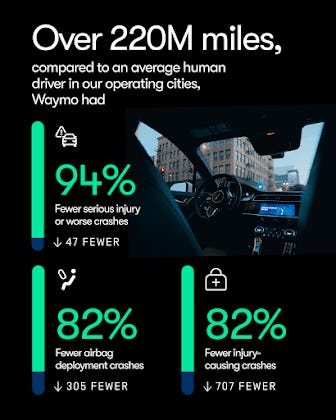
Driverless cars are winning the safety argument on the only terms the industry currently measures: they crash less than human drivers do. That’s a real achievement. Waymo, for example, claims over 90% fewer collisions than humans. That means significantly fewer people get hurt. But crashes are only part of the safety story.
We’ve each spent a decade building safety systems, including leading safety product strategy at Lyft. This work taught us that keeping a car from crashing and keeping its riders safe are two different disciplines: Road Safety and Community Safety. Road Safety is about how the car moves through the world. Community Safety is about the people a ride touches: the riders inside, and everyone the car passes on the road and the curb. Robotaxis are winning on Road Safety, but we feel that they have quietly set Community Safety aside. That’s incomplete. Rebuilding Community Safety without a driver is still an unsolved problem of the driverless era.
What Crash Rates Don’t See
The Community Safety failures are already here – you can read about them in the last year of headlines and they fall into four patterns.
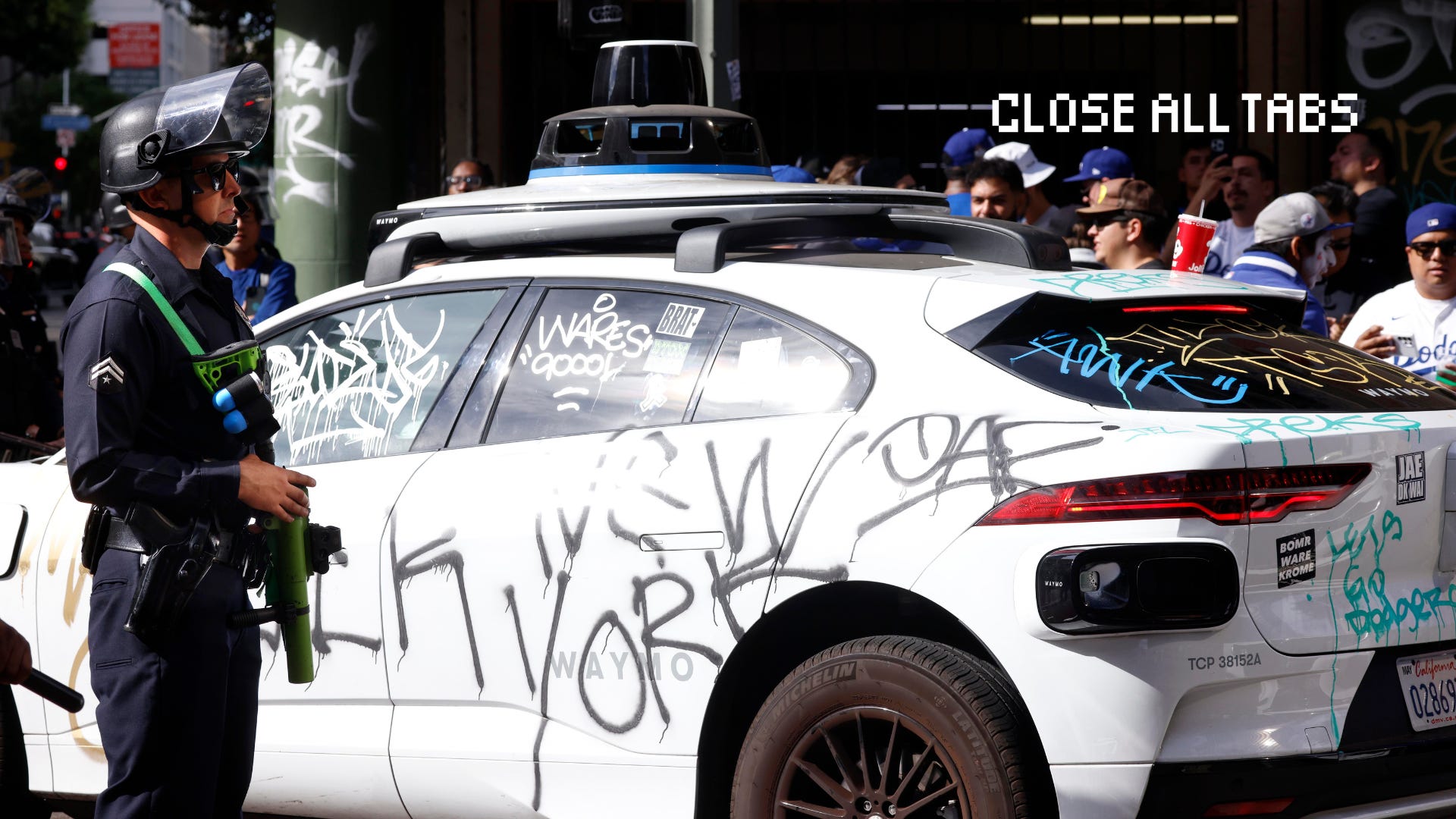
The first is the cars getting in the way of help. Robotaxis stall during power outages, when they run out of charge, or when a rider won’t get out. Each time, first responders have to come move them, pulling city resources toward a stuck car instead of a real emergency. Most of that is cost and nuisance. But the same stalling turns dangerous the moment it blocks a first responder: one Waymo held up an ambulance during a mass-shooting response until a police officer climbed in to move it. Enough incidents like that have piled up that federal regulators recently told the industry, in writing, to stop AVs from interfering with emergency responders. A car frozen in an intersection isn’t just an inconvenient delay, it’s seconds taken from someone who needs help.
The second failure is riders who can’t protect themselves. In Waymo’s first nine months in Austin, the company called 911 nearly 99 times for passengers who’d passed out or couldn’t get out of the vehicle. In another case, teens hung out of windows of a moving robotaxi while the car just kept driving. These are situations a human driver would have noticed, and done something about.
The third failure is riders with no safe way out. A robotaxi’s answer to trouble is almost always the same: stop, wait, and contact Support. Whether the problem is a flooded street, a railway crossing the AV can’t read, or a threat outside the vehicle. Either way the rider is stuck, with riders feeling like “sitting ducks.”
The fourth failure is the hardest to see, because it’s an absence. What keeps a street safe isn’t only police or cameras. It’s ordinary people looking out for one another. Eyes on the street. Every human driver was a pair of them; a robotaxi is not. We saw it with the burglar who used one as a getaway, with no driver to notice. Or when there’s no one inside the vehicle to offer help to the person walking home at 2am. As driverless cars replace the drivers who once filled these streets, the informal watch thins out, and legal scholars have warned for years that driverless vehicles can be an invitation to the very things drivers used to deter, from petty crime to trafficking.
Here’s what the industry keeps skipping. Taking the driver out removes real risks, and that’s a genuine gain we don’t discount. Many riders, women especially, say they feel safer without a stranger at the wheel.
But the driver was never only a risk. They were also a safeguard, and pulling one out takes both: the potential danger and the thing that was holding other risks in check. The risks didn’t disappear; they transferred, and no one is designing for that handoff. That was survivable when robotaxis were a novelty. At the scale they’re reaching now, it’s no longer an edge case.
Rebuild The Safeguards
The four patterns look like four problems. They’re really one, traced back to a single cause: the driver is gone, and no one is left to deter, monitor, or step in.
So you can apply the same framework to solve all of them. However, before you can build anything, you have to be able to measure it, and before you can measure it, you need a shared way to name the harms, a taxonomy that captures these vectors precisely enough to count. You can’t build for, or show improvement on, a harm that you can’t name.
Rideshare has done this before. A few years ago there was no agreed way to even describe in-ride sexual harm; definitions varied by state and stopped at what was criminal. So Uber worked with the National Sexual Violence Resource Center and the Urban Institute to build a 21-category taxonomy of misconduct, which any company could use. Robotaxi Community Safety needs the same foundation.
But naming and counting is only the ground floor. The driver did something more active, moment to moment. Rebuilding it means building evaluations for three distinct things a driver used to do without thinking:
Detect. Notice the thing going wrong: the passenger gone quiet, the argument in the back, the car getting boxed in, the siren up ahead.
Interpret. Figure out what it means. Asleep and okay, or asleep and not breathing. Rowdy, or dangerous. This is the judgment layer, and it’s the hard one.
Respond. Do the right thing, at the right level. A cabin check-in for the small stuff, a trusted contact or a live agent when it’s more, emergency services only when it’s truly an emergency. The response is a ladder, and today most cars only have the top rung.
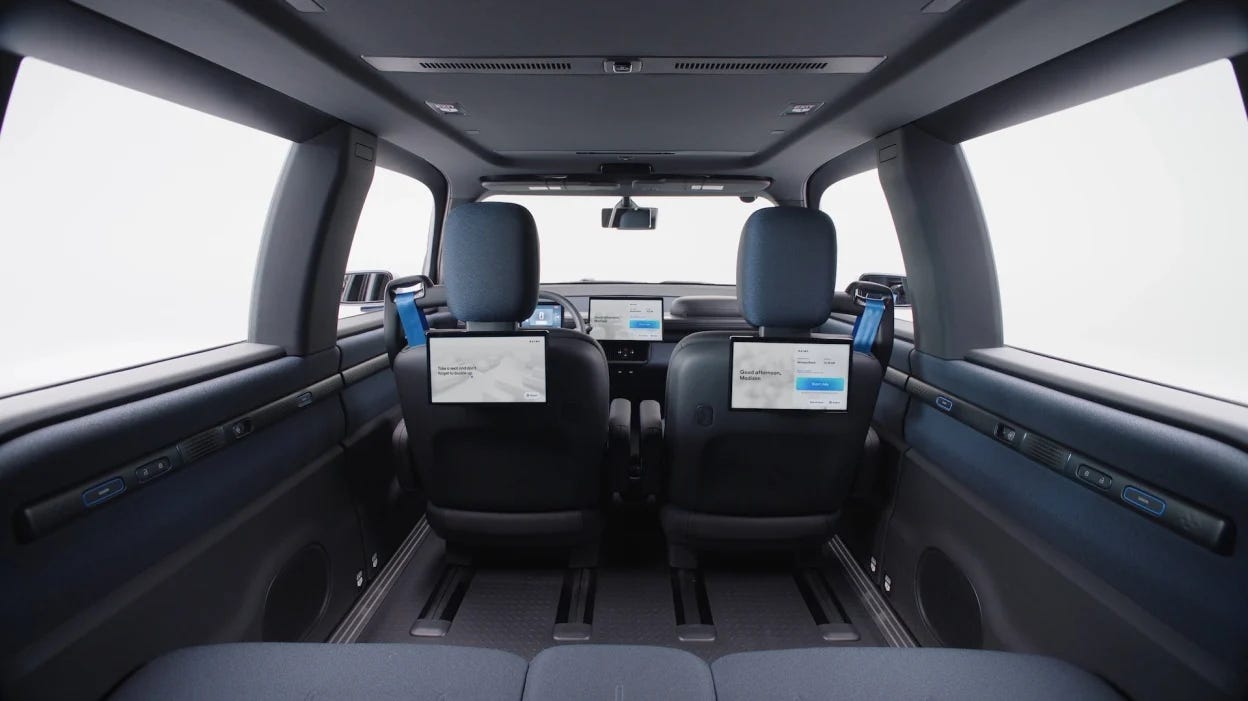
The tools to close that gap already exist, better than they did with a driver. The car sees the whole cabin, controls the vehicle, and applies every policy the same way on every ride. That consistency is the foundation Community Safety needs, and it’s the one thing a driverless fleet does that a human one never could.
You can already see it in the small stuff: riders lose over a million items in rideshares a year, and an AV can solve that issue because it notices what’s left behind and tells you before driving away. You can see an example here.
Run the four patterns through those three stages and they stop being four problems:
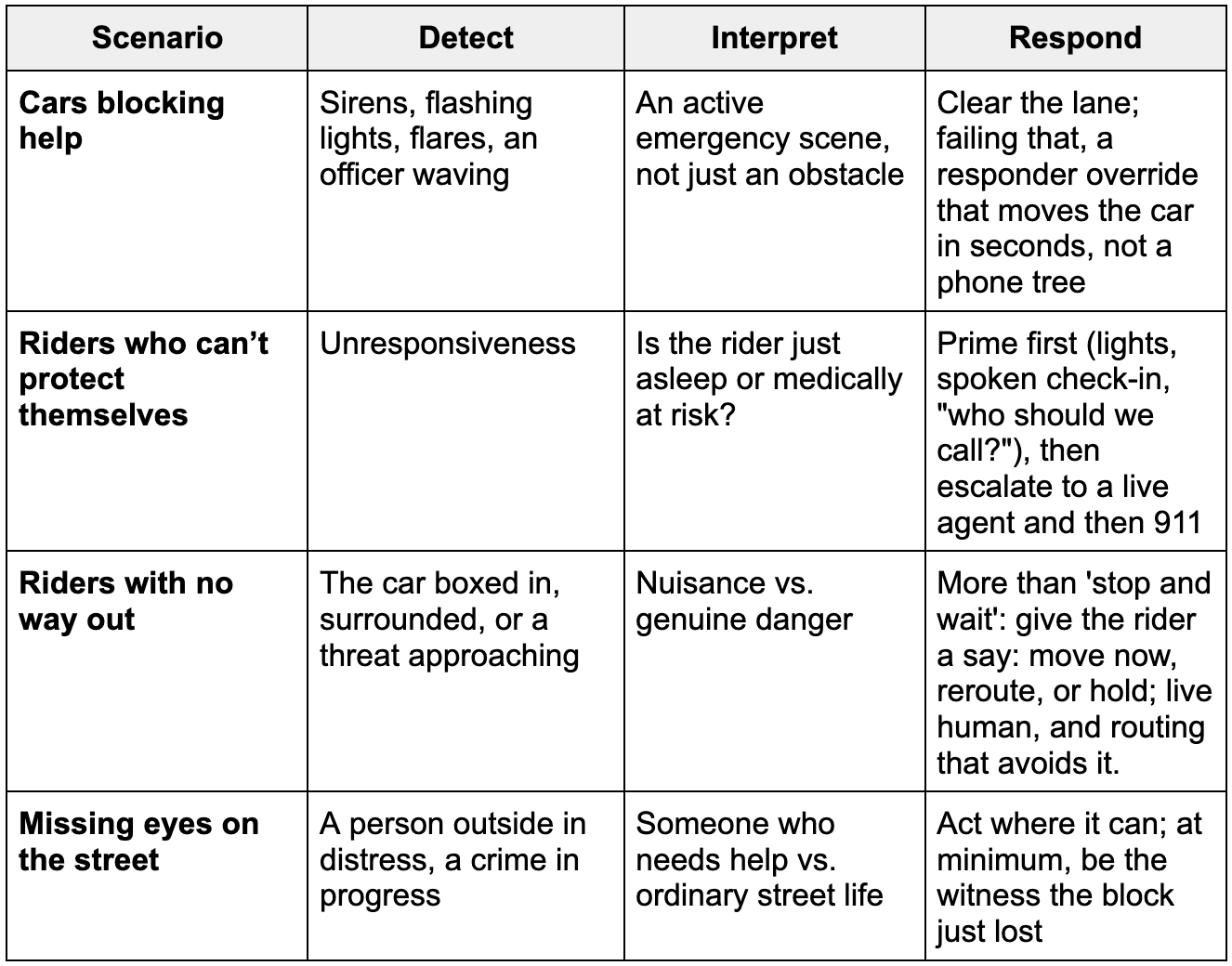
It's the discipline the industry already applies to Road Safety. Now it’s time to aspire for the passenger instead of the pavement: name the harm, define a good response at each rung, and measure how often the car gets there.
Don’t Leave It Just To The Companies: Create A Public Scorecard
And it can't be left to each company to grade itself. Whether a city gets a fleet that clears the lane or one that sits in it comes down to internal policy, not any shared standard. The companies can measure Community Safety and publish it. The cities and regulators that let them operate can require it. Road Safety became a number everyone could see. Community Safety has to become one too.
For a deeper dive on AV Safety, we are doing a dedicated series on our personal Substacks.
We start where the pressure is highest, with first responders: a concrete protocol for what an AV should have to prove, from reading a scene, to clearing a lane, to a two-week safety trial with local emergency services before it ever carries a paying rider. Follow along over on Substack.
I doubt that the companies are not measuring these things. What is true is that they don't publish them. The crash numbers are published due to a reporting requirement.
However, I think society very, very much wants them to focus on the crashes and injuries. It just thinks that these other items are also important. They are of course important, but much less important. But not knowing how frequent they are, we focus on anecdotes, not data, which is always a mistake. Even so, as these companies turn the dial between conservative no-injuries driving and good road citizenship -- and yes, there is almost always such a dial -- the message to them has been very clear about how to tune it, and you're going to get more bad road citizenship as a result. We want them to reduce injuries first, and all these other incidents second, and I can't imagine us wanting anything else -- other than wanting a magic wand that gives both of them together.
I would be shocked if the companies aren't eager to reduce these incidents, and working hard on it. That mistakes happen is not evidence against that, unless perfection was your standard. But again, we would much rather they suck at this than risk injuries, so we don't want them to prioritize it more than they reasonably can. Which I strongly suspect is already a *lot*.
Except on the 4th one, watching the streets. Here, the lack of eyes is a two-edged sword. Do we truly want these cars turning into 24/7 eyes on our streets? I am pretty sure we don't, but that means you won't get certain police state friendly features. Indeed, these companies could easily turn this power onto things like following home the vandals who have attacked their cars--as you walk anywhere in SF these days a Waymo records you several times a minute. They have declined to do that, because they know we won't like where that leads, in spite of their strong self interest in catching these folks.