

This week’s podcast is brought to you by Terawatt – purpose-built charging for autonomous vehicle fleets.
Listen to this episode on Apple Podcasts, YouTube, Spotify, and Substack. Transcripts are also available by clicking on the “transcripts” button in the top right corner of this post.
In today’s episode, I’m speaking with Shao (Pat) Tsen, Deputy Executive Director for Consumer Policy, Transportation, and Enforcement at the California Public Utilities Commission (CPUC).
We start with an overview of the CPUC and Pat’s role in it. We also break down the split between the CPUC and DMV, clarifying who regulates what, and what companies actually need to do to launch an autonomous vehicle service in California, including the different permit types required along the way.
Pat explains the CPUC’s technology-agnostic approach to AV regulation, and why Tesla’s current robotaxi deployment isn’t considered an autonomous vehicle service under CPUC jurisdiction. We then dig into what it really takes to secure an AV permit, and whether the approval process is more subjective or objective in practice.
The conversation also covers enforcement, reporting, and data collection requirements for AV companies, including new stoppage event reporting rules and what data is ultimately made public. We also get into how the CPUC approaches transparency, accountability, and the balance between innovation and public safety—and where its regulatory oversight starts to reach its limits.
Chapters
(00:00) Introduction to Shao (Pat) Tsen
(03:34) Introduction to the CPUC and their areas of regulation
(05:03) Pat’s role at the CPUC
(08:37) CPUC vs DMV: Who Regulates What?
(10:54) Steps to launching an autonomous vehicle service in California—and the different types of permits
(14:05) The CPUC’s technology-agnostic role in AV regulation
(15:05) Why Tesla’s robotaxi isn’t considered an autonomous vehicle service in California
(18:35) What it takes to get an AV permit from the CPUC
(21:35) Is the CPUC’s AV permit approval process more subjective or objective?
(24:55) Enforcement, reporting, and data collection for AV companies under the CPUC’s jurisdiction
(30:21) What autonomous vehicle companies currently have to report to the CPUC, including new stoppage event requirements
(32:45) What AV company data is made publicly available?
(37:10) How the CPUC handles new edge cases and teleoperations
(41:44) Limits of the CPUC’s oversight
(43:00) Conclusions and final thoughts
Designing Charging Hubs for Autonomous Fleets
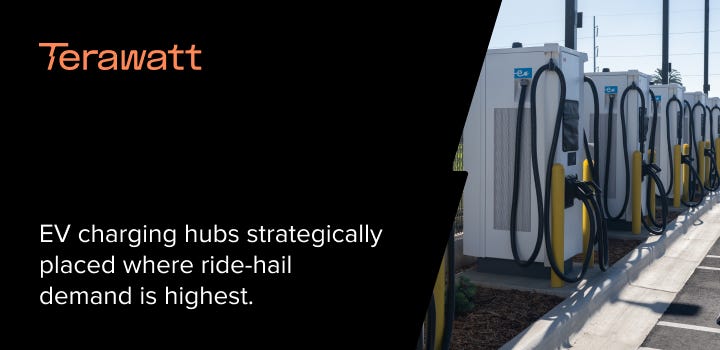
We are excited to partner with Terawatt, one of the leading providers of charging infrastructure. To learn more about Terawatt’s network of AV charging hubs and track record of 99%+ uptime, reach out to Logan Szidik at lszidik@terawattinfrastructure.com
Notes/Links:
You can find Pat on Linkedin.
Relevant links for the CPUC’s AV program
Decision and resolution numbers which set rules or approved new authority to operate
D.18-05-043 aka the “Pilot Decision,” created the AV Pilot program and set requirements for participants
D.20-11-046 as modified by D.21-05-017 aka the “Deployment Decision,” created AV Deployment program and set the requirements for participants
D.24-11-002 aka the AV Data Decision, expanded AV data reporting requirements including incident reporting and “stoppage event” reporting
R.-25-08-013 (OIR opened August 2025) – the new AV rulemaking to update policies/processes/rules for AV passenger transportation
General Order (GO) 157-E: TCP Regulations
Resolutions:
Resolution TL-19144 (2023) – approved Waymo for Phase I Driverless AV Passenger Service Deployment
Resolution TL-19145 (2023) – approved Cruise (Phase 1 driverless deployment authorization)
AV Program Quarterly Reporting (link).
To file a complaint, you can fill out this form Passenger complaint form and email to consumer-affairs@cpuc.ca.gov
To submit a public comment in the ongoing AV rulemaking, as mentioned at the 41:25 timestamp, you can access the public comment tab here R2508013
-Harry


