

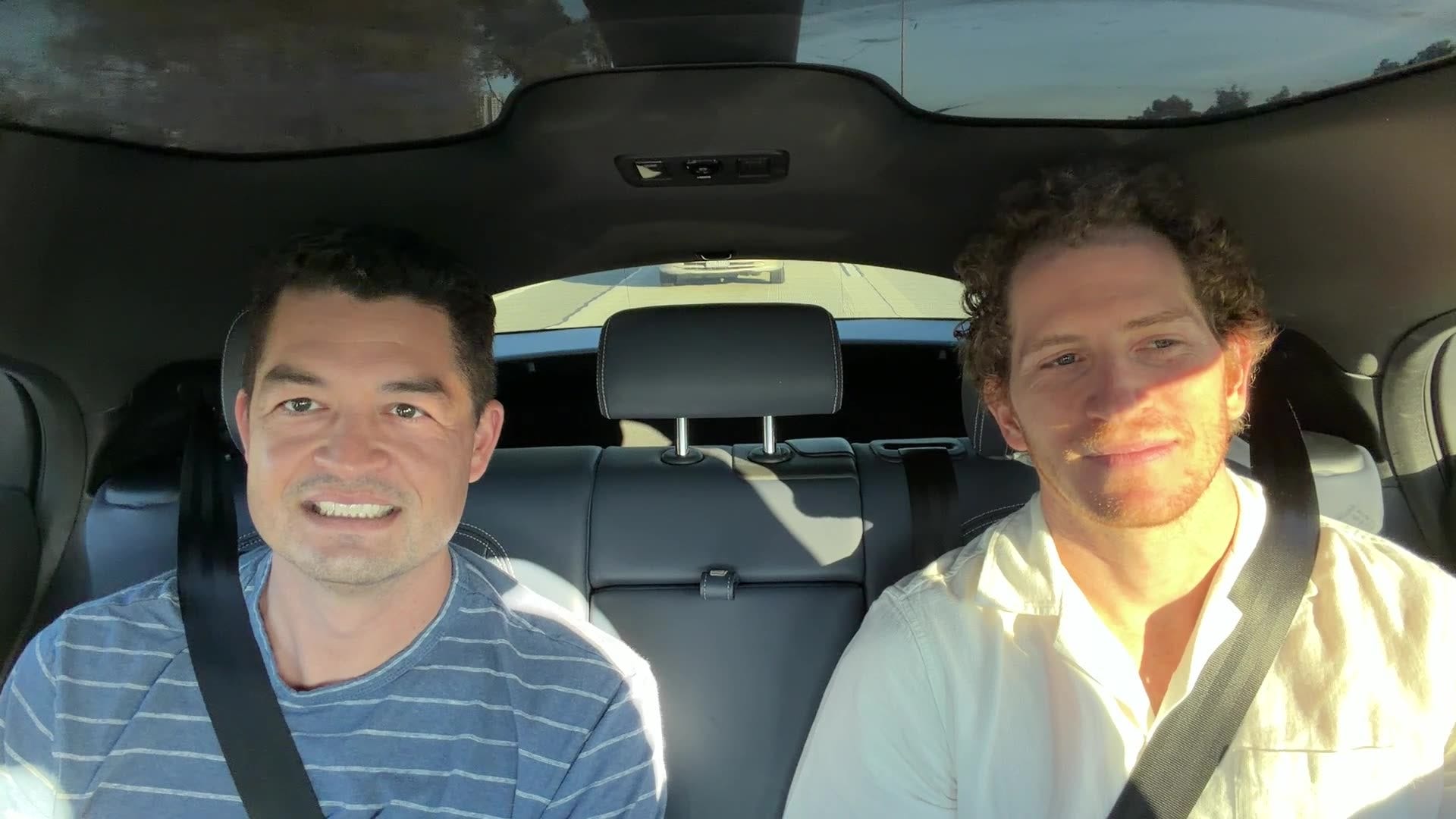
Waymo recently launched freeway rides for a small group of riders in San Francisco, Los Angeles, and Phoenix. I immediately signed up for the waitlist and got access a few weeks later1.
So naturally, I called up my Curbivore co-founder Jonah Bliss so we could experience it together and see what all the fuss was about.
The freeway milestone matters a lot. For years, freeway driving has been one of the clearest technical and regulatory hurdles for robotaxi companies. An overwhelming majority of Waymo trips to date have been limited to surface streets, where speeds are lower and the operating environment is more constrained.
Freeways are a completely different challenge. Higher speeds, tighter margins for error, complex merges, and human drivers making unpredictable decisions at 65 to 80 miles per hour or more all raise the bar significantly. Because of that, even a short freeway segment carries outsized significance.
This capability has been a long time coming, and it should meaningfully improve the rider experience. Freeway access enables longer trips and eliminates the slow, winding detours that came from avoiding highways altogether. So I was excited to finally try it out.
You can check out my first ride video below:
Calling the Waymo
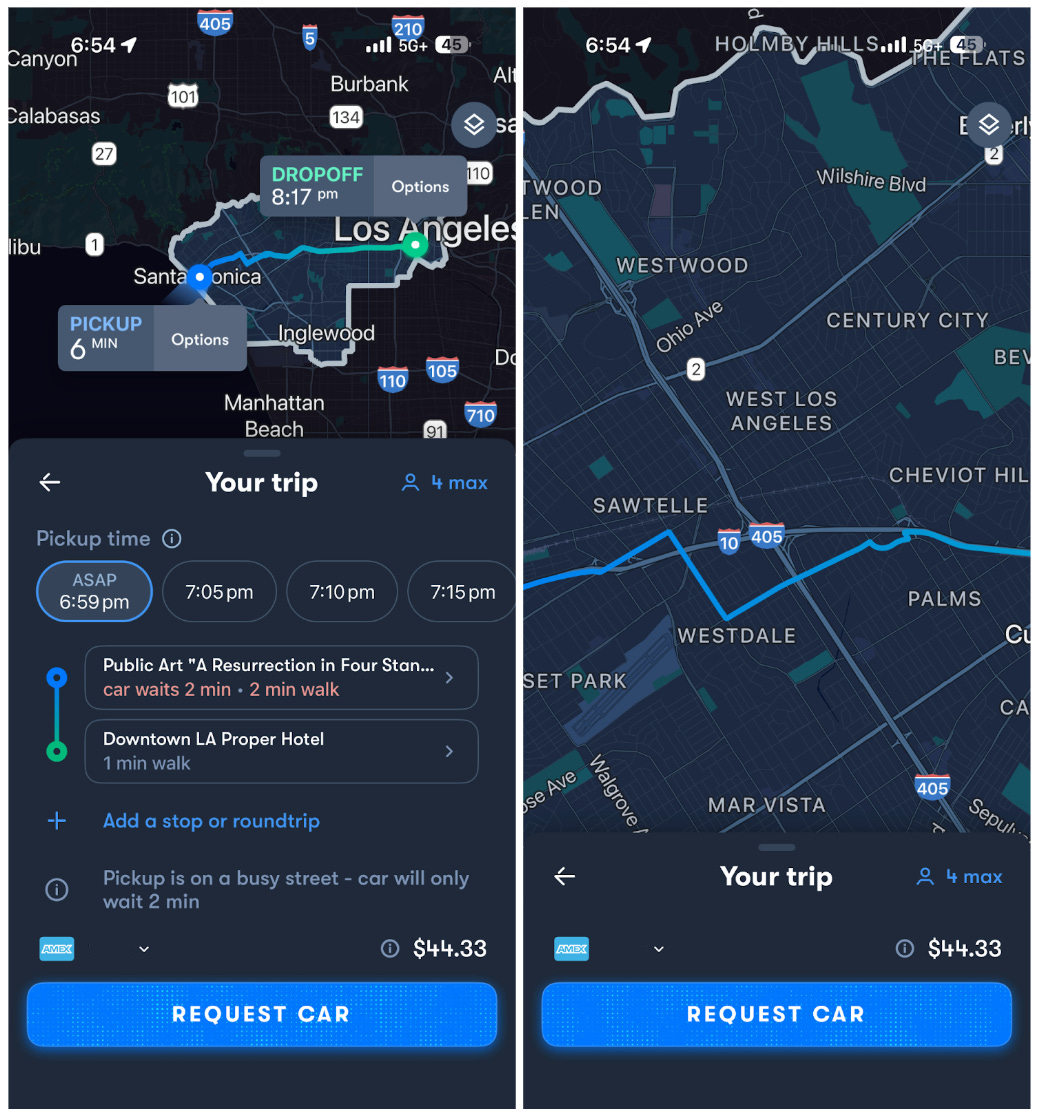
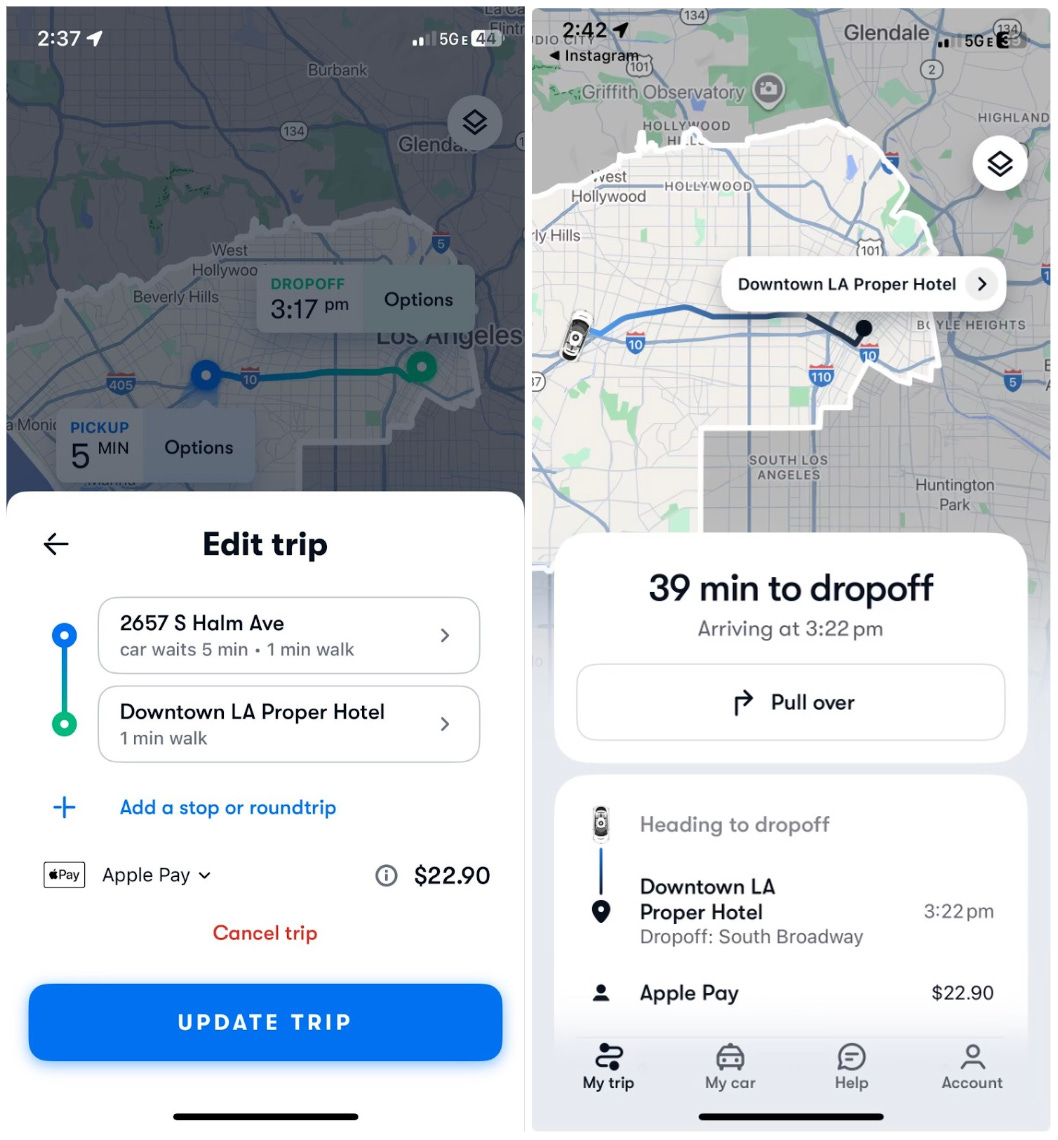
This ended up being the hardest part of the experience. I initially planned a trip from Santa Monica to Downtown, heading east on the 10 freeway. But Waymo’s route would have us get on the freeway, exit before the 405 interchange, and then re-enter shortly after. I tried routing the trip in the opposite direction from east to west and saw the same behavior. Not a huge deal, but not ideal either. Waymo clearly does not like that stretch of freeway yet.
My best guess is that the heavy merging around the 405 and 10 interchange is still a challenge. That area is chaotic even for human drivers, so it makes sense that it might be one of the last segments to be fully unlocked. Still, it does hurt the experience. In its current form, I would probably call an Uber for this trip instead since it will save me a lot of time.
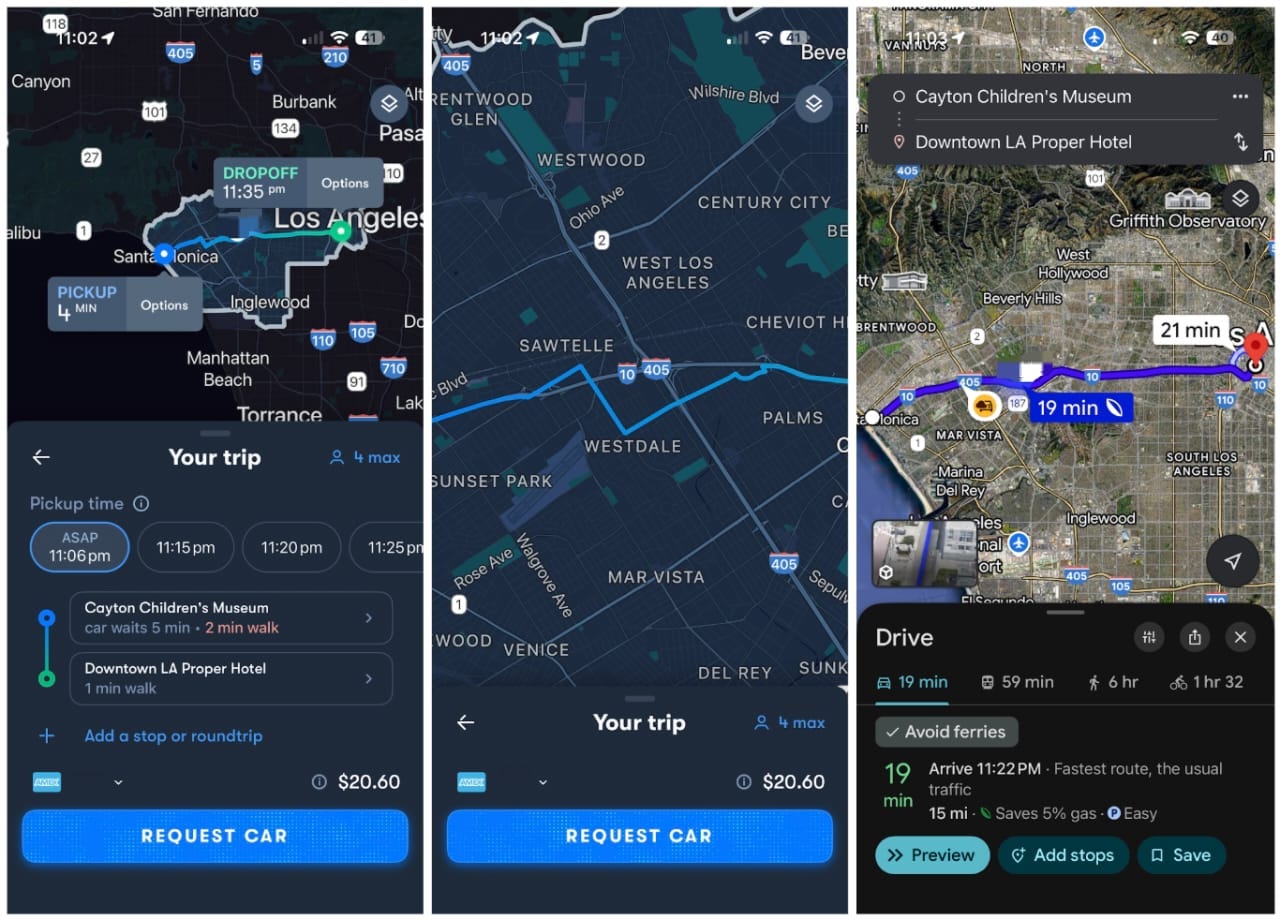
Here’s another trip I mapped a few hours later, once traffic had died down, with a Google Maps route included for reference. Waymo’s estimated travel time for this trip was 29 minutes, while staying on the freeway the entire time would have taken about 19 minutes. So even without traffic, the detour may cost up to 10 minutes.
Another Quirk
Since I did not want to get on and off the freeway, I decided to head east toward Downtown instead. Around 1 pm, I mapped out a trip from my house in Mid City to Downtown, and the freeway routing looked fine, so we were ready to go. But by the time we actually left around 2 pm, as traffic picked up, Waymo would no longer take the freeway at all. My guess is that conditions crossed some internal threshold where traffic was simply too heavy. As a result, we had to head east on surface streets in the Waymo and then come back west on the freeway, where there was little to no traffic.
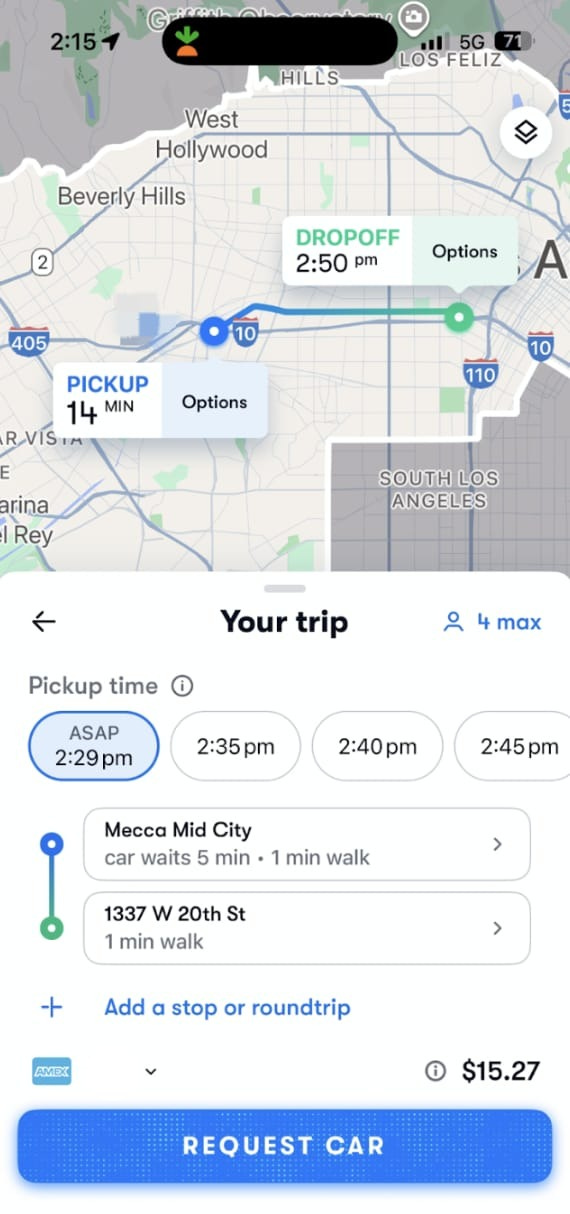
Once we were in the Waymo headed east, Jonah tried booking from his phone and got matched with a different car that said it would actually take the freeway! So we ended our trip, switched cars, and went with his instead. And of course, as soon as we got in to Jonah’s Waymo, it rerouted and sent us back onto surface streets 😆.
The Ride Experience
After about an hour of shenanigans, we finally made it to Downtown, and traffic was clear heading back west and our Waymo was headed onto the freeway!
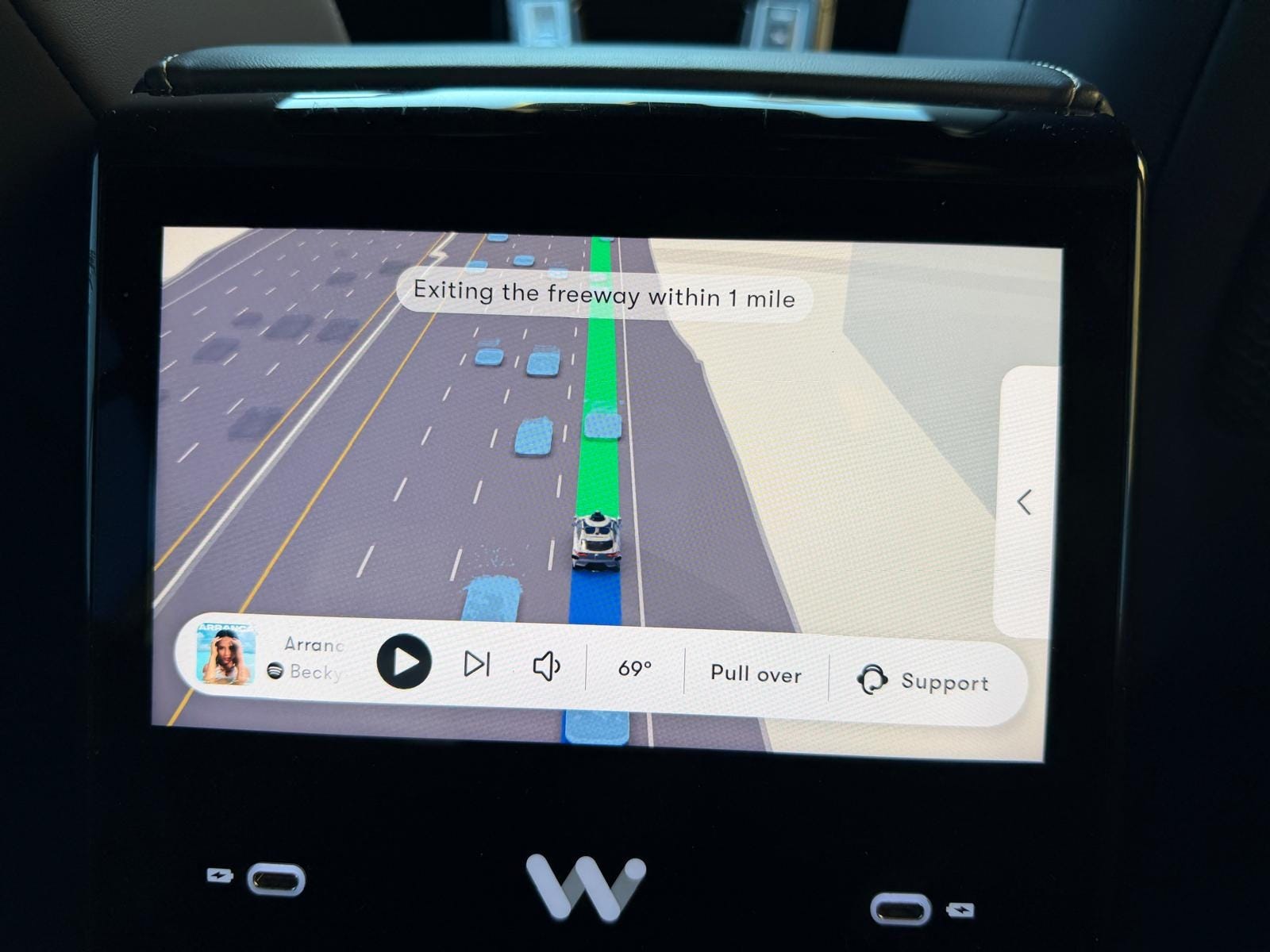
The transition onto the freeway was uneventful, which is probably the point. The merge was smooth, lane changes were deliberate, and the car maintained speed confidently without any noticeable hesitation. If you were not paying attention, you could easily miss the fact that this is still a relatively new capability for the system.
Getting off the freeway was just as smooth. There was a prompt on the center console indicating when we entered and exited the freeway. This was a short first ride, but I did notice that the Waymo never went above 65 miles per hour and stayed toward the right side of the freeway. I also did not see any other Waymos on the freeway during the trip. On surface streets, you usually see them everywhere.
Overall Impressions
Overall, my first freeway ride was uneventful, but that is sort of the point. It is impressive how quickly you settle in after your first Waymo ride (freeway or not).
Clearly, it would be nice to have more control over routing, such as choosing freeways versus surface streets or forcing a specific route, with pricing adjusted accordingly. You can obviously do this with human drivers, even if they complain sometimes.
And even though I plan to take more freeway trips in the future to further test Waymo’s freeway driving capabilities, this trip was quite impressive for a first ride. Its uneventfulness felt like a perk rather than a flaw.
Freeway trips bring a lot of advantages for both Waymo and riders. Without freeway access, robotaxi trips can be longer, less time competitive, and less appealing for airport runs or longer cross city routes.
That said, there are clearly still some kinks to work out. The rollout is early, and it will be interesting to see how the system improves as more riders gain access and Waymo gathers feedback at scale.
Riders, have you taken a freeway ride yet? What was your experience — and if you haven’t, would you try one?
- Harry
I took my first Waymo freeway ride in the Phoenix area on December 14, 2025 -- going from PHX to my residence in the North Scottsdale community of McDowell Mountain Ranch. It was a somewhat odd and indirect mix of surface streets and freeways. It navigated a somewhat complicated movement from the westbound AZ-202 to the northbound AZ-51. There were several ramp merges and a mix of drivers who go slow and those who are going, or trying to go, faster. Waymo handled that transition flawlessly.
When it exited from northbound AZ-51 to eastbound Shea Boulevard, I noticed that it approached the intersection without slowing as much as you might expect for the gradual right-hand turn. I then realized that, of course, Waymo can see in all directions simultaneously. So, it was perfectly safe to make a speedy turn because there was no conflicting traffic on the surface street.