

In Austin and Atlanta, the only way to hail a Waymo is through the Uber app, under the product aptly named “Waymo on Uber.” That partnership was a big win for Uber since Waymo was, and still is, the only company in the U.S. offering paid, fully driverless rides.
But Waymo isn’t Uber’s only AV partner. Uber has signed a long list of autonomous vehicle partners over the past few years:
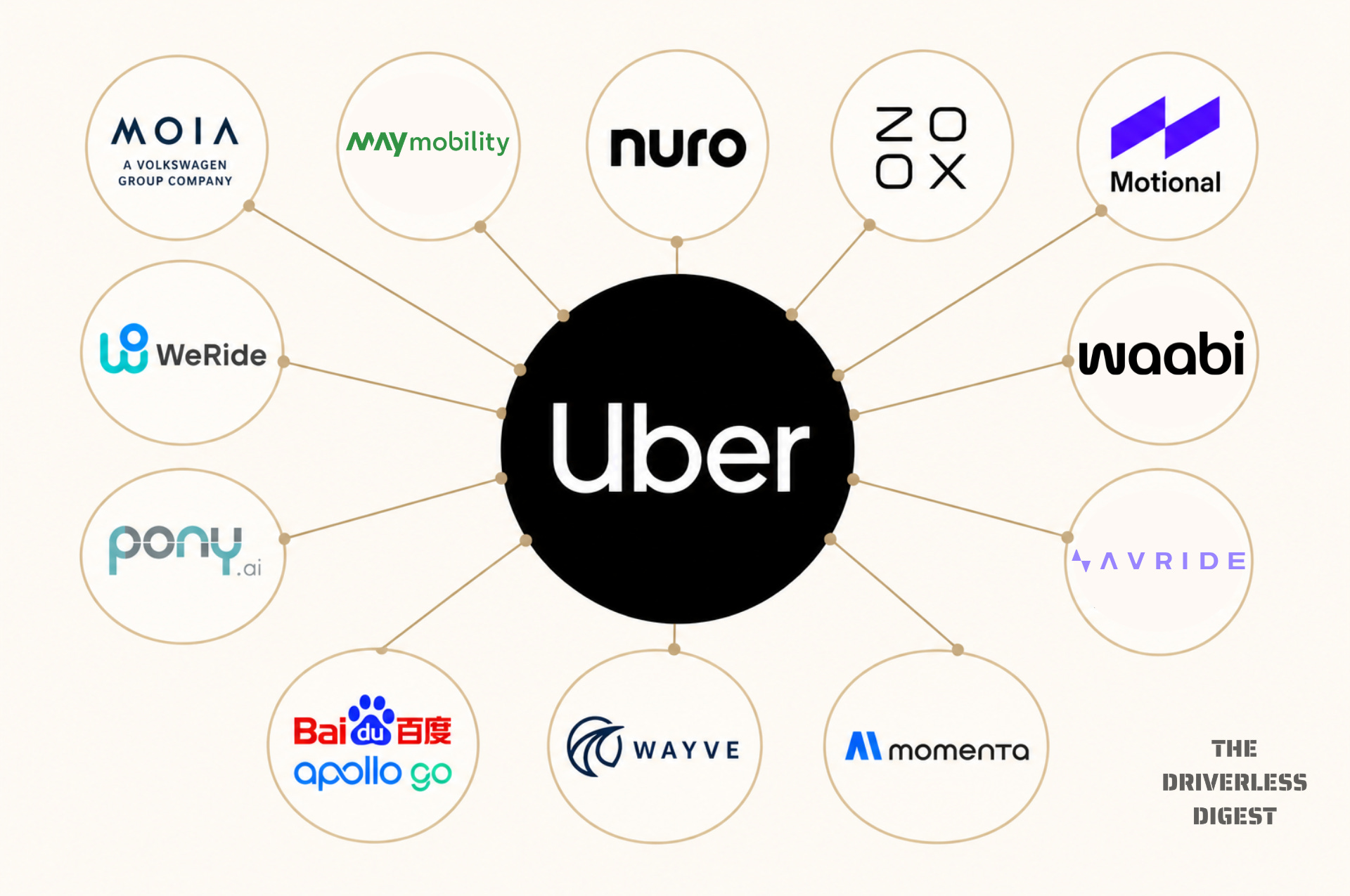
Waymo is however, the only Uber AV partner generating meaningful, real-world rides at scale today. So when it comes to Uber’s short term AV strategy, it’s all about Waymo.
In other words, this partnership isn’t just important for Uber, it’s critical, and yet we are starting to see some real signs of strain.
Waymo has announced a wave of new market expansions without Uber, while also partnering with Uber’s biggest U.S. rival, Lyft, in Nashville. That’s not just diversification, it’s a signal that Waymo isn’t building around Uber as an exclusive demand partner.
You can see other signals as well. A recent “AV behaving badly” clip stood out less for the incident itself but more because it was shared by Uber’s CTO on X. The clip shows a Waymo overtaking a bus once the light changes from red to green, and the Uber executive inexplicably driving towards the Waymo and honking, while also filming with his phone (nice Rivian though!).

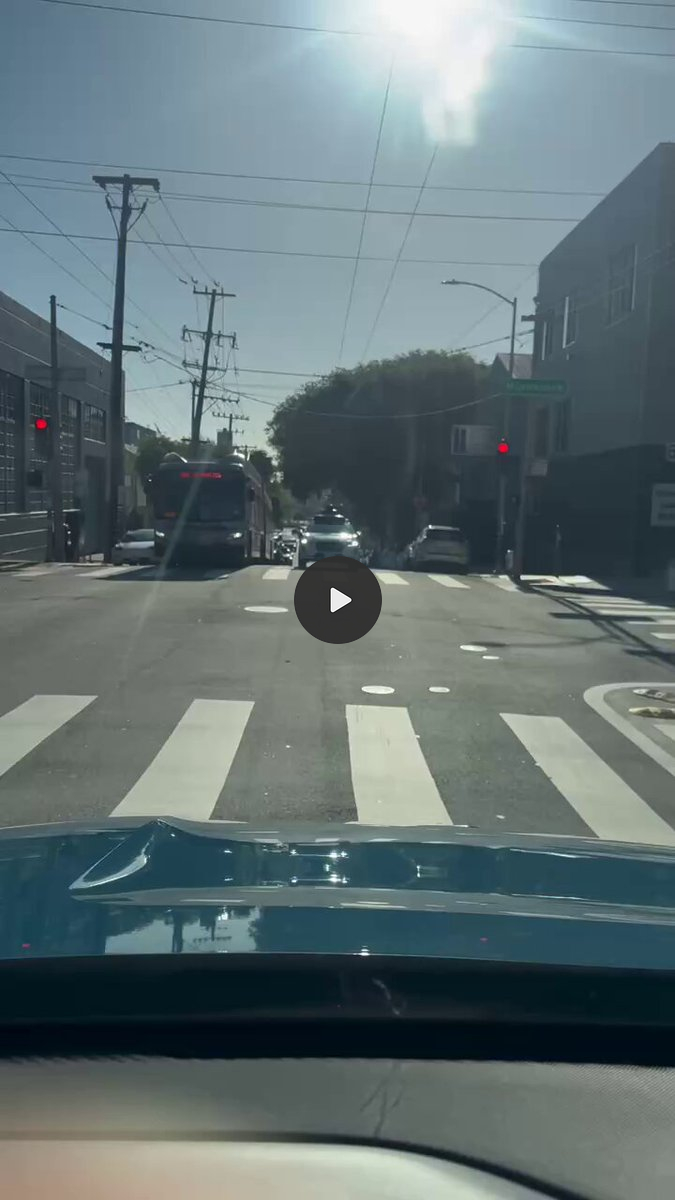
The Uber executive’s behavior was strange here but this clip stands out to me for a different reason. It is hard to recall a time in the past 10 years of covering this industry, where a C-suite executive publicly amplified criticism of a key partner like this. Typically, executives are highly media trained and tend to support partners publicly, especially one as important to Uber as Waymo. This suggests there may be some underlying tension.
Zoom out, and the issue is straightforward. Uber and Waymo are partners in a couple of markets, but in most places, they are direct competitors, and Waymo is increasingly taking share from both Uber and Lyft where it operates.
That tension is starting to show up in policy too. In New York City, where autonomous vehicle deployment is still restricted, Waymo has been pushing forward, while Uber has taken a more cautious stance, suggesting the city should slow down to get the policy right. Uber says this is about worker protections, accessibility, and political feasibility, but the competitive dynamics are hard to ignore.
You’re seeing a similar situation take place internationally. In London, one of the world’s most important ridehail markets, Uber is already partnered with Wayve, a homegrown autonomy player it’s backing heavily, and Baidu’s Apollo Go, a proven global operator, for upcoming robotaxi deployments. That means it won’t be reliant on Waymo for supply. At the same time, Waymo is entering London independently through its own app, setting up a market where Uber and Waymo are competitors from day one, not partners.
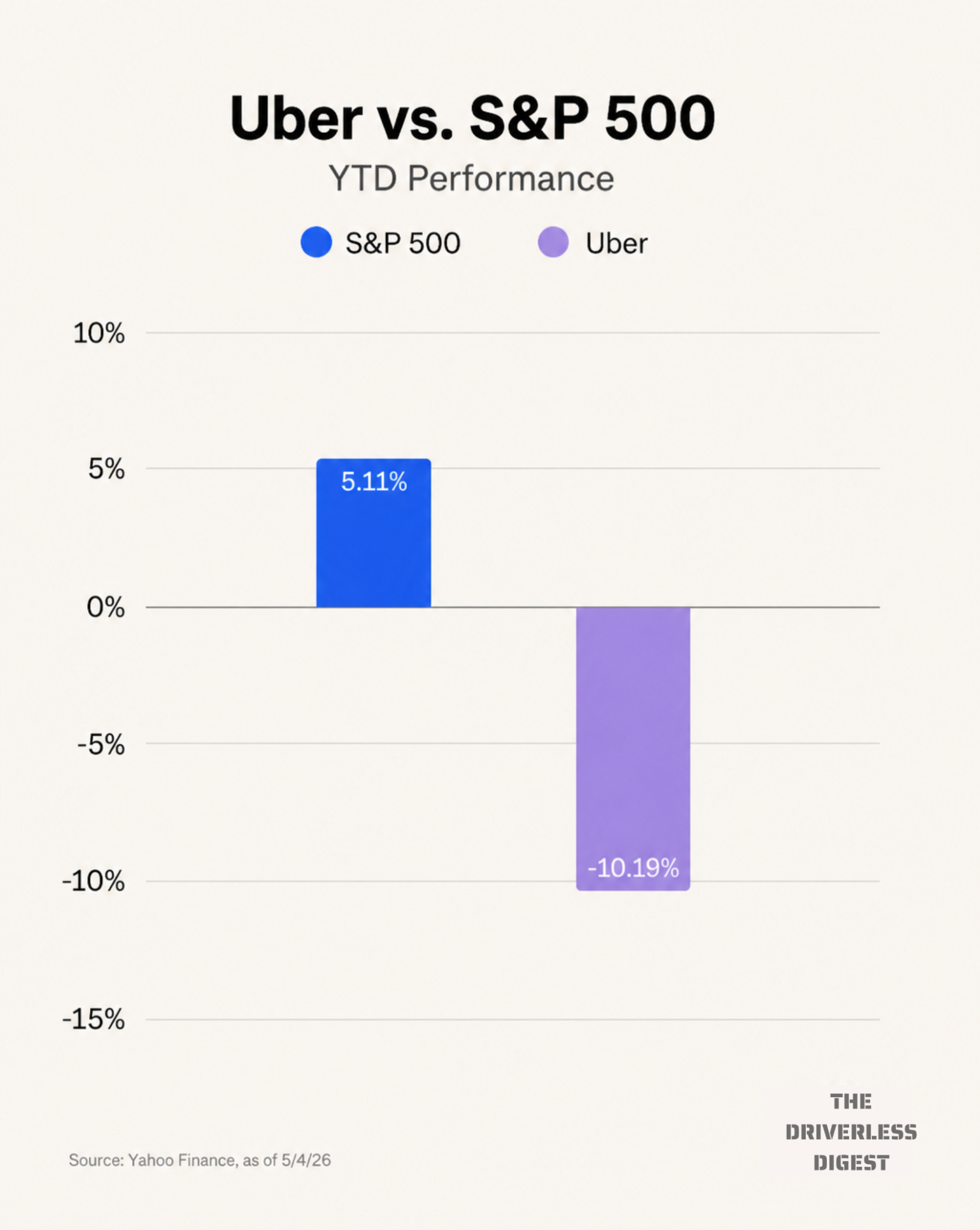
Put together, the incentives between Uber and Waymo are no longer fully aligned. Uber needs Waymo today to show it has a credible autonomous future, while Waymo is increasingly proving it can scale demand on its own or through multiple partners. Investors don’t seem to be giving Uber much credit for its broader AV strategy though.
Uber and Waymo’s Future
That said, there is still a role for aggregators. Uber and Lyft provide distribution, liquidity, and a familiar interface for riders, which matters, especially in newer or supply-constrained markets. But the current “Waymo on Uber” model is unlikely to be the end state.
We know from Obi’s data that Waymo riders are often willing to pay more and wait longer for a driverless ride, which makes them a high-value segment. Long term, it likely makes more sense for Waymo to capture that demand directly through its own app, while using platforms like Uber and Lyft more selectively to backfill demand.
That’s closer to the hybrid model we’re seeing with Lyft in Nashville, where customers can book a Waymo directly through the Waymo app, and eventually through Lyft under certain conditions, similar to the “Waymo on Uber” product.
But if that’s where things are heading, Waymo doesn’t need to pick a single partner. It can work with both Uber and Lyft (and maybe even new upstarts like Empower), even in the same markets, and optimize across them. We tell human drivers all the time to sign up for both platforms to maximize earnings and prioritize the best trips. Waymo could take a similar approach.
If Waymo wanted to take it a step further, it could even aggregate Uber and Lyft drivers onto its own platform. That would run counter to its current strategy, but it would shift the balance of power and give Waymo a way to solve for peak demand on its own without having to rely on Uber and Lyft to do the heavy lifting.
In summary, the partnership between Uber and Waymo isn’t over, but it’s starting to look less like a long-term strategic alliance and more like a transactional relationship, which is a much weaker foundation over time.
Readers, what do you think of Uber’s CTO’s tweet? Is he trying to send a message to Waymo, or is this just normal feedback on a partner’s product?
- Harry
The incentives between Waymo and Uber have never been fully aligned, dating back to when Uber ATG was directly competing with Waymo on robotaxi development. Uber sold off ATG, betting on autonomy becoming commoditized and a competitive marketplace emerging on a timescale commensurate with ATG's own development horizon. (And probably also betting that Uber's new public market shareholders would not have the patience to see it through at the kind of burn rate ATG was enduring.)
It seems like they miscalculated, or at least, were unlucky, because since then, Waymo has dominated in the US--attributable in no small part to the shocking collapse of Cruise.
I view Waymo and Uber as now being in the midst of a series of empirical tests to see who actually has the market power: Uber, the aggregator who owns the overwhelming majority of the customer relationship and can provide liquidity as a ridehail "market maker", or Waymo, who has an objectively superior product. Time will tell, and the dynamics will get exponentially more complex when a true second AV ridehail player enters the market.
Anyway--great writeup, thanks!
Disclosure: I'm long Waymo.
Nice synopsis. Austin & Atlanta were cities 4&5. It seems obvious now that Waymo's plan to quintuple cities in 2026 from 5 to 25 was already baked in including a car strategy. They largely starved cars in Austin until recently and Atlanta still seems ignored. The attention given to the 2026 cities with service expansions seem to foretell these Uber partnered cities feel doomed. This is a pre-positioned car allocation to an amazing number of cities. Waymo actually gets to 20-25 cities this year without much mention of Uber this feels like a nail in the coffin. I figure Austin's utility for Waymo is to be juxtaposed to Tesla and only a handful of cars operating in a small Hamlet of South Austin from 10a-3p when not raining after 10+ months of effort in the HQ city!!! It makes the lack of progress of a 'competitor' embarrassing I think. For me, I ignore the hype of most players and ONLY CARE about rider only miles available to everyone. Tesla only released an Android application in the last week. This is a worldwide market and Android is ~4B users vs iOS ~1.5B worldwide.