

Top Stories of the Week
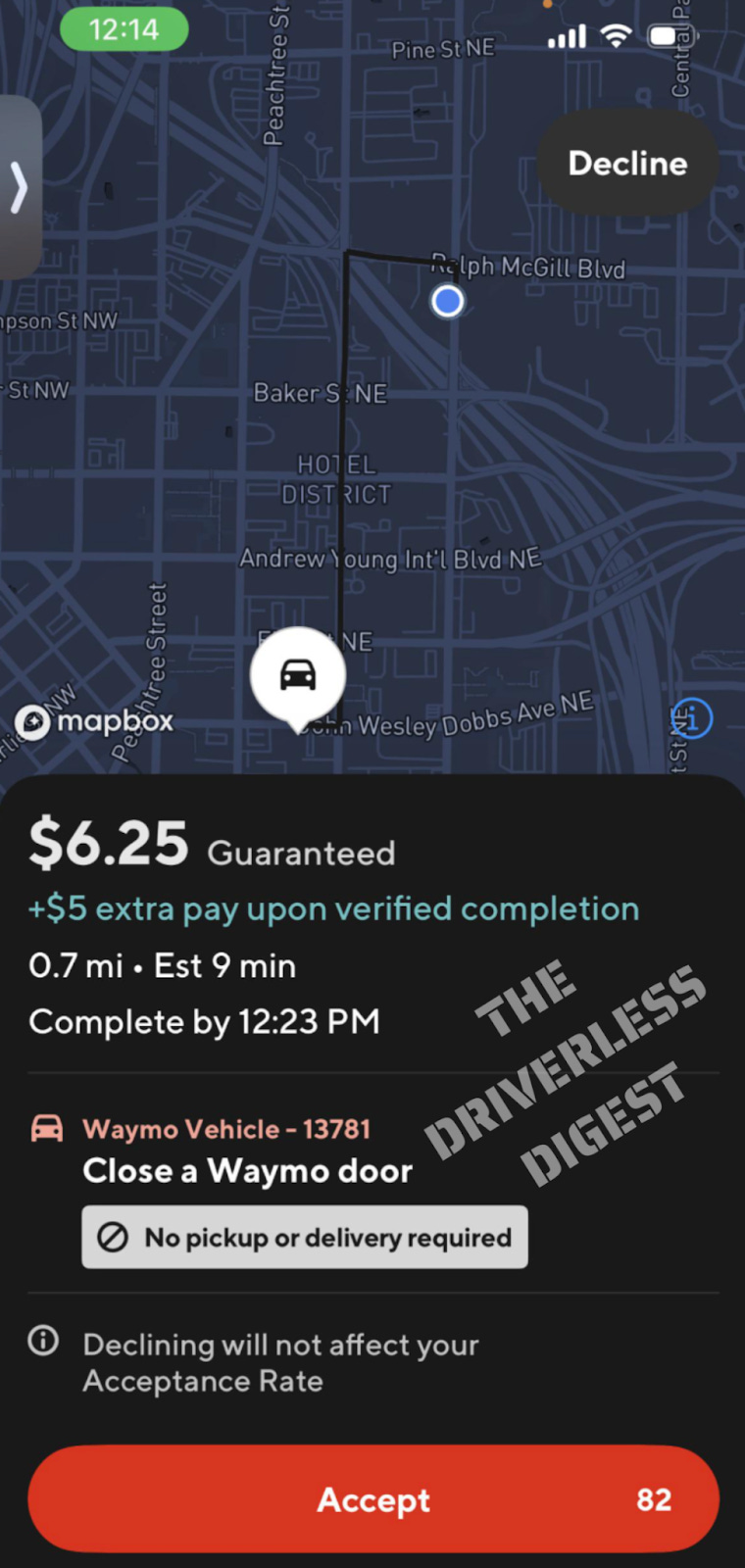
Looks like Waymo has partnered with Doordash to deal with doors left open by riders (link). Until now, Waymo reportedly relied on tow truck drivers to close doors at ~$22 to $24 per call. This setup suggests it can now be handled for closer to $11, so it is clearly a cost reduction move.
But it is not just about the cost savings, it is also the downtime savings. The faster the vehicle gets back into service, the better the asset utilization. That likely matters more than the few dollars saved on the service call itself.
And since Dashers are everywhere, they can get to these vehicles much faster than a tow truck driver. For a Dasher, it is essentially a short drive and a door close, no pickup or delivery friction. At $11.25, it is easy incremental income, and even at a lower payout of $5-6, there would probably still be plenty of takers.
At some point, the cleaner solution may be behavioral, not operational. Waymo already reminds passengers and will audibly alert you if a door is left open, but riders may be distracted or intoxicated and simply ignore it. If a rider repeatedly leaves doors open, Waymo could impose escalating fines or account penalties. They already charge for other forms of rider misuse, so this would be a logical extension.
Longer term, this feels like a transitional fix. Zoox solved this with purpose built vehicles and automated doors from day one. Waymo’s future Zeekr platform should help as well. But retrofits on platforms like Hyundai are more constrained, so for now, humans are still closing the loop for physical AI.
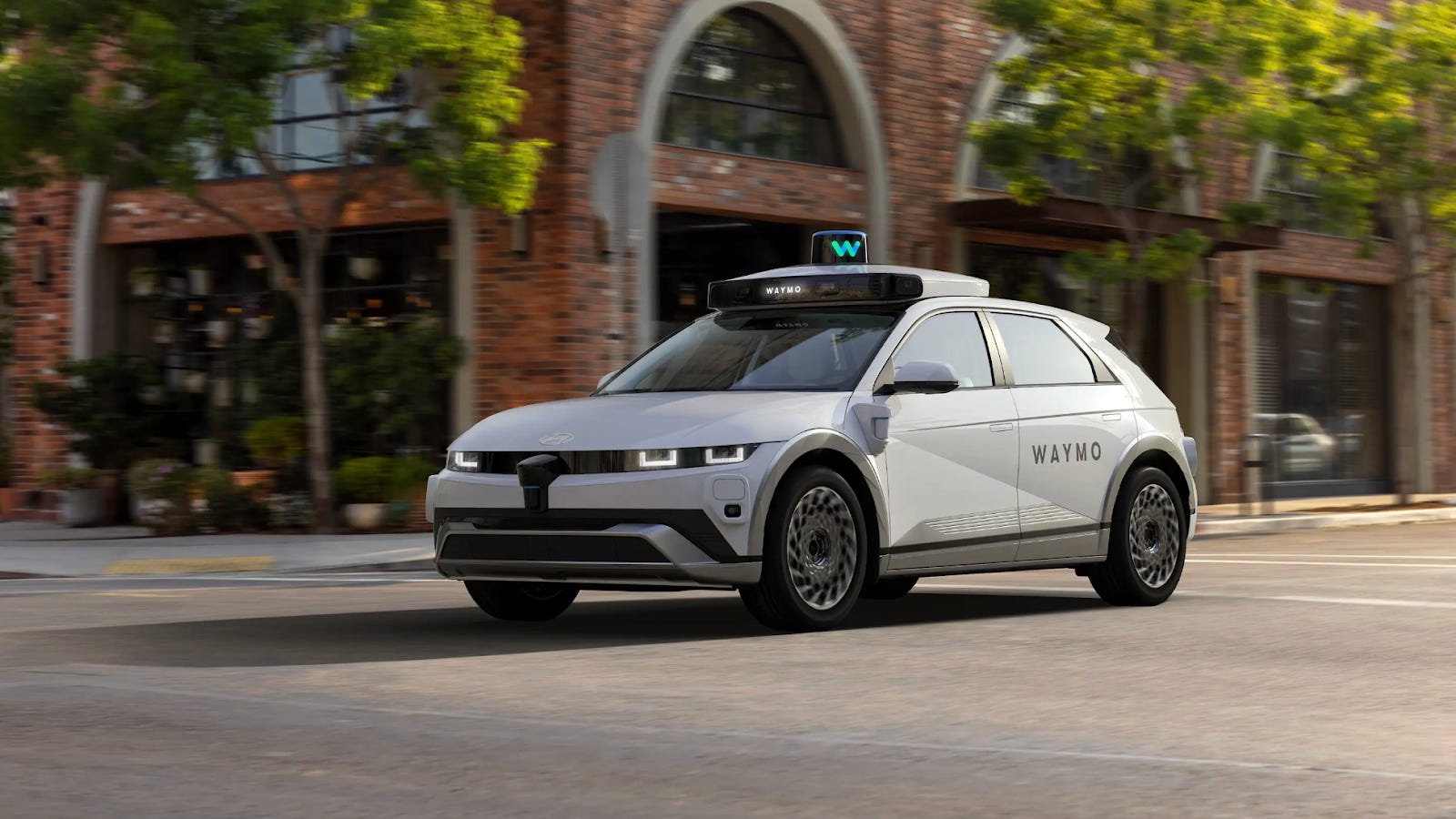
Behind a Potential $2.5B Deal: Hyundai and Waymo Tackle Scale Together? (link). Chinese auto outlet Gasgoo (first I’ve heard of them) reported this week that Hyundai Motor Company is looking to supply up to 50,000 IONIQ 5 vehicles to Waymo by 2028. At ~$50,000 per vehicle, that implies a potential $2.5B deal.
There is no on the record confirmation from either company and the sourcing is “people familiar with the matter.” Outlets like Electrek and The Verge picked it up, but they are citing Gasgoo’s report, not independently confirming it. So take this with a grain of salt until we see confirmation from the companies.
If true though, it would be a massive deal.
Waymo’s fleet currently sits around ~3,000 vehicles, so adding 50,000 more in less than three years would be an entirely different growth curve. It does make strategic sense though. I’ve long maintained that vehicles are the limiting factor to Waymo’s current expansion. A standardized, high volume EV platform from Hyundai would be the clearest path to unlocking the next phase.
The bigger question is operational readiness. 50,000 vehicles would require a step change in depots, charging infrastructure, maintenance networks, regulatory approvals across dozens of jurisdictions, and likely deeper integration with partners like Uber and Lyft.
I’m not sure Waymo is ready for that kind of scale. My guess is that if something like this materializes, it either stretches over a longer timeline or ends up being fewer vehicles. But directionally, the logic of the partnership makes sense.
Other Stuff
Waymo Co-CEO Outlines Path to 1 Million Weekly Trips in 2026 (link, no paywall). Waymo Co-CEO Tekedra Mawakana said the company expects to surpass 1 million paid weekly rides in the U.S. by the end of 2026, while also working to become more cost-effective as it continues expanding its fleet. Check out the full interview here (audio/video).
Baidu and Uber Partner to Bring Apollo Go Autonomous Ride-hailing to Dubai in Collaboration with Dubai’s Roads and Transport Authority (link).
Expected to launch in the coming month, the fully autonomous vehicles will be available via the Uber app across select locations within the Jumeirah area, and the deployment will expand based on operational learnings and regulatory approvals across the city.
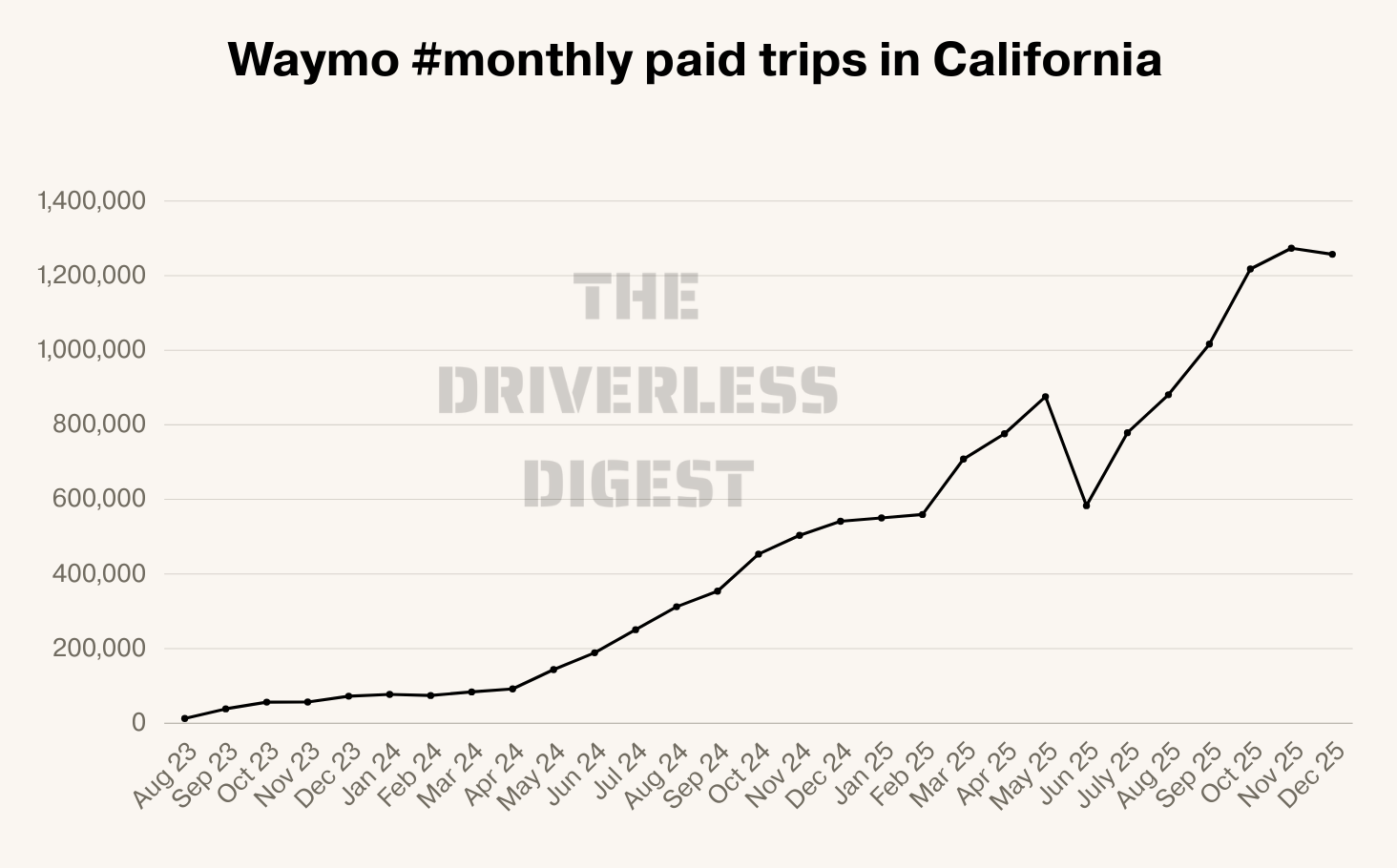
The CPUC just released Waymo trip data through December 2025 (link). The latest figures show Waymo was providing roughly 1.3 million paid trips per month in California, or about 284,000 paid trips per week as of December 2025.
Waymo Asks the DC Public to Pressure Their City Officials (link, no paywall). This echoes the playbook Uber and Lyft used a decade ago, mobilizing riders and going state by state to pass laws that preempted local regulators and cleared the way for expansion.
The difference here is that autonomous vehicles are inherently harder to scale than ridehail ever was. AV operators have to design, build, validate, and deploy new vehicle platforms and software stacks, stand up operations, and meet safety requirements before a single commercial ride happens. Adding a patchwork of state by state permitting, reporting, insurance, and operational rules on top of that only slows things further. From that perspective, the case for clearer federal standards is a reasonable one.
These Billionaires Plan To Bring Self-Driving Tech To Everything That Moves (link). Interesting deep dive on Applied Intuition and its push to bring autonomous driving software to basically every category of vehicle, not just robotaxis.
The upside is obvious: unlimited TAM. If autonomy becomes a horizontal software layer, the market extends far beyond ride hailing. But there is also diversification. If robotaxi timelines slip, another vertical may move faster.
The downside is also obvious: complexity. Each vertical has its own regulatory regime, safety bar, hardware stack and entrenched competitors.
Aurora’s driverless trucks can now travel farther distances faster than human drivers (link). Aurora’s self-driving trucks can now run nonstop on a 1,000-mile route between Fort Worth and Phoenix, going beyond what human drivers are legally allowed to do.
The Waymo World Model: A New Frontier For Autonomous Driving Simulation (link).
Congress moves to set national rules for self-driving cars, overriding states (link).
Uber sees opportunity, not threat, in robotaxis (link).
Waymo begins deploying next-gen Ojai robotaxis to extend its U.S. lead (link). Waymo has begun offering fully driverless rides in its sixth-generation Zeekr robotaxis to employees and their guests in San Francisco and Los Angeles, an early sign of what’s coming next.
Understanding the Global Regulatory Progress for Autonomous Vehicles (link).

The Fig Newtons wrap is a joke, but Waymo is already leaning into brand and celebrity partnerships that are effectively a form of advertising, so it’s not hard to imagine robotaxis eventually becoming highly targeted, rolling ad inventory. If and when that happens, standing out will matter, and one startup doing interesting things here is Adway with its vehicle-mounted projection technology (disclosure: I’m an investor and advisor).
Bot Auto booth at Manifest in Las Vegas (link).
Behind robotaxis are thousands of humans helping the AI drive better (link, no paywall).
Omar Zoubi, a VP at TaskUs, which provides third-party data labeling and remote support agents for companies like Waymo, told Business Insider that the company had just under 2,000 workers across its entire AV-related operations, which could double by the second quarter of this year.
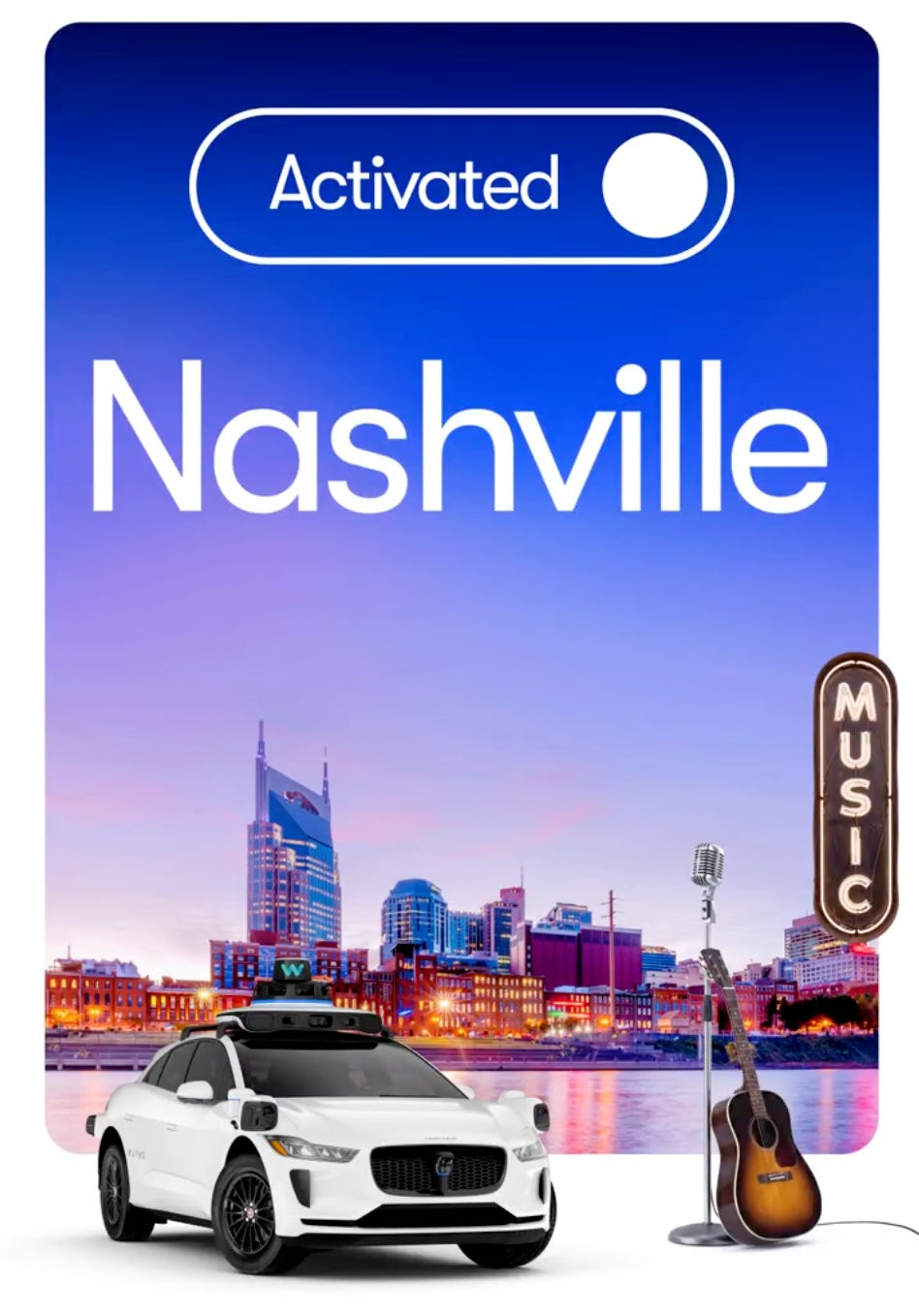
Waymo begins autonomous testing in Nashville (link). This comes ahead of their planned 2026 launch with Lyft as their partner.
China’s Pony AI, Toyota Start Ramp-Up of Self-Driving Car Model (link, no paywall).
The first of 1,000 all-electric and autonomous Toyota bZ4X compact crossovers has rolled off the assembly line at a joint venture between Toyota and Guangzhou Automobile Group Co., Pony AI said
Overland AI raises $100M to meet military demand for autonomous ground vehicles (link).
What else we’re reading/listening to
The Compound and Friends podcast featured Uber President & COO Andrew Macdonald discussing the trillion dollar opportunity in autonomous driving (link). One thing that stood out: Uber ultimately wants to preserve the asset light model it is known for. But in the near term, they are open to deploying capital to help seed supply and accelerate autonomous vehicle rollout.
Why is this interesting? The Pauking Edition (link). Reilly Brennan coins “pauking” to describe AVs occupying curb space while waiting, arguing cities will need to rethink how they price this in between state of parking and cruising.
Today in Tech, by Keith Shaw, featuring May Mobility CEO Edwin Olson: Why 2026 Could be the turning point for self-driving vehicles (link).
The Hidden Workforce Behind “Driverless” Cars (link).
11 Ways Waymo Can Improve the Rider Experience (link). Our latest guest post from Rakesh Agrawal. TDD Readers chimed in on this one and overwhelmingly agree that Waymo needs to add charging cables and fix the map integrations asap :)
✍🏻 Interested in guest posting on The Driverless Digest? Fill out this form, or hit reply and tell us what you want to cover.
AVs/Humans/Trees behaving badly
Tree falls on Waymo (link).
Zoox traffic jam (link). OP wrongly attributed the incident to Waymo 🤦♂️
Waymo drives through crime scene in Atlanta where two officers were injured in shooting (link). At least it wasn’t an ‘active crime scene’ this time 😂
Unsupervised Robotaxi Enters Active Construction Zone! (link).
Previous riders should be banned for leaving their stinky leftovers/trash (link).
Downtown lights have been stuck on Red for over 10 mins now and I’m behind a Waymo (link).
Neat Jobs
Multiple program management roles at Waymo, via David M.
Multiple operations roles at Zoox, via Jared Rose (link).
Investment and Debt Compliance Manager at Terawatt (link) via Peter Cohen.
Here’s a full list of the jobs we’ve featured (link).
Job Moves
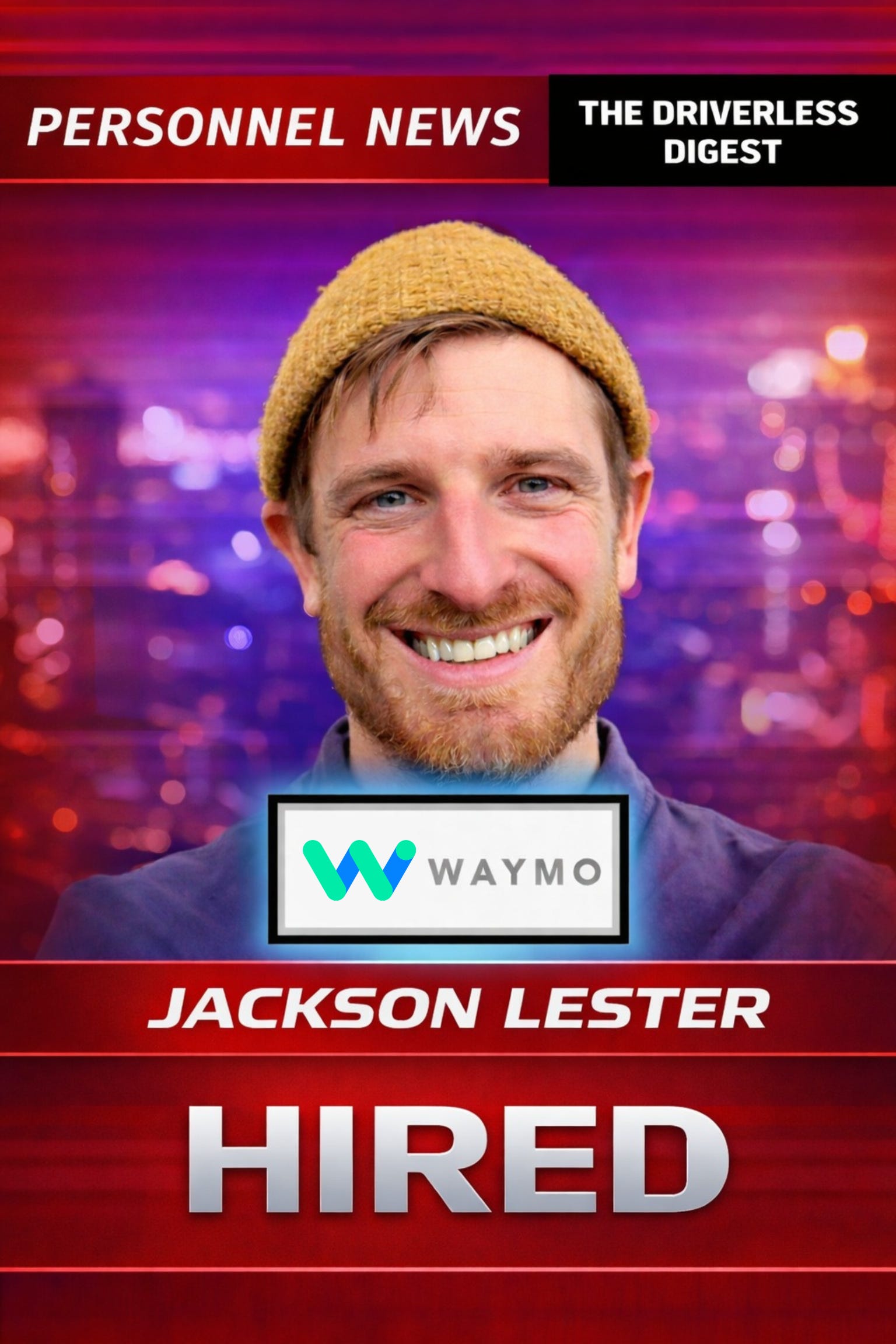
Congrats to our friend Jackson Lester on his new role as Product Manager at Waymo (link).
Irenee French: Manager, TA Corporate Functions at Intuitive ➡ Contract Technical Recruiter at Zoox (link).
Dirk Katterfeld: Automated Driving (Level 3/4) Systems Engineering at Mercedes Benz ➡ Remote Operation Manager at Wayve (link).
Rebecca Tjahja Harvey: Founding Partner at Gold Creek Strategies ➡ Strategy and Operations Lead - Policy & Government Affairs at Waymo (link).
William Lynn: Senior Director, Strategy & Corporate Development at Nio ➡ Senior Director, Autonomous Business Development at Lyft (link).
Cool Rides
‘While in the Bay Area for the Super Bowl, Scott Thornhill, Kolby Garrison, and her guide dog Marty took a ride in a fully autonomous Zoox robotaxi’ (link).
Freeway Driving in the Rain (link).
‘Caught my first Waymo in LA with my wife’ (link).
Shout-outs
Big thanks to TDD readers at Wayve, and to Kory and Jonas for referring new subscribers. If there’s someone you think would enjoy TDD, feel free to forward this email or use the referral button below, and we’ll make sure to shout out your company.
We’re now over 7,000 subscribers! Interested in advertising with TDD? Reach out to learn more.
Until next week :)
-Harry
Hilarious but deeply practical, Harry. The Waymo-DoorDash partnership to close doors proves that the biggest challenge for AI isn't the driving—it's the human behavior. It’s also fascinating to see Reilly Brennan's concept of 'pauking' mentioned. As we scale to 50k vehicles with the Hyundai deal, cities will stop seeing robotaxis as 'moving cars' and start seeing them as 'temporary obstacles' that need managed space. The curb is about to become the most expensive real estate on earth.
Thanks for the shoutout to my article, Harry!
On the Hyundai deal: I think you nailed it with "operational readiness." Going from 3K to 50K vehicles isn't just a procurement challenge. It's depots, charging, maintenance, and a massive scale-up of the remote operations workforce. These aren't independent problems; they're deeply interconnected, and solving them in parallel is a different game entirely.