
Uber to Invest $100 Million in Robotaxi Charging Hubs
First Waymo Ojai Robotaxi spotted without a driver, Musk’s Robotaxi Promises Are Still Missing, and New York pulls plug on robotaxi plans

We just announced new autonomy partners for our flagship Curbivore conference on April 16-17th in LA, grab discounted tickets while they’re still available!
Top Stories of the Week
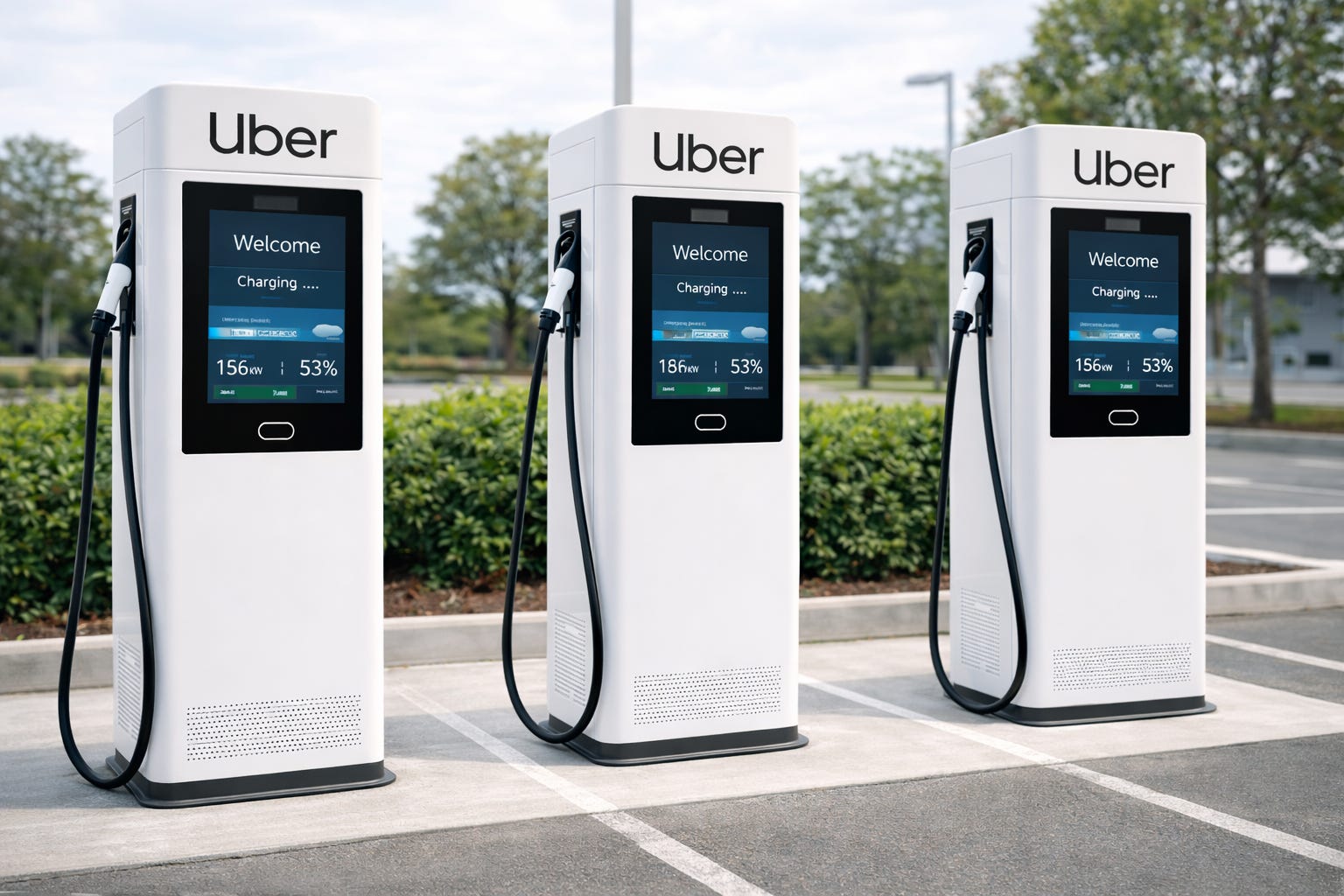
Uber to spend $100 million on charging for electric robotaxis (link). The budget covers everything from site buildout to charger installation, grid interconnection, and upfront infrastructure costs. Initial markets are the San Francisco Bay Area, Los Angeles, and Dallas, all key robotaxi battlegrounds where Uber plans to launch with partners and compete directly with Waymo.
This is straight out of Uber’s AV playbook. As we noted last week:
Uber ultimately wants to preserve the asset light model it is known for. But in the near term, they are open to deploying capital to help seed supply and accelerate autonomous vehicle rollout.
We already know fleets are transitioning to electric vehicles. The real questions are timing, utilization, and cost curves. By investing in charging, Uber is effectively underwriting the electrification of its own future supply, whether that supply comes from Waymo, Nuro, other autonomous fleets, or even human driven electric vehicles. Unlike equity bets in autonomous vehicle operators, charging is less binary. Even if a specific partner falters, the assets retain value because the broader vehicle market is steadily electrifying. Charging demand is not tied to one stack or one company. It is tied to the long term shift to electric mobility itself, which is a pretty safe bet.
Other Stuff
Is Waymo Worth $126 Billion? (link).
Currently the average fare for Waymo is roughly eighteen dollars per trip. So even if they hit their weekly trip target of one million by the end of 2026 and reach $1 billion in revenue, they would still be valued at 126 times forward revenue. Uber trades at roughly three to four times revenue. Tesla at its most frothy was maybe around twenty times forward twelve-month revenue.

Shots fired..by Motional?? 👏
Tesla ‘Robotaxi’ status check: 8 months in, 19% availability, and all of Musk’s promises are missing (link). By most objective measures, the rollout has been underwhelming. But Elon Musk has a long history of missing timelines and eventually shipping anyway. The key question is not whether they are behind, but whether they can close the gap. If and when Tesla stabilizes the product, they become the wild card in the autonomous vehicle race given their installed base, vertically integrated stack, and ability to push updates at scale.
RoboDock: Autonomous Depots for Autonomous Fleets (link). A smart infrastructure play focused on automating the entire depot, from charging and cleaning to staging and light servicing for autonomous fleets. We’re excited to have them at Curbivore on April 17 in Los Angeles!
If Uber is putting $100 million into charging, backing early stage startups like Robodock feels like a natural next step. Even small checks would go a long way at this stage, and having Uber’s name on the cap table would be a powerful signal. Same picks and shovels thesis, just earlier and with meaningful strategic upside.
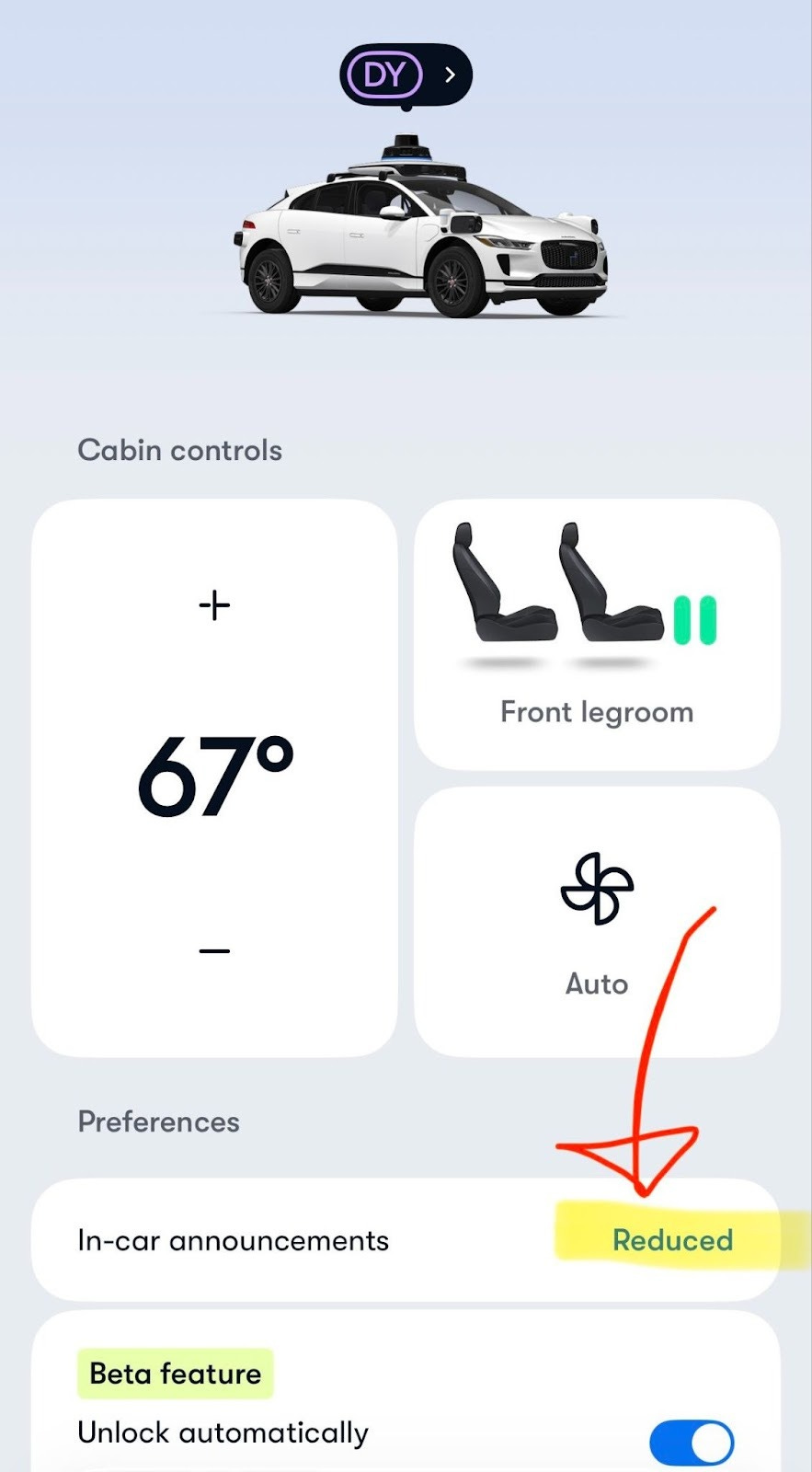
‘New feature alert: in the Waymo app you can turn off the “don’t forget your phone, keys, or wallet” announcement that plays a minute before dropoff. quiet mode 😌’ (link).
The long view of self-driving cars (link, no paywall). An interesting op ed that features a quote from The Driverless Digest and steps back from the daily headlines to examine today’s criticisms and concerns around autonomy, while also outlining the long term upside and broader societal benefits if the technology matures as many expect. Although not everyone agrees.
CharterUP adds Holon autonomous shuttles to US network (link).
Uber, Latest Victim of Disruption Panic, Still Has Role in Robotaxis (link, no paywall).
Waymo’s Ojai robotaxi will begin public rides this summer (link).
Related: Just spotted my first Waymo Ojai robotaxi here in Los Angeles without a driver (link).
Robotaxi app store rankings: Waymo at #5, Zoox at #25, and Tesla Robotaxi at #145 (link).
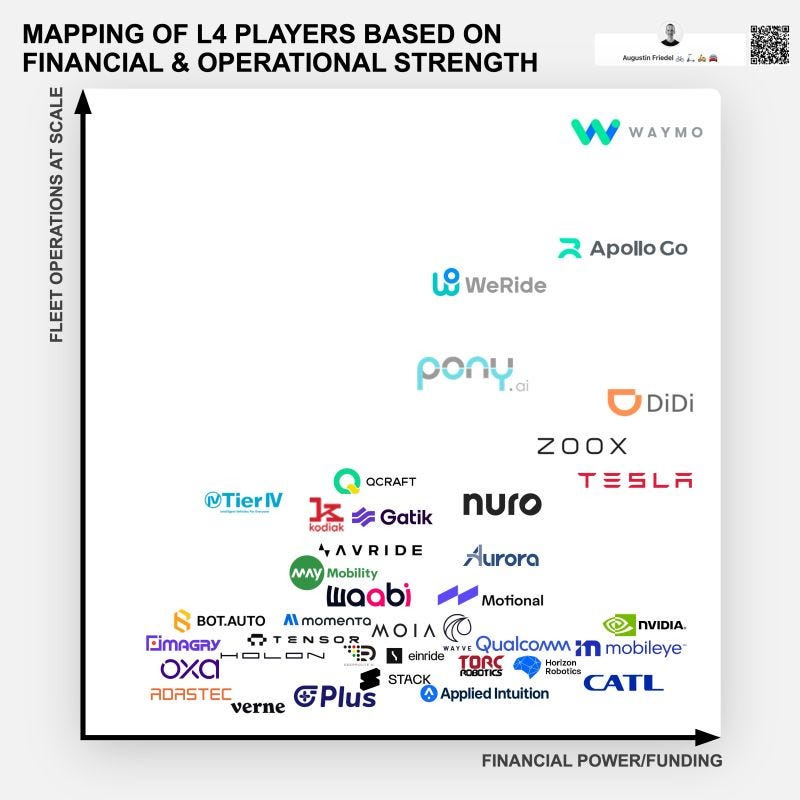
‘Autonomous mobility is entering its “winner-takes-ops” phase. Not winner-takes-tech. Not winner-takes-funding. Winner-takes-OPERATIONS’ (link).
‘I’ve been awarded funding from the U.S. Department of Transportation to study safety perception of Waymo, Uber, and transit…’ (link).

We’re excited to announce our latest partners for Curbivore 2026, happening in Downtown LA on April 16–17. Say hi to Bot Auto, Robotis, indiGO, Rideshare Carz, RoboDock, and Neubility—joining existing partners like Uber, DoorDash, Zoox, Nexar and Starship Technologies. Join leaders across autonomy, mobility, delivery, and retail for a can’t-miss gathering shaping the future of curbside commerce. Register now and use code Autonomy25 to save an extra 25%.
Gridwise’s Autonomous Vehicles Impact Report 2026 (link) takes a data driven look at how robotaxi proliferation is affecting human rideshare. One key finding: drivers in autonomous vehicle active cities are losing trips about twice as fast as drivers elsewhere. In those markets, trips per hour fell 5.3 percent in Q4 2025 versus Q4 2024, compared to a 2.6 percent nationwide decline.
Pay trends tell a similar story. Nationwide, hourly gross pay rose 1.8 percent year over year in Q4. But in major autonomous vehicle markets, earnings declined: Los Angeles (-3.7%), Phoenix (-0.4%), and San Francisco (-1.7%).
New York’s Robotaxi Plan Pulled in Blow to Waymo Expansion (link, no paywall). The proposal to allow commercial driverless robotaxi service outside New York City was pulled after it became clear there wasn’t enough political support in the state, a setback for Waymo’s broader deployment plans.
‘How actually ridiculous is it that still today comma.ai is the second best driving system you can buy after Tesla FSD’ (link).
What the Headlines About Waymo’s “Offshore Drivers” Are Getting Wrong (link).
Related: Advice, not control: the role of Remote Assistance in Waymo’s operations (link).
MIT Mobility Forum featuring Bot Auto CEO Xiaodi Hou and WeRide CEO Tony Han on February 20, 2026 (link).
Aurora begins operations in Arizona (link).
Take a look inside Waymo’s largest robotaxi depot (link, no paywall).
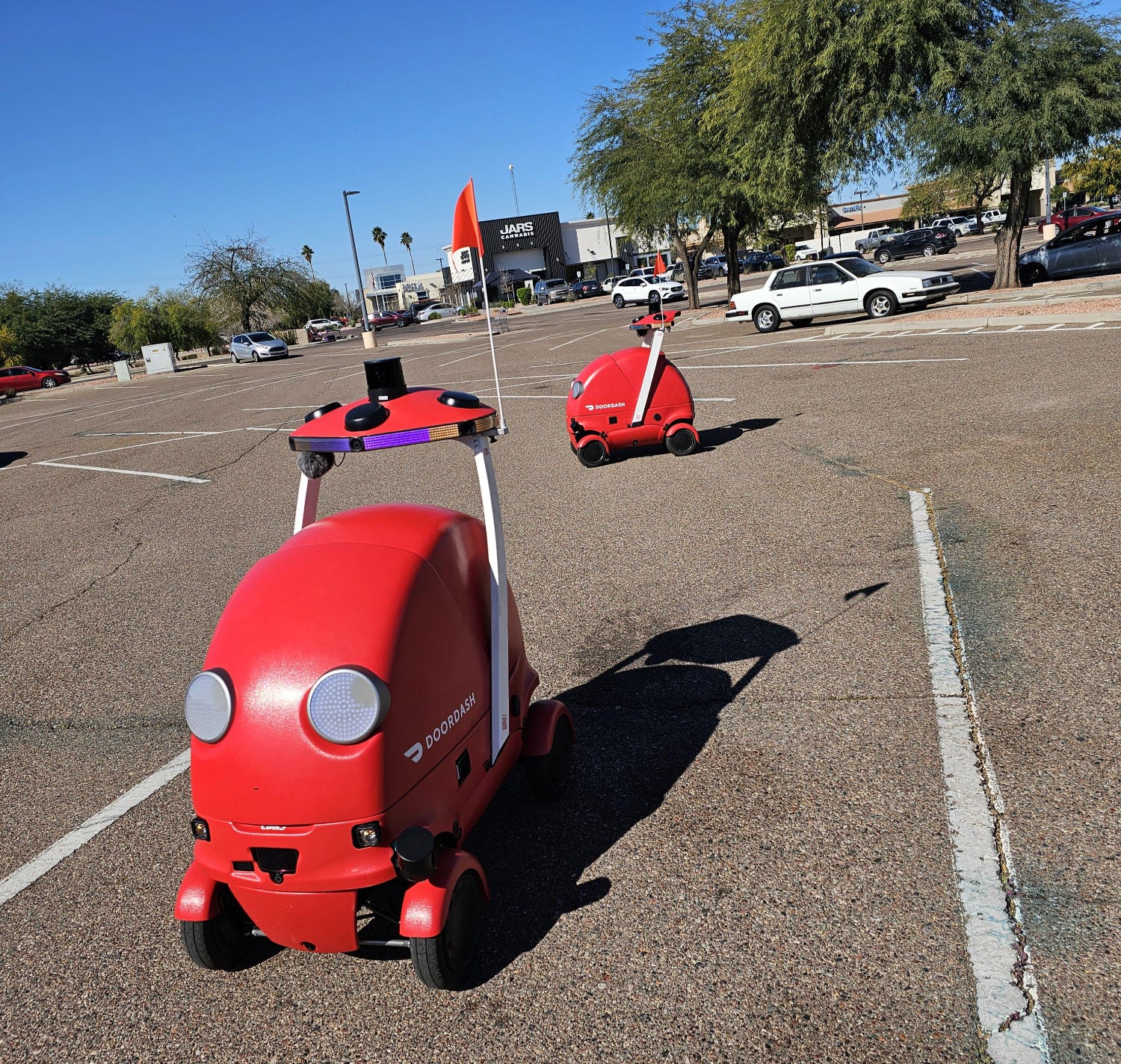
DoorDash Dot spotted in the wild… honestly, these things are kind of adorable. 🤖❤️
Golden State Warriors Waymo Livery (link).
What else we’re reading/listening to
Conversations in cleantech: Neha Palmer, CEO at TeraWatt Infrastructure: on Fleet Electrification, Utility-Grade Thinking & Building the Backbone of AV Charging (link).
Look Both Ways with David & Wes: The Future (& Past) of Rural Transportation + The War on Bikes (link).
Related: AV companies are ignoring rural America. That’s a shame (link).
AI in Motion by Waymo: Waymo & NVIDIA on their futures in autonomy (link).
Autonocast by Alex Roy, Ed Niedermeyer, Kirsten Korosec: #357: Why AV’s Need Real World Data with Nexar’s Zach Greenberger (link).
Understanding AI by Timothy B. Lee: Waymo just revealed a crucial statistic for scaling its technology (link).
AVs/Humans behaving badly
‘Waymo gets confused in construction zone, rider exits after Support has connection issues’ (link). Lol, well this doesn’t exactly give me a lot of confidence in Waymo’s remote operators.
‘This food delivery robot did laps with protestors for about 5 minutes’ (link).
‘Hey Waymo, please move’ (link). Love how polite they were.
AVs vs Rain
Waymo vs Rain Montage (link). In all seriousness though, it’s surprising to see Waymo still struggling with heavy rain, especially when the storm was well forecast and highly publicized in Southern California. There’s an operational layer here that feels like the easier fix. If you know torrential rain is coming, you can shrink the service area, geofence historically flood prone corridors, or tighten dispatch thresholds. The harder problem is technical. As Philip Koopman notes:
Flooding has been both a sensing and perception problem for as long as there has been robotaxi technology. Even if water is detected, it is tricky to figure out if it is a sheen of rain water, a large puddle, or actual flooding. But if you want to operate in the rain, you have to deal with it. I’m not sure why Waymo is struggling so much. Depending on their internal architecture this might be something that for some reason is particularly challenging for an end-to-end machine learning approach.
‘Waymo stalled in the middle of two lanes during heavy rain’ (link).
‘Waymo stuck in LA flooding on Wilshire blvd’ (link).
‘Another Waymo stranded in the flooding on Melrose, LA’ (link).
‘LA Stormy day: $0. Coffee: $5. Waymo Customer Support: Priceless. My rainy day rescue’ (link).
‘LA Metro bus navigates around stalled Waymo in front of flooded road’ (link).
‘Coco vs Los Angeles rain’ (link).
Neat Jobs
Senior Manager, Physical Security at Zoox (link) via Brent Hughes.
Trust & Safety Lead at Serve Robotics (link) via Genevieve Garcia.
Multiple AV operations roles at Lyft, via Christopher Mcgee.
Senior Software Engineer, Motion Controls at Waymo (link) via Eric S Kim.
Here’s a full list of the jobs we’ve featured (link).
Cool Rides
‘Tonight in rainy San Francisco, I’m sitting in a Waymo… and I just noticed something wild’ (link).
Delivery robot politely asks human to press crosswalk button, then lights up with gratitude (link).
‘In town for work and finally checked off a very important professional development milestone: my first ride in a Waymo’ (link).
Pack of delivery robots at UTK (link).
Shout-outs
Big thanks to TDD reader Perkins F for referring new subscribers. If there’s someone you think would enjoy TDD, feel free to forward this email or use the referral button below, and we’ll make sure to shout out your company.
We’re now over 7,000 subscribers! Interested in advertising with TDD? Check out our media kit here.
Until next week :)
-Harry
Spot on, Harry. Uber’s $100M move into charging hubs is a massive signal that the 'asset-light' dream has limits when it hits the physical world. In the end, autonomy is a real estate game. Whether it’s charging, cleaning, or staging, robotaxis need a 'home' in dense urban centers. This investment de-risks their strategy: even if the AV tech takes longer than expected, they’ve secured the prime infrastructure that every electric fleet will fight for. Infrastructure is the ultimate moat.
Question via e-mail: Why so much emphasis on charging and none of these fleet vehicles seem to be going the "interchangeable battery" route?
Charging gets so much emphasis because it builds on existing infrastructure and improving technology curves. Fast charging speeds are increasing, battery density is improving, and costs are coming down. That creates strong tailwinds.
Battery swapping can make sense in emerging markets where charging infrastructure is limited or grid reliability is an issue. It could even serve as a transitional model in certain U.S. fleet use cases where uptime is critical. But long term, I’m skeptical. You’re effectively betting on a parallel infrastructure model at the same time charging technology keeps getting faster, cheaper, and more convenient.
As an investor, I prefer backing technologies aligned with clear structural tailwinds. Swapping feels like it faces structural headwinds as charging efficiency and battery performance continue to improve.