

This week’s edition is brought to you by Virewirx. Enable full autonomy with Virewirx’s VX60, a high-performance 60 GHz wireless system for fast and scalable robotaxi data movement.
Top Story of the Week
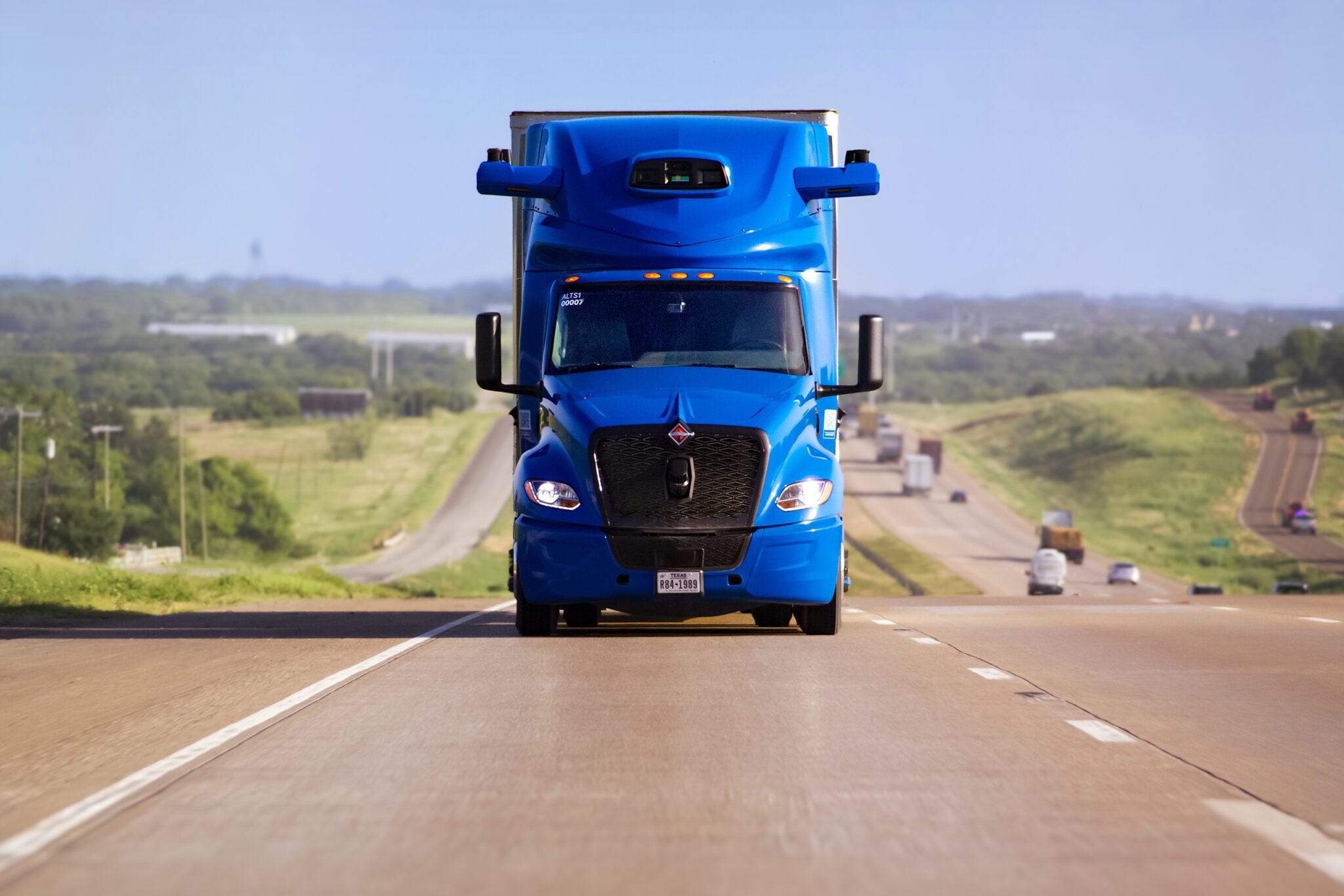
Aurora Launches Second-Generation Driverless Trucks in U.S. to Meet Customer Demand (link).
The new fleet will be deployed across Aurora’s commercial network of 10 driverless routes in the U.S. Sun Belt, allowing the company to serve more customers as it expands its autonomous freight operations. The trucks replace Aurora’s first commercial fleet, which entered service last year when the company became the first to operate Class 8 trucks without a driver on public roads in the U.S. Those vehicles have since completed nearly 440,000 driverless miles. Aurora expects the new fleet to grow to 200 driverless trucks by the end of the year.
“Last year’s driverless launch proved our technology could operate safely on public roads – our new platform now provides the foundation to deliver at scale,” said Chris Urmson, CEO and co-founder of Aurora.
Other Stuff
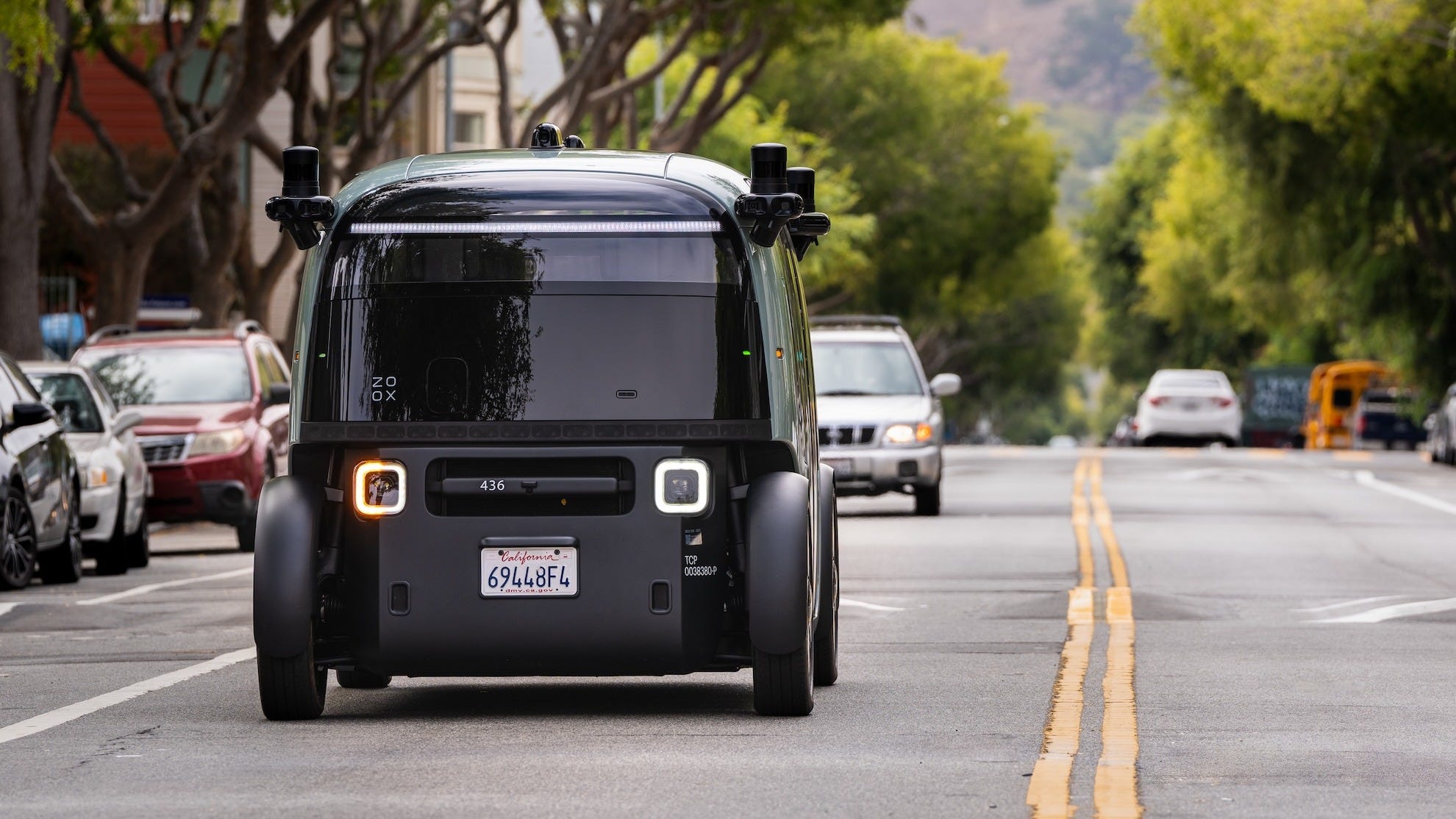
Zoox issues software recall after a robotaxi got confused by heavy smoke (link).
The software update “enhances the existing capability of detecting active [emergency] scenes by adding the ability to detect and respond to heavy smoke in certain situations.”
Report: Waymo Cars Mean Way Mo’ Traffic (link).
Waymo cabs spend far more time driving around without passengers than comparable human-driven Uber and Lyft cabs. In California, where Waymo’s autonomous taxis have been operating and churning out trip data for years, a Waymo will travel 0.71 miles empty for every one mile. But in New York City, so-called high-volume taxis — Uber, Lyft and the like — drive empty for 0.49 miles for every one mile with a passenger. That 14.8-percent gap would translate to tens of thousands of additional vehicle miles every single day.
Related: Are Waymo robotaxis actually safer than NYC Uber and taxi drivers? (link). A lot of the safety analysis cited in this article comes from the report referenced above, but the researchers have since pulled that entire section after discovering discrepancies in the NYC crash data and definitions they used. So for now, I’d take those safety findings, including the claim that Waymo had 1.5x the serious injury/fatal crash rate of NYC for-hire drivers, with a pretty big grain of salt. The report’s authors say they’re working to resolve the discrepancies and update the analysis.
Meanwhile, there has also been some recent research from the Insurance Institute for Highway Safety (IIHS) reinforcing Waymo’s safety claim: Waymo’s driverless cars crash less often than people (link). They found Waymo’s driverless vehicles had 68% fewer police-reportable crashes and 81% fewer injury crashes per mile than human drivers across roughly 50 million driverless miles. This is consistent with Waymo’s own safety research, which found a 79% reduction in injury crashes over 56.7 million miles (link).
Trial Lawyers Lobby Against Autonomous Vehicles (link).
Remarkably the trial lawyers saw the writing on the wall very early and they have been lobbying against AVs for nearly a decade! The trial lawyers earn a huge amount litigating ordinary auto accidents–Annual U.S. auto insurance payouts (liability + PIP/MedPay) are on the order of $180–220B and trial lawyers are very eager to retain the right to sue car manufacturers for product liability.
Tesla spins up robotaxi pilots in Orlando and Tampa ahead of Q2 earnings (link).
Waymo expects D.C. robotaxi talks to continue this summer (link).
Terawatt: How EV Fleet Operators Can Turn Energy Costs Into an Advantage (link).
Hertz’s next act: From rental cars to robotaxi depots (link).
Faster Data Off the Vehicle—Faster AI on the Road

This July 27-30, Virewirx is bringing VX60 High Performance Wireless to ATS 2026. Visit Booth 6 and discover advanced mmWave networking that delivers the massive, real-time data movement that autonomous fleets and robotaxi fleets demand. Reach out to Brian Lee at info@virewirx.com for more info.
Waymo And Uber Support Bad, Incumbent-Protecting Laws In DC And NJ (link, no paywall).
Stellantis taps Mobileye for hands-free driving assist (link, no paywall).
Mobileye CEO Amnon Shashua to step aside as company pushes into robotaxis, robotics (link).
Pony.ai ties up with JD.com for China robotaxi maintenance (link).
Waymo meltdowns, Lurie pressure, spur push for tougher robotaxi rules (link, no paywall).
Under Cortese’s bill, AV companies would be required to immediately dispatch a technician to move a car if it has a steering wheel or allow first responders to move it. Each failure to move cars or ensure that first responders can move them would result in a $5,000 fine, and if an AV causes a roadblock for more than 30 minutes and blocks first responders, the fine would be $10,000. Failure to comply with the law would result in a civil action against the AV company.
Just a few days until SAE International’s Automated Transportation Symposium in San Diego (link).
‘Uber robot taxi, new competitor incoming?’ (link). Closeup of an Uber-Lucid-Nuro robotaxi.


They can do that because they operate using a Limo license like Uber Black, and not an AV permit like Waymo (link).
Related: How the CPUC Handles AV Permits, Data, and Enforcement - Pat Tsen (link).
‘Updated Ojai Cup Holders’ (link).
What else we're reading/listening to
Waymo’s Lead Is Real. Its Biggest Test Is What Comes Next (link). Our latest guest piece where former founding member of Uber’s Autonomous Mobility & Delivery team, Eduardo Rojas, analyzes Waymo’s lead in the Robotaxi space. What strikes me here is the gap between impressive operational scale and actual market penetration. Waymo is currently completing 500,000 rides per week, which annualizes to about 26 million rides. That sounds significant, but against an estimated four billion annual U.S. ride-hail trips, it represents only 0.65% of total demand.
Rethinking AV Safety as Robotaxis Scale with Junko Yoshida (link). My latest podcast with the veteran tech journalist discusses what journalists still get wrong in their coverage of AVs today, the state of the industry, what needs to happen to scale robotaxis, and why transparency remains one of the industry’s biggest challenges.
Related: I’ll be on stage with Junko Yoshida at SAE International’s Automated Transportation Symposium on July 30th at 11:40 am on the ‘Journalist Panel’, alongside ATS co-founder Jane Lappin, Alan Ohnsman of Forbes, and David Welch of Bloomberg. Feel free to reach out if you’ll be in attendance!
AVs/Humans behaving badly
‘They’re going to kill me’: A Waymo rider was trapped inside as vandals smashed the robotaxi (link, no paywall).
The car’s remote assistant had noticed the car was not moving, and decided to call the police. Watson grew frantic. He asked Waymo’s support team when law enforcement would arrive, but they didn’t know. He asked if they could move the car, and they declined, saying it was obstructed.
‘Absolutely Insane Route’ (link). I’ve had several weird routing issues with Waymo lately and it seems like I’m not the only one. Hard to tell if routing is getting worse for some reason or these are just anomalies.
‘What’s the longest you’ve had to wait for a Waymo?’ (link).
‘My Ojai re-routed into the Waymo backrooms and rider support had to step in’ (link).
Shout-outs
Big thanks to TDD readers at Element Fleet Management, Uber, and to Andy L and Mark M for referring new subscribers. If there’s someone you think would enjoy TDD, feel free to forward this email or use the referral button below, and we’ll make sure to shout out your company.
Neat Jobs
Staff Product Data Scientist, Paid Media at Waymo (link) via Hongying Z.
Physical Infrastructure Engineer at Waabi (link) via Gregory Carvlin.
Senior Software Engineer, Cloud, Simulation at Wayve (link) via Arvind Pereira.
UK Operations Lead at Waymo (link) via Leticia Cavalcante.
Job Moves
Mason Lee: Nvidia -> Rivian (link).
Laura Salazar Lawton: Torc Robotics -> Avride (link).
Sendil Palani: Tesla -> Zipline (link).
Girish Venkataramani: Wayve -> OpenAI (link).
Neha Sinha: Thermo Fisher Scientific -> Waymo (link).
We’re now at 11,000+ subscribers! Interested in advertising with TDD? Check out our media kit here and reach out to us. Newsletter spots are currently sold out until September but we do have podcast advertising opportunities available.
Until next week :)
-Harry
This posts says that Waymo cars run empty 0,71 mile for every mile traveled. Is there an explanation for that high percentage of cars running empty. Is it because Waymo cars continue running until they get their next asssignment? Is there an issue with parking the cars between assignments?