

This week’s edition is brought to you by MN8 Energy – powering the next generation of fleet and infrastructure electrification.
Top Story of the Week
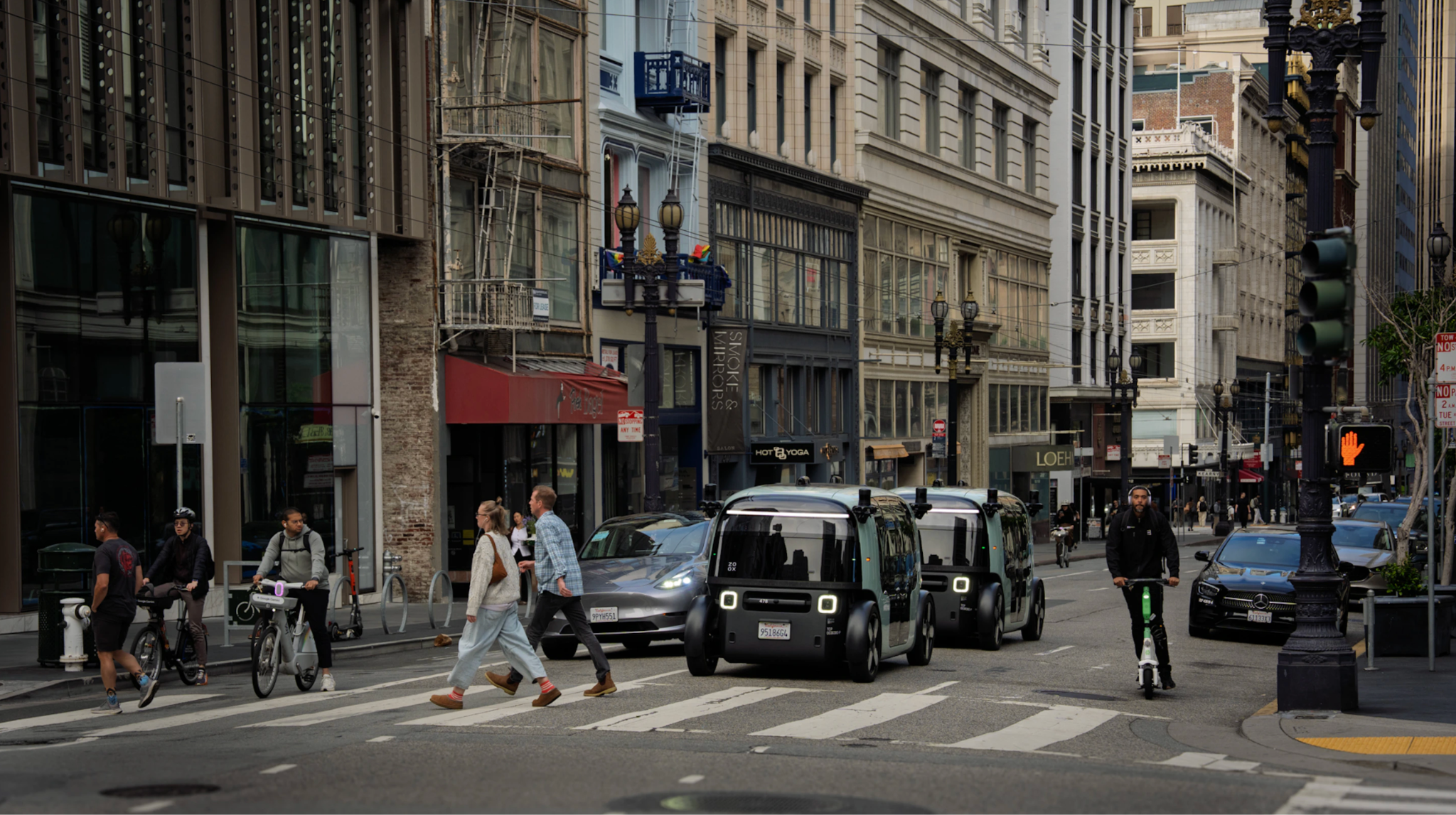
Amazon’s Zoox wins first US approval for paid robotaxis without human controls (link).
Zoox has won U.S. approval for limited commercial deployment of its novel steering-wheel-free robotaxis, a first for the autonomous ride industry, the U.S. auto safety agency said on Thursday… NHTSA Administrator Jonathan Morrison told Reuters that Zoox had received clearance to commercially deploy up to 2,500 vehicles in each of the next two years… All remote operators must be located in the United States, NHTSA said, and Zoox must publish maps of areas indicating where the vehicles are operating.
“We can say pretty clearly that the systems in place on the Zoox exceed the equivalent performance requirements of a compliant vehicle,” said NHTSA Administrator Jonathan Morrison. “But we still want to make sure that the automated driving system will operate appropriately.”
Other Stuff
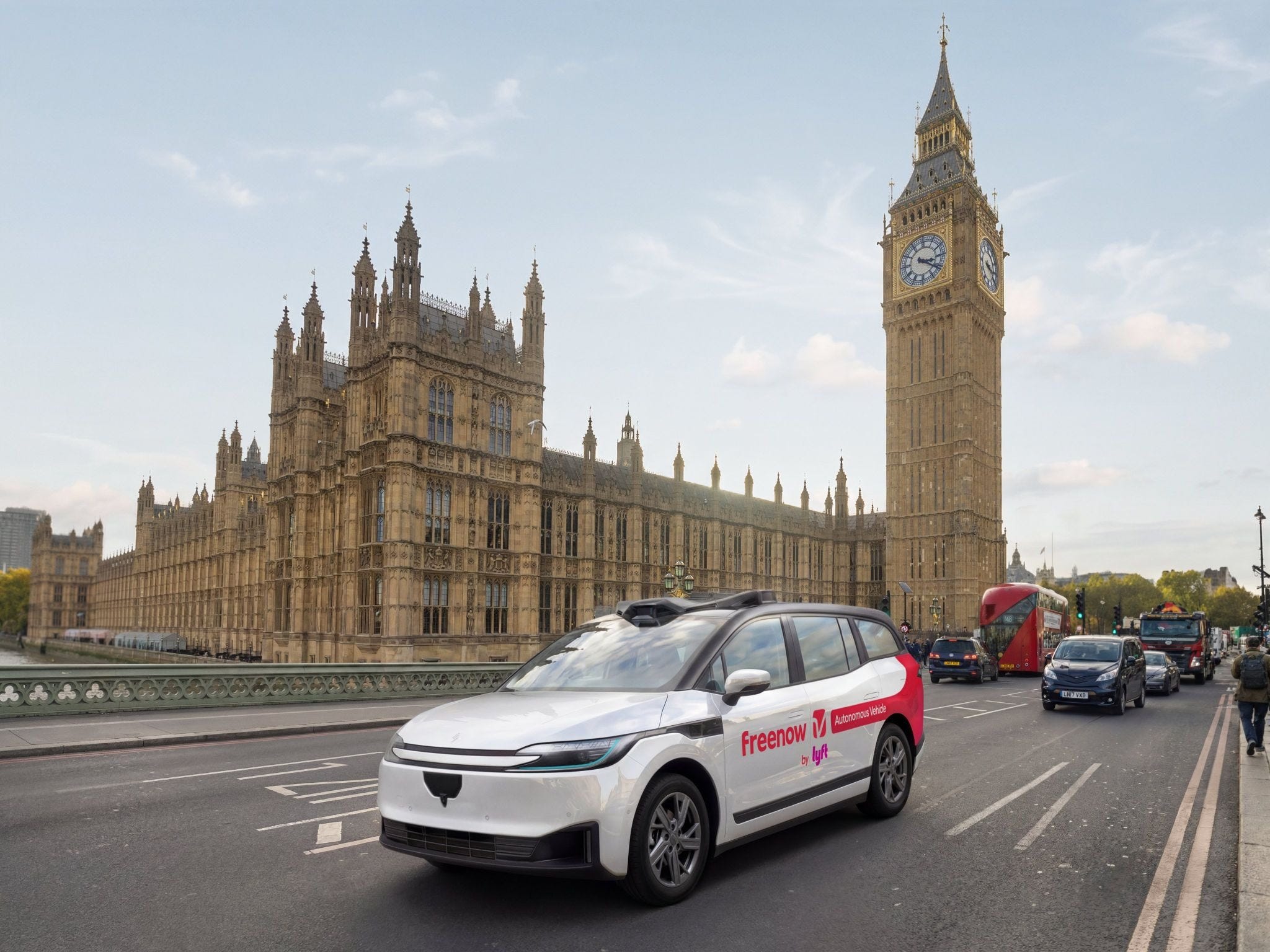
Baidu’s Apollo Go begins London robotaxi testing with Uber and Lyft (link).
The London deployment comes out of two separate deals Baidu signed in 2025. The Lyft partnership is meant to scale thousands of Apollo Go vehicles across key European markets. The Uber partnership targets thousands of vehicles on Uber’s platform across global markets outside the US and mainland China.
The move highlights London's growing role as a neutral testing ground for US and Chinese autonomous vehicle companies. It also reinforces the increasingly two-horse nature of the global robotaxi race, with Waymo leading commercial deployments in the US while Baidu has quietly built the broadest international footprint, spanning China, Hong Kong, the UAE, Switzerland and now the UK.
Waymo robotaxis are starting to return to freeways (link).
Waymo announced Wednesday that it would gradually add freeway routes, starting with Phoenix — the company’s first driverless ride-hailing market. More cities, including Los Angeles and the San Francisco Bay Area, would follow in the coming days.
DoorDash is building its own drone delivery business (link). This was a big announcement, and I’m bullish on drone delivery over the long term. The technology already seems to be working well and if the regulatory hurdles can be cleared, I think drones have the potential to become the fastest and lowest-cost way to get small orders to customers.
I also find it interesting that DoorDash is pursuing both a partnership strategy and a build-it-yourself strategy. The company already works with Coco and Serve on sidewalk robots while also developing its own Dot autonomous delivery vehicle. On the drone side, it partners with Wing and Flytrex but is now adding DoorDash Air to the mix. Rather than picking a single winner, DoorDash seems content to partner where it makes sense while building its own capabilities in parallel.
The question is what that means for partners over the long run. If DoorDash builds strong in-house robots and drones, does it keep relying on partners or start shifting toward its own tech?
The company unveiled the new business, called DoorDash Air, after receiving a Part 135 air carrier certification from the U.S. Federal Aviation Administration. The certification allows the company to legally operate a commercial drone delivery service in the United States…If DoorDash wants its drones to fly autonomously over longer distances, it will need the FAA to approve its Beyond Visual Line of Sight technology, a certification that companies like Amazon, Wing, and Zipline have received in recent years.
‘A few months ago I had an idea to build a self-driving golf cart’ (link).
Waymo explores split with Uber as robotaxi tensions deepen (link, no paywall).
The self-driving car company has held internal talks about ending its current deals with the ride-hailing group, which operates services in Austin and Atlanta, according to multiple people familiar with the matter. Waymo has already notified Uber that it plans to enter these markets independently in January 2028 when their contract allows, the ride-hailing group said in a statement.
Designing Energy Infrastructure for Autonomous and Electric Fleets
MN8 Energy is one of the largest renewable energy and infrastructure owners in the U.S., supporting fleet operators as they scale electrification and autonomy. With expertise in delivering custom, turnkey solutions tailored to each fleet’s duty cycle and operational needs, bringing reliability, uptime guarantees, and long-term operational ownership, MN8 is the choice partner for fleets as they transition to electric and autonomous operations.
To learn more about MN8’s work with fleet and infrastructure partners, reach out to the Distributed Energy Solutions team at DES@mn8.com
China Resumes Issuing Robotaxi Licenses After Long Freeze (link, no paywall). I’ve been critical of Waymo for their lack of transparency around the recent July 4 issues but we still have no idea what happened with this much more serious incident in China.
Neither the government nor Baidu has publicly disclosed details of the cause of the Wuhan robotaxi outage in March, which triggered the halt in licenses.
Waymo Is Racking Up Thousands of Dollars of Parking Fines in Austin (link, no paywall). Just a drop in the bucket considering Waymo has hundreds of vehicles operating in the city. But it does make me wonder: is Waymo paying those tickets, or is Uber getting the bill?
In Austin, Texas, Waymo’s robotaxis have struggled to follow parking rules. Since the company came to town in 2024, its vehicles have been fined $9,325 in parking tickets, according to documents The Wall Street Journal obtained through an open-records request.
‘In hindsight it was a huge mistake for Rivian to commit to deploying their Robotaxis exclusively on the Uber network’ (link). Of all Uber’s AV partners, Rivian has the furthest hill to climb. As a happy R1S owner, I can confirm they make a great vehicle, but the autonomy features are the same as what you’d find on any other average car (lane keep and adaptive cruise control). We’ll see if all the hype and investment translate into a better product though over time.
Japanese AV truck startup T2 raises $30M (link, no paywall).
Momenta wins Germany-wide level 4 testing approval (link).
Waymo Registers Korean Subsidiary as Asia-Pacific Push Accelerates (link).
Wayve CEO Alex Kendall: A frontier ecosystem for embodied AI (link).
Say hi to the new Ojai in-car experience (link).


What else we're reading/listening to
The AV Market Strategist by Daniel Abreu Marques: Tesla Q2 2026: 3 New Robotaxi Markets, 36% Fewer Paid Miles & Waymo Puts a Date on the Uber Divorce (link).
The InEVitable on MotorTrend: The Rideshare Guy: How Uber Drivers Make Money—and When Robotaxis Take Over (link).
Electrons & Asphalt by Josie-Dee Li: EV/AV Learning Resources (link). Cool list of electric & autonomous mobility resources, featuring The Driverless Digest newsletter and podcast.
TBPN: Inside Travis Kalanick’s Wild New Al Company (link).
Autonocast by Alex Roy, Ed Niedermeyer, and Kirsten Korosec: #368: How Aseon Labs Is Solving AV Operations, w/CoFounder George Kalligeros (link).
AVs Are Coming to Southeast Asia. The Global Playbook is Not (link). Our latest guest piece where Grab’s GM for AVs, Dominic Ong, explores why he thinks the future of ride-hailing in Southeast Asia will not be fully autonomous, but rather a hybrid fleet.
A single monsoon downpour can spike ride requests 9-10x within ten minutes. This is a bind for a standalone robotaxi fleet. If you build your capacity for the peak monsoon surge, you risk underutilizing cars. And if you build for the quiet average, you fail your riders whenever demand surges around events.
How NVIDIA Alpamayo Is Accelerating Autonomous Driving with Matt Cragun (link). My latest podcast where I sit down with NVIDIA's Director of Product for AVs to discuss the company's AV strategy, how its open-source Alpamayo models are helping developers accelerate autonomous driving, and why NVIDIA is combining end-to-end AI with more classical autonomy approaches, among other things.
AVs/Humans behaving badly
‘First public-road accident involving Bliq’s remotely driven passenger car – an important learning opportunity for the entire industry’ (link).
2 hurt after Waymo driverless car catches fire in Atlanta (link).
Data from Waymo shows the autonomous vehicle was turning left off Cheshire Bridge Road when the other car rammed it from behind at 33 miles per hour. The impact triggered a rapidly growing fire in the back of the Waymo.
‘Wrong Way Driving in SF’ (link).
‘Waymo, doing waymo things’ (link).
Shout-outs
Big thanks to TDD readers at NGV Talent, Uber and to Li X for referring new subscribers. If there’s someone you think would enjoy TDD, feel free to forward this email or use the referral button below, and we’ll make sure to shout out your company.
Neat Jobs
Staff Tech Lead Manager at Waymo (link) via Claire Yan.
Manager, Technical Program Management at Zoox (link) via Ernie L.
Data Engineer at Wayve (link) via Marius Cordts.
Staff Engineer, OEM Platform Integration at Motional (link) via Aimee Henley.
Job Moves
Chetan Shankar: Mercedes-Benz -> Bliq (link).
Andrew Beck: Perplexity -> Bedrock Robotics (link).
Yuka Hamanaka: Haas@Work -> Moove AV (link).
Bree Jones: The Browser Company -> Waymo (link).
Gaurav Jurani: AWS -> Zoox (link).
We’re now at 11,000+ subscribers! Interested in advertising with TDD? Check out our media kit here and reach out to us. Newsletter spots are currently sold out until September but we do have podcast advertising opportunities available.
Until next week :)
-Harry